Key Takeaways
- Old Lyme falls into a high-wind zone, requiring specific fastening patterns (6 nails per shingle) to meet state safety mandates.
- Connecticut code allows for a maximum of two roofing layers, but local coastal conditions often make a full tear-off the only viable choice.
- Ice and water shield protection is non-negotiable in New London County, extending at least 24 inches past the interior wall line.
- Every roofing project in Old Lyme requires a building permit from the Town Hall to ensure the warranty and home insurance remain valid.
I was standing on a driveway near Mile Creek Road last Tuesday, watching a homeowner named Sarah stare up at a row of lifted shingles. It was one of those raw March mornings where the wind kicks off the Sound with enough bite to make you regret leaving your scarf in the truck. Sarah was frustrated. She'd just been told her "simple" patch job wasn't going to fly because her existing roof didn't meet the current Connecticut State Building Code.
"It's just a roof, Noah," she told me. "Why does the state care how many nails are in a piece of asphalt?"
The truth is, the state cares because Old Lyme is essentially a target for every Nor'easter and tropical remnant that crawls up the Atlantic. In 2026, we aren't just building for aesthetics; we're building for survival against 135 mph wind gusts. Understanding the fine print of the CT State Building Code—specifically the 2022 amendments that we're still living with today—is the difference between a roof that stays put and one that ends up in your neighbor's pool after a spring gale.
The Wind Zone Reality: Why Old Lyme is Different
If you live in Hartford, the wind requirements are one thing. If you live in Old Lyme, they're an entirely different beast. According to the current NWS Storm Events Database, New London County has seen a marked increase in localized microbursts and high-wind events over the last decade. Because of our position on the coast, the building code classifies much of our town as a "High Wind Region."
This means your contractor can't just "eyeball" the nailing. Code R905.2.4.1 specifically outlines the attachment requirements for asphalt shingles. In most of Connecticut, four nails per shingle might pass. Here? You're looking at a six-nail requirement. I've seen 14-year-old roofs stripped bare because they were installed with a standard four-nail pattern that couldn't handle a 90 mph gust. It's a heartbreaking sight, especially when you realize insurance might balk at the claim if the installation didn't meet the local wind-load specs.
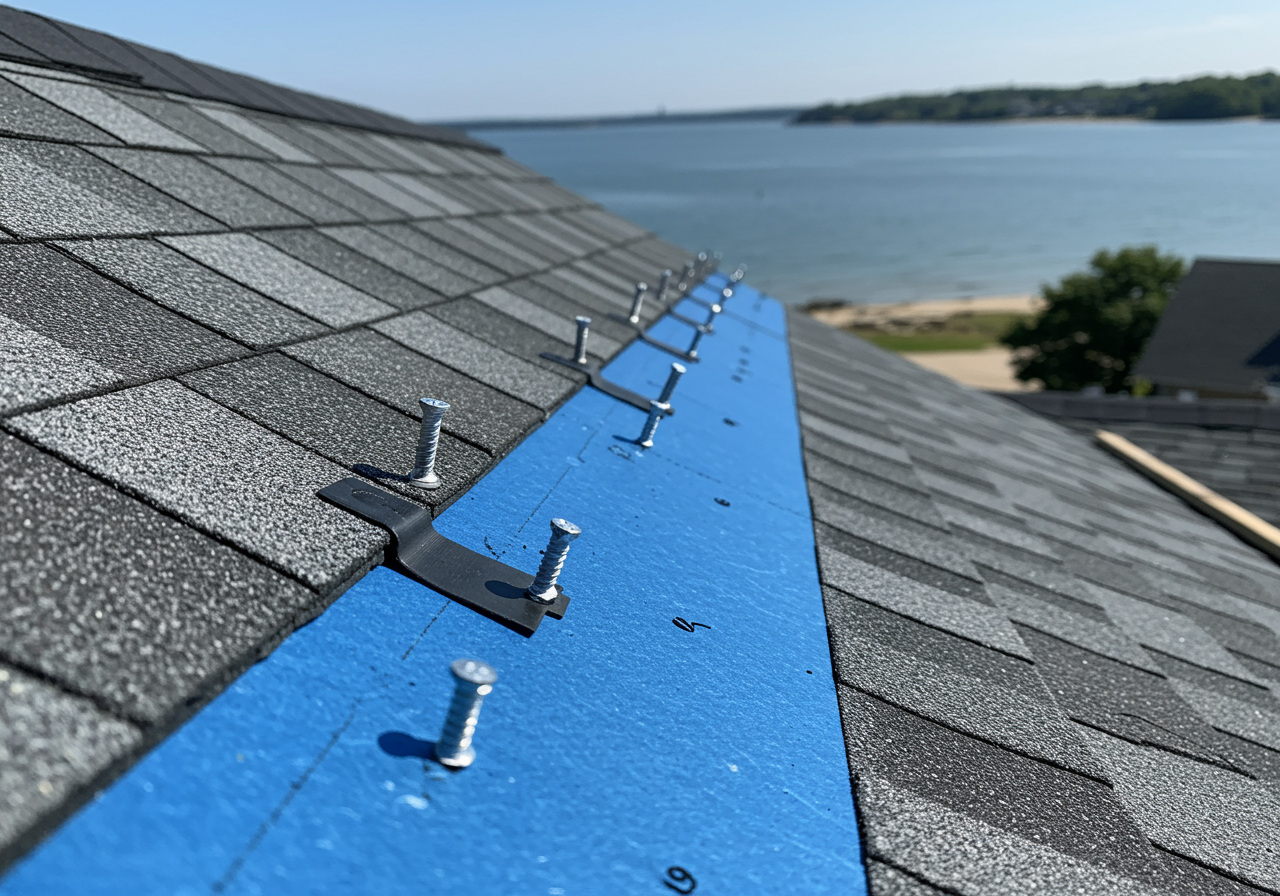
High-wind roofing installation in Old Lyme
Proper fastening patterns required for coastal Connecticut homes
Understanding the 135 MPH Benchmark
The "Ultimate Design Wind Speed" for Old Lyme is often cited at 135 mph. When I look back at my field notes from the storms of 2023, the roofs that failed weren't always the oldest ones—they were the ones where the installers ignored the high-wind fastening instructions. It's not just about the shingles; it's about the drip edge. Code requires the drip edge to be mechanically fastened every 12 inches. If your guy is spacing them every 24 inches, he's cutting corners that the March winds will eventually find.
The Ice Dam Defense: R905.1.2 and You
March in Old Lyme is a game of thermal gymnastics. The sun hits the roof, melts the snow, and the water runs down to the cold eaves where it freezes solid. This is the birth of the ice dam. Connecticut code is very specific about preventing the interior damage these dams cause.
I remember a colonial over on Shore Road that had water dripping through the light fixtures in the kitchen. The culprit? The previous roofer only ran one row of ice and water shield. Per CT code, you need this membrane to extend from the lowest eave edge to a point at least 24 inches inside the exterior wall line. In a town with deep overhangs like we have in Old Lyme, that often means two full courses of shield.
Why "Good Enough" Underlayment Fails
Standard felt paper is a relic of the past. For a roof to be code-compliant in our humid, coastal climate, the underlayment must meet ASTM D226 or D4869 standards. But beyond the letter of the law, I always recommend synthetic underlayment. It doesn't tea-bag or wrinkle when it gets hit by a sudden March rain shower mid-install.
Old Lyme Underlayment Performance
The "Two-Layer" Trap: To Tear Off or Overlap?
One of the most common questions I get at the general store is, "Noah, can I just shingle over my old roof?" Technically, the Connecticut State Building Code allows for two layers of asphalt shingles. However, just because you *can* doesn't mean you *should*—especially in New London County.
When you add a second layer, you're adding roughly 220 pounds per square (a 10x10 area) to your rafters. If we get a heavy, wet March snow—the kind that sticks to everything—that extra weight can push your structural limits. More importantly, you can't inspect the decking for rot if you don't strip the old shingles. Planning a full replacement allows a contractor to see if the plywood has been softened by decades of salt air.
The Decking Clause
Local Permit Requirements
Don't think you can skip the paperwork. The Old Lyme Building Department is diligent. A permit isn't just a tax; it's your paper trail. If you ever sell your home, the buyer's inspector will look for that closed permit. If it's missing, you'll be evaluating your repair options under much more stressful conditions. Also, Connecticut's home improvement laws are there to protect you, but they only work if you're playing by the rules of the permit system.
Ventilation: The Silent Code Requirement
The most ignored part of the roofing code is Section R806: Roof Ventilation. In the humid summers of the Connecticut River Valley, an unventilated attic is a slow-motion disaster. The code generally requires 1 square foot of net free ventilating area for every 150 square feet of attic floor space.
I've walked into attics in Old Lyme that felt like saunas because the ridge vents were installed without soffit intakes. That's a code violation, and it will bake your shingles from the inside out, voiding your 30-year warranty in about seven years.
"A roof without proper ventilation is like a human trying to run a marathon while holding their breath. It doesn't matter how good the shingles are; the system will eventually collapse."
Safety First: OSHA and the Shoreline
When you see a crew on a steep roof in Old Lyme, they should be tethered. Following OSHA's fall safety standards isn't just for the workers' protection—it protects you from liability. If a worker falls on your property and the contractor isn't following federal safety mandates, your homeowner's insurance might be entering a very grey area. Always ask to see their safety plan before they pitch the first ladder.
Did You Know?
In Connecticut, if your roof slope is greater than 4:12, specific underlayment lap requirements change to prevent wind-driven rain from backing up under the shingles.
Before you sign any dotted line, it's worth using a project cost estimator to see how these code requirements—like extra ice shield and high-wind nails—impact your bottom line. It's usually about 8-12% more than a "bare minimum" job, but it's the only way to sleep soundly when the March winds start howling through the salt marshes.
Need a roof that actually meets Old Lyme's tough coastal codes?
Get matched with a verified local contractor who knows the 135 mph wind requirements inside and out.
No credit card required • Free to use
Get Your Free Roof Quote
Enter your zip code to get started
FAQ

About Noah Knight
Verified ExpertNoah Knight is a Connecticut Weather & Climate Specialist who helps homeowners understand how New England's unique weather patterns affect their roofing systems. He combines meteorological knowledge with practical home maintenance advice.