Just last week, while grabbing coffee near the Berlin Turnpike, I ran into a homeowner who was livid because her "fixed-price" roofing project had just ballooned by $3,140. She lived right over by Elizabeth Green Elementary, and her contractor had conveniently "forgotten" to mention that the original quote didn't include the dumpster fees or the replacement of four sheets of water-damaged decking. It's a story I hear every March in Newington. As the winter frost finally exits our soil, homeowners rush to book contractors, and some companies use that urgency to slide through vague estimates that look great on paper but bleed your bank account dry by day three of the tear-off. If you are staring at a quote that feels suspiciously lean, let's pull back the curtain on where those dollars are hiding.
Key Takeaways
- Decking: Demand a written per-sheet price for plywood/OSB replacement before tear-off—not a blank check after the roof is open.
- Permits & dumpsters: Confirm Newington permit fees and landfill/tonnage charges appear as line items, not verbal promises.
- Flashing & ventilation: Reused metal and skipped NFA math void warranties and invite $2,000+ interior damage.
- Labor: A fixed-labor clause beats surprise ‘pitch’ or ‘layer’ surcharges from crews the sales rep never met.
The rotten wood shell game and your decking budget
The most common "gotcha" in the Newington roofing market involves the wood underneath your shingles. When a contractor walks your roof, they can guess at the condition of the plywood, but they don't truly know until the old materials are stripped. I've seen local quotes that look $1,500 cheaper than the competition simply because they don't include a "unit price" for decking replacement. They wait until your house is half-naked and then tell you it's $95 per sheet for OSB that costs them $18 at the local supply yard.
I always tell people to look for a specific line item that dictates the cost of plywood replacement per sheet. If it isn't there, you're giving the contractor a blank check. For those just stopping isolated leaks before they spread, this might not be a dealbreaker, but for a full tear-off, it's a financial minefield. I once helped a family on Main Street negotiate a "decking cap" into their contract, which saved them $700 when the crew discovered a soft spot near the chimney that "wasn't visible" during the initial inspection.
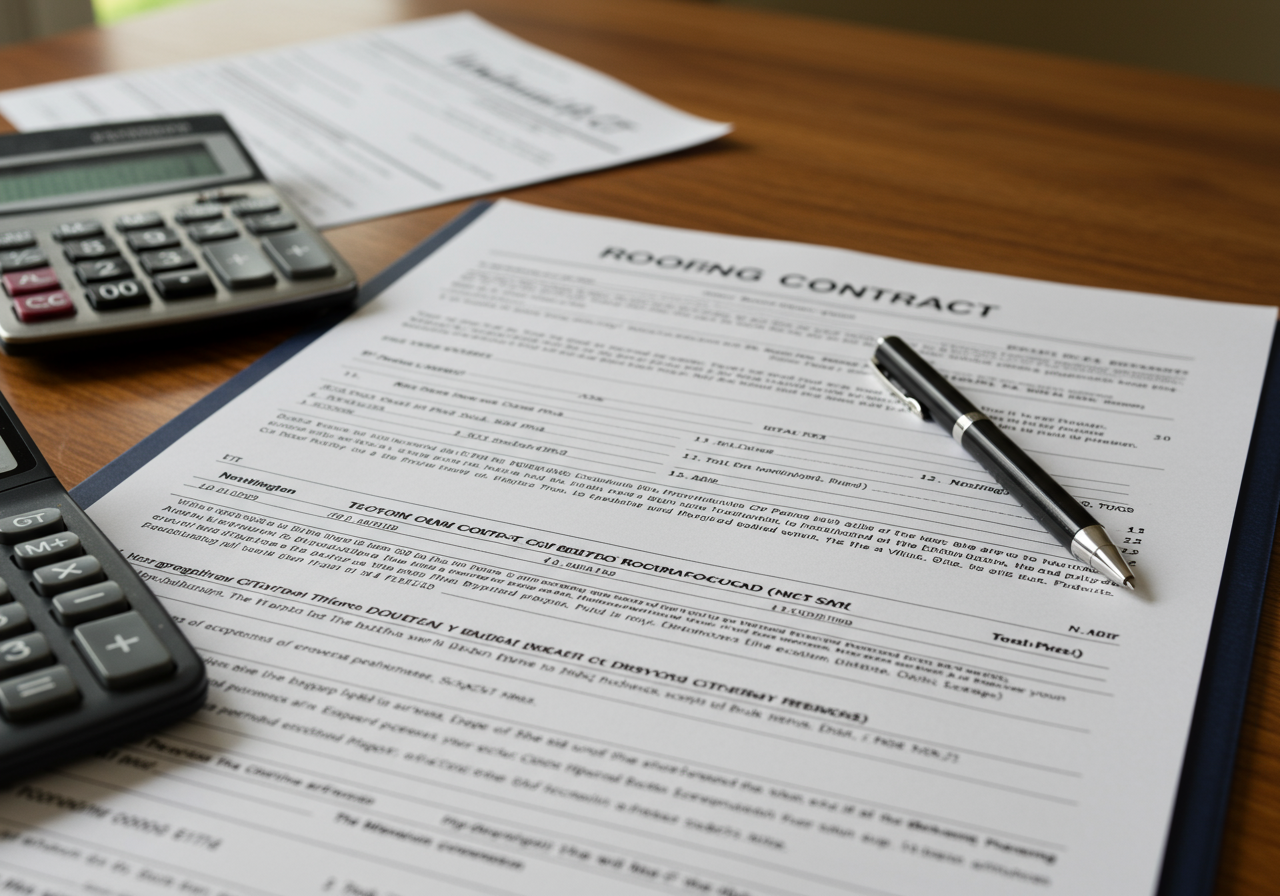
Line-item clarity beats sticker shock
Transparent Newington quotes spell out decking, disposal, and flashing before tear-off day.
Newington permit fees and the disposal disconnect
Did you know the Newington Building Department calculates permit fees based on the total cost of the job? If your contractor says, "Oh, don't worry about the permit, I'll take care of it," check to see if that $120 to $250 fee is actually in the written estimate. Some guys will try to skip the permit entirely to save time, but that leaves you—the homeowner—liable if the work isn't inspected to code.
Then there's the "disposal fee." I've seen estimates where the dumpster is listed, but the "tonnage overage" is hidden in the fine print. A standard Newington ranch roof can easily produce 3 to 4 tons of debris. If your quote only covers the first 2 tons, you're looking at an extra $450 in landfill fees that you didn't plan for. You should also look into potential savings; for instance, the IRS instructions for residential energy credits highlight how certain upgrades might offset your total investment, but you won't get those credits if your paperwork isn't airtight from the start.
Hidden fees: vague vs. transparent quotes
Illustrative line-item dollars for the same scope—how "extras" stack when they aren't priced upfront.
Vague quote 'extras'
Transparent quote (upfront)
Extra surprise cost per category
Difference when vague bids omit unit pricing (same illustrative scope)
The flashing shortcut that leads to April showers
March in Connecticut is famous for its "will it or won't it" rain patterns. If your roofer plans to "inspect and reuse" your existing flashing around the chimney or step-flashing against the siding, run the other way. Reusing old, bent metal is the primary reason new roofs fail within the first three years. Contractors do this because custom copper or aluminum flashing work is labor-intensive and requires a skilled hand, which eats into their profit margins.
When you are upgrading to a full roof system with new underlayment and metal, the flashing should be replaced, period. I remember a case in a Newington colonial where the roofer saved $600 by not replacing the valley flashing. Two years later, a heavy spring thaw caused a backup that ruined the homeowner's upstairs ceiling. It cost $2,400 to fix a problem that would have cost $600 to prevent. Don't let them tell you the old metal "looks fine." Metal fatigues, and nail holes from the previous roof don't just disappear.
"A quote that doesn't detail the specific brand and weight of the underlayment isn't a quote—it's a suggestion. In Newington, the difference between a standard felt and a high-performance synthetic can be the difference between a dry attic and a mold colony."
Ventilation math that most contractors fail
Many Newington homes, especially those built in the 1950s and 60s near the Wethersfield line, have woefully inadequate attic ventilation. A contractor might quote you for new shingles but fail to mention that your soffit vents are painted shut or that your ridge vent is undersized. They do this because fixing ventilation involves "extra" work like cutting into the eaves or installing baffles, which makes their bid look higher than the guy who just wants to "nail and sail."
However, if your roof isn't vented correctly, your shingle warranty is likely void from day one. According to Energy Star's cool roof guidance, proper airflow is essential for temperature regulation. Without it, your shingles will literally bake from the inside out during our humid CT summers. Ask your contractor to show you their "NFA" (Net Free Area) calculations. If they look at you like you're speaking Greek, they haven't done the math.
Did You Know?
Newington building codes require specific ice and water shield coverage—usually extending 24 inches inside the warm wall line—to prevent damage from the ice dams we often get in late winter.
Labor surge pricing and the subcontractor gap
Here is a reality check: the person who sells you the roof is rarely the person who installs it. Many companies in the Hartford area use subcontractors. There's nothing inherently wrong with that, but "hidden costs" often crawl in when the primary contractor hasn't secured a fixed rate with their crew. I've seen "labor surcharges" added to bills because the roof pitch was "steeper than anticipated" or because there were "extra layers" of shingles that weren't counted.
Lock in labor before you sign
Compare transparent numbers for Newington
See what verified labor and material baselines look like before you say yes.
No credit card required • Free to use
To avoid this, use a tool that relies on verified data. Our interactive roofing cost calculator helps you establish a baseline for labor and materials in Newington so you can spot a "low-ball" bid before it turns into a high-stress invoice. I once saw a quote for a house near Cedar Mountain that was $4,000 lower than every other bid. The catch? The labor wasn't insured, and the homeowner would have been on the hook for any injuries on site.
Negotiation scripts to lock in your final price
You don't need to be a jerk to get a fair deal, but you do need to be firm. When a contractor hands you a quote, don't just look at the bottom number. Use these specific phrases to smoke out hidden fees. Ask them: "Can you provide a written unit price for decking replacement, including labor?" or "Does this total include the Newington permit fee and all landfill tipping charges?" If they hesitate, they're planning to bill you later.
Also, ask about wind resistance. According to FEMA's fact sheet on sloped roof systems, specific nailing patterns matter in high-wind zones. In Newington, we get some nasty gusts coming off the ridges. If your contractor isn't planning for "six-nail" installation, they are cutting corners on labor time. Get every detail—from the brand of the drip edge to the specific type of starter shingles—in writing. It's the only way to ensure the price you see in March is the price you pay in April.
Get Your Free Roof Quote
Enter your zip code to get started
Frequently Asked Questions

About Dana Jackson
Verified ExpertDana Jackson is a Homeowner Advocate & Cost Analyst who helps Connecticut families navigate the financial aspects of roofing projects. She specializes in finding the best value and avoiding common pricing pitfalls.