
"Most homeowners think they're buying a roof, but if you live in a village like Essex, you're actually buying a legal agreement with the past. If you try to slap a 2026 architectural shingle on a 1780 Cape, the Historic District Commission won't just be annoyed—they'll be reaching for their legal pad."
Michael's right. Living in the “Best Small Town in America” comes with a specific set of financial and aesthetic responsibilities. As we hit April 2026, I'm seeing a surge of Essex homeowners finally addressing the wear and tear from a decade of erratic shoreline winters. But here's the thing: you can't just call any guy with a ladder and a truck. Historic roofing in Middlesex County is a high-stakes game where the wrong material choice can tank your property value by $30,000 or more in a single afternoon.
I've spent the last month reviewing line-item quotes for several properties near Main Street and the waterfront. The price gaps are staggering. While a standard suburban roof might run you a certain amount, a historically accurate restoration is a different beast entirely. We aren't just talking about keeping the rain out; we're talking about preservation, structural integrity, and navigating the HDC without losing your mind—or your life savings.
Key Takeaways
- HDC Compliance is Non-Negotiable: If you're within the Essex Historic District, material approval is your first hurdle before a single nail is pulled.
- Synthetic vs. Natural: High-end composites now offer a 50-year lifespan that rivals cedar shakes at a lower long-term maintenance cost.
- Hidden Structural Costs: Older Essex rafters often require reinforcement to handle the weight of modern slate or heavy-duty wood shakes.
- The "Shoreline Factor": Salt air and river moisture necessitate specific flashing materials like copper to prevent premature failure.
The Financial Friction of Living in a Landmark
Let's talk about the “Essex Tax.” It's not an official levy, but it's very real when you're sourcing materials for a home built before the steam engine was common. When I look at a quote for a historic restoration, I'm looking for three things: material authenticity, specialized labor, and “contingency math.”
Actually, let's look at a scenario. I recently helped a couple on Pratt Street who were quoted $22,400 for a “standard” roof and $58,900 for a historically accurate cedar shake replacement. That $36,500 gap is enough to make anyone's heart skip a beat. But when we dug into the line items, the cheaper quote didn't include the necessary lead-coated copper flashing or the specific venting required for a “hot roof” design common in 19th-century builds. If they'd gone cheap, they'd be replacing rotted plywood in eight years.
The reality is that authentic materials—true Atlantic White Cedar or Vermont Slate—are becoming harder to source. This scarcity drives up the “show me the receipt” cost. You aren't just paying for the wood; you're paying for the specialized crew that knows how to hand-split a course so it sits flush against a 200-year-old chimney.
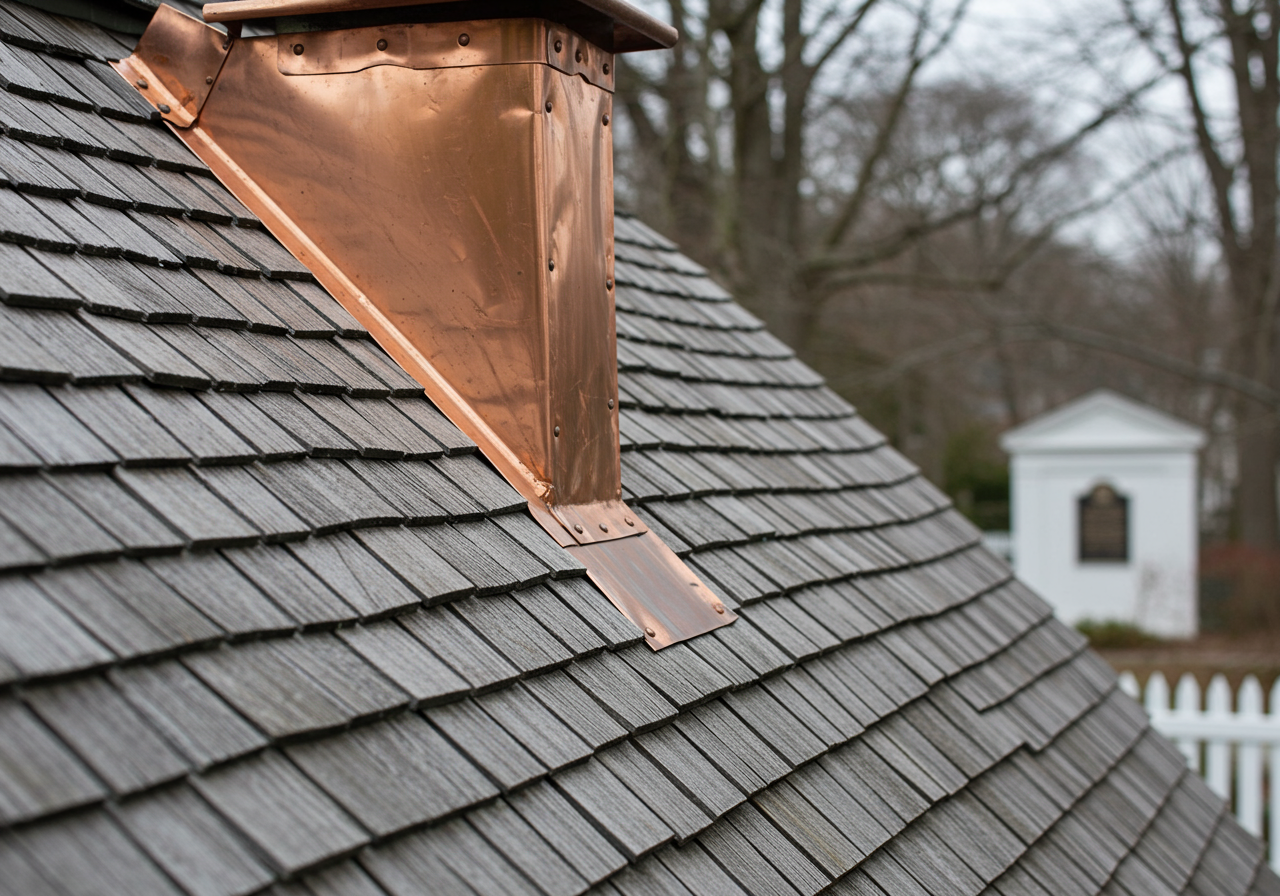
Historic Essex roofline and waterfront context
Authentic materials and HDC-approved alternatives both have to satisfy the village aesthetic—your quote should spell out how each layer gets there.
The “Historical Tax” on Materials
The raw cost of cedar has fluctuated wildly over the last three years. In April 2026, we're seeing premium Grade A Perfections retailing for nearly triple the price of high-end asphalt. But for an Essex colonial, the “alternative” isn't just ugly—it's a liability. If you ever plan to sell that house, a buyer looking in the $1.5M+ range will spot a “cheap” roof from the driveway. You're effectively spending money now to protect your equity later.
Labor Expertise: Why “Average” Isn't Enough
I always tell people: a roof is 30% material and 70% installation. In historic districts, that ratio shifts even further. You need a crew that understands “flashing” isn't just a piece of tin. It's an art form. Most standard contractors will plug your square footage into a calculator and spit out a number without studying the details. A restoration expert will look at your eaves, your rafter tails, and your crown molding before they even touch a calculator.
Navigating the Essex Historic District Commission (HDC) Maze
If you live in the village, the HDC is your silent partner. I've seen homeowners try to “ask for forgiveness later” after installing unauthorized synthetic slate. Don't do that. The HDC has the power to make you tear it all off.
Before you sign a contract, you need a “Certificate of Appropriateness.” This involves a public hearing where you present your materials. But here's a tip I've picked up after years of analyzing these disputes: don't just bring a brochure. Bring a physical sample of the shingle and a photo of a similar home in town that used the same material. It's much harder for a board to say “no” to a proven aesthetic.
"The HDC isn't there to make your life difficult; they're there to ensure Essex still looks like Essex in 2076. The trick is showing them that modern materials can respect 18th-century bones."
Approved Materials vs. Modern Performance
The International Code Council model codes provide the baseline for safety, but the HDC provides the baseline for beauty. Sometimes these two clash. For instance, modern building codes might require ridge vents that didn't exist in 1790. You'll need a contractor who can install “hidden” venting systems that satisfy the building inspector without offending the preservationists.
The Evolution of Essex Standards
Lately, the commission has become more open to high-quality synthetics. Brands like DaVinci or Bravo have created molds from actual 100-year-old slate tiles. From the sidewalk, you cannot tell the difference. If you're looking to plan a full replacement with line-item clarity, these “new-age” historic materials are often the smartest play for your wallet.
Weighing Authentic Historic Roofing
Pros
- Authentic aesthetic that matches the village streetscape.
- Strong resale signal for buyers comparing $1.5M+ inventory.
- Smoother HDC path when materials match precedent homes.
- Long-term durability when detailing (flashing, ventilation) is done right.
Cons
- High initial investment vs. standard suburban packages.
- Specialized labor crews command premium hourly efficiency.
- Longer project timelines for samples, hearings, and inspections.
- Strict material requirements that limit off-the-shelf shortcuts.
Wood Cedar Shakes vs. Synthetic Alternatives
This is the big debate in the Essex shoreline community right now. On one hand, you have the purists who want the silver-gray weathering of real cedar. On the other, you have pragmatic homeowners who are tired of power-washing moss off their roof every three years.
I've looked at the maintenance logs for both. A real wood roof in the damp, salty air of the Connecticut River valley needs a lot of love. If you don't treat it, you'll get 15-20 years out of it. If you use a high-end synthetic, you're looking at 50 years with zero maintenance.
Relative Service Life in Essex Conditions
Illustrative years before major replacement; maintenance and ventilation change real-world results.
The $14,000 Gap: Real Cedar Costs
When you factor in the cost of fire-retardant treatments and the specialized “breather” mats required under real wood, the price climbs quickly. I recently saw a quote where the “underlayment system” alone for a cedar roof was $8,400. That's more than some people pay for an entire asphalt roof. But without that airflow, the wood rots from the bottom up.
The Case for Composite
If you're skeptical about “plastic” roofs, I get it. Ten years ago, they looked like Lego pieces. But the 2026 versions are incredible. They have the variegated colors, the rough-hewn edges, and—most importantly—they don't absorb water. For a home near the Essex Yacht Club, where the humidity is constant, synthetic is often the more protective choice.
The Hidden Infrastructure: Rafters, Weight, and Ventilation
Here is where I get into the “boring” stuff that actually saves you $50,000. Most Essex homes have “true” lumber rafters—actual 2x8s or 2x10s from a century ago. Over time, these can sag or bow. If you decide you want the “Prestige” of a real slate roof, you might be adding 10,000 pounds of weight to your house.
I once worked with a homeowner near South Main who wanted to switch from wood to slate. We had to bring in a structural engineer who found that the roof would have literally pancaked the second floor within two years. We ended up stabilizing the existing structure with a targeted repair plan before any shingles were even ordered.
Why Slate Isn't Always an Option
Slate is the “forever” roof, but it's heavy. If your quote doesn't include a structural assessment, fire your contractor. You need to know if your ridge beam can handle the load. If not, you're looking at an additional $12,000 to $18,000 in “sistering” rafters and reinforcing the load-bearing walls.
Copper Flashing: The Lifetime Investment
In Essex, we don't use aluminum flashing on historic homes. It's like wearing a tuxedo with sneakers. We use copper. Specifically, 16-ounce or 20-ounce cold-rolled copper. It starts bright, turns brown, and eventually reaches that beautiful sea-foam green patina.
Review the IRS instructions for Form 5695 if you're considering “cool roof” technologies or solar-integrated shingles, though many historic looks don't qualify for the big energy credits unless they meet very specific reflectivity standards. For material context, the National Park Service brief on roofing materials is a useful cross-check when you're comparing what “authentic” really means on older wood frames.
Initial HDC Consultation & Material Approval
Secure board feedback and written approval paths before you order materials or pull permits.
Structural Integrity Audit (Rafter Load Test)
Verify whether slate or heavy shakes are structurally realistic for your frame and ridge.
Tear-off & Decking Inspection for 'Hidden' Rot
Expose the deck, photograph damage, and lock in per-sheet plywood and per-foot rafter repair rates.
Installation of Breathable Underlayment & Copper Flashing
Specify brands, gauges, and valley details—no mystery metals in salt-air exposure zones.
Final Historic District Inspection & Warranty Sign-off
Close the loop with HDC documentation and a warranty that covers workmanship and materials.
The Negotiation Script: Vetting an Essex Restoration Roofer
Look, if a contractor gives you a one-page quote that just says “Replace roof with cedar,” run away. That is a recipe for a lawsuit. A real historic roofing quote should look like a grocery list from a very expensive chef.
Here is what you say when you're interviewing: “I need to see the line-item cost for the copper valley flashing, the specific brand of breathable underlayment you're using, and your plan for attic ventilation that doesn't involve visible plastic ridge vents.”
If they stumble, they aren't the right crew for an Essex landmark.
Line-Item Analysis: What to Look For
I want to see the permit fees as their own line. I want to see the “dumpster and disposal” fees. And most importantly, I want to see a “rotted wood” clause. In a 200-year-old home, you will find rot. A good contractor will tell you upfront: “It's $95 per sheet of plywood or $12 per linear foot of rafter repair.” If they hide that, they'll hit you with a “surprise” $5,000 bill halfway through the project.
Insurance and Liability for Shoreline Historic Homes
Make sure their insurance covers “Open Roof” damage. April in Connecticut is notorious for sudden afternoon thunderstorms. If they have your roof stripped and a cell rolls off the river, you want to know their policy covers your 19th-century hardwood floors. Ask for the “Certificate of Insurance” (COI) sent directly from their agent, not a photocopy they have in their glovebox.
Don't guess on your historic restoration
Get an instant, line-item estimate from contractors who actually understand Essex building codes.
No credit card required • Free to use
Summary: Protecting the Essex Aesthetic
At the end of the day, a roof in Essex is more than a utility—it's a stewardship. Whether you choose the timeless (but high-maintenance) beauty of real cedar or the “set it and forget it” reliability of modern composites, the key is transparency in the math.
Don't let a contractor rush you into a “spring special” deal. Historic homes require a slower, more methodical approach. Take the time to get the materials right, get the HDC on your side, and make sure every copper nail is accounted for. Your home has stood for a century or two; the roof you put on it today should ensure it stands for at least one more.
Get Your Free Roof Quote
Enter your zip code to get started