Key Takeaways
- Hartford HOAs often mandate specific 'architectural grade' shingles that can increase material costs by 18% to 22% compared to standard builds.
- Approval timelines in Hartford County communities typically range from 14 to 45 days; starting your paperwork in February is essential for a spring install.
- Failure to match the 'neighborhood aesthetic' can result in remediation fines exceeding $5,400 or a full 'tear-off and redo' order.
- Local Hartford bylaws may require specific ice and water shield coverage that exceeds standard CT building codes due to historic snow load data.
February in Hartford usually means we're all staring at the snow piling up on the West End roofs, wondering if the ice dams are winning this year. It's the season when I see homeowners start sketching out their spring home improvements, but if you live in a managed community—whether it's a townhome near Elizabeth Park or a detached HOA in the North End—your "to-do" list has an extra, expensive layer of red tape.
I've spent a lot of time reviewing line-item estimates where the homeowner thought they were looking at a $14,000 project, only to realize their HOA's specific shingle requirement tacked on an extra $3,200 in "premium material" costs. You aren't just buying a roof; you're buying permission to stay in your neighbors' good graces. In this guide, I'm pulling back the curtain on why Hartford HOAs operate the way they do and how you can protect your bank account from "aesthetic" surcharges.
1. The Uniformity Tax in Hartford Neighborhoods
When you live in an HOA, you've essentially signed away your right to be "unique." In many Hartford County planned developments, the Board of Directors views the roof as a collective asset for property values, not just your personal weather shield. This "uniformity tax" is the most common reason for budget overruns. I recently reviewed a contract for a homeowner in a cluster of homes near Blue Hills who was told their chosen "charcoal" shingle was too dark. The board required a specific "driftwood" blend from a single manufacturer.
The price difference wasn't just the shingle; it was the availability. When a board mandates one specific brand and color, your contractor loses the ability to shop around for the best deal. You end up paying whatever the local distributor is charging that week. Always ask the board: "Is this a specific product requirement, or an 'equal-to' aesthetic requirement?" Getting that distinction in writing can save you about $1,150 on an average-sized roof.
Dana's Pro Tip
2. Material Mandates: Beyond the 3-Tab Shingle
You won't find many 3-tab shingles in modern Hartford HOAs. Most boards now require "architectural" or "laminated" shingles. While these are better for our Connecticut winters, the board's reasoning is usually about the "shadow line"—that 3D look that makes a house look more expensive from the curb.
The reality is that these shingles weigh more and cost more to ship. If your HOA demands a heavy-weight designer shingle, you're looking at a material cost of roughly $165 per square (a 10x10 area), compared to the $110 you might pay for a standard architectural shingle. I've seen boards go as far as requiring metal accents on valleys or specific copper flashing that can add $2,400 to a standard job. When you upgrade to a new roof system in a managed community, the "bells and whistles" aren't optional—they're the law of the land.
Estimated Material Costs: Standard vs. HOA Mandated (Hartford)
3. The Hidden Costs of the Approval Process
Nobody tells you that getting a "yes" from your board can cost money before a single nail is driven. In some of the more "hands-on" Hartford associations, you might be required to submit a professional rendering or even pay an "administrative review fee." I've seen these fees range from $75 to $350.
Then there's the deposit. Some HOAs require a "construction damage deposit" of $1,000 or more to cover potential ruts in the common-area grass or damage to shared curbs. If your contractor isn't careful with their dump trailer, you're the one who loses that cash. Always make sure your contractor's contract explicitly states they are responsible for any HOA-levied fines regarding site cleanliness or common area damage. According to FEMA's hurricane mitigation guide, proper attachment is key for storm safety, but your HOA cares just as much about where the contractor parks their truck.
4. Hartford Building Codes vs. HOA Standards
Here is where it gets tricky: Hartford's municipal building code is the floor, but your HOA is the ceiling. For example, the City of Hartford might require ice and water shield two feet past the interior wall line. However, an HOA might demand it go six feet up because they've had a history of litigation over leaks in shared-wall units.
I always tell people: don't let a contractor tell you "the code says X" as a reason to ignore the HOA. The HOA can be stricter than the city, but they can't be more lenient. If your HOA hasn't updated its roofing specs since 1998, you might actually be looking at a situation where you need to estimate your project cost based on modern standards that the board hasn't even considered yet. I've had to help homeowners explain to their boards that the "cool roof" tech recommended by the Energy Star guidelines is actually a better long-term investment for the community's energy bills, even if the color looks slightly different than the old shingles.
"The biggest mistake Hartford homeowners make is assuming the contractor knows the HOA rules. The contractor knows the building code; the homeowner owns the bylaws. If the two clash, the homeowner pays the fine."
5. Contractor Compliance and the Hartford Bond
Your HOA likely requires "Proof of Insurance," but in Hartford, that's just the start. Many local boards now require a specific "Performance Bond" or a higher tier of liability insurance (often $2 million+) because the homes are so close together. If a fire starts on your roof during a torch-down application in a townhome complex, it's not just your house at risk.
When you are looking for vetted roof repair services, you need to ask if they have experience working with "managed properties." These crews know they can't start at 6:00 AM because of noise ordinances, and they know they can't leave a dumpster in the middle of a shared cul-de-sac overnight. I once saw a homeowner get fined $150 per day because their contractor left a pile of debris on a "common element" sidewalk for three days.
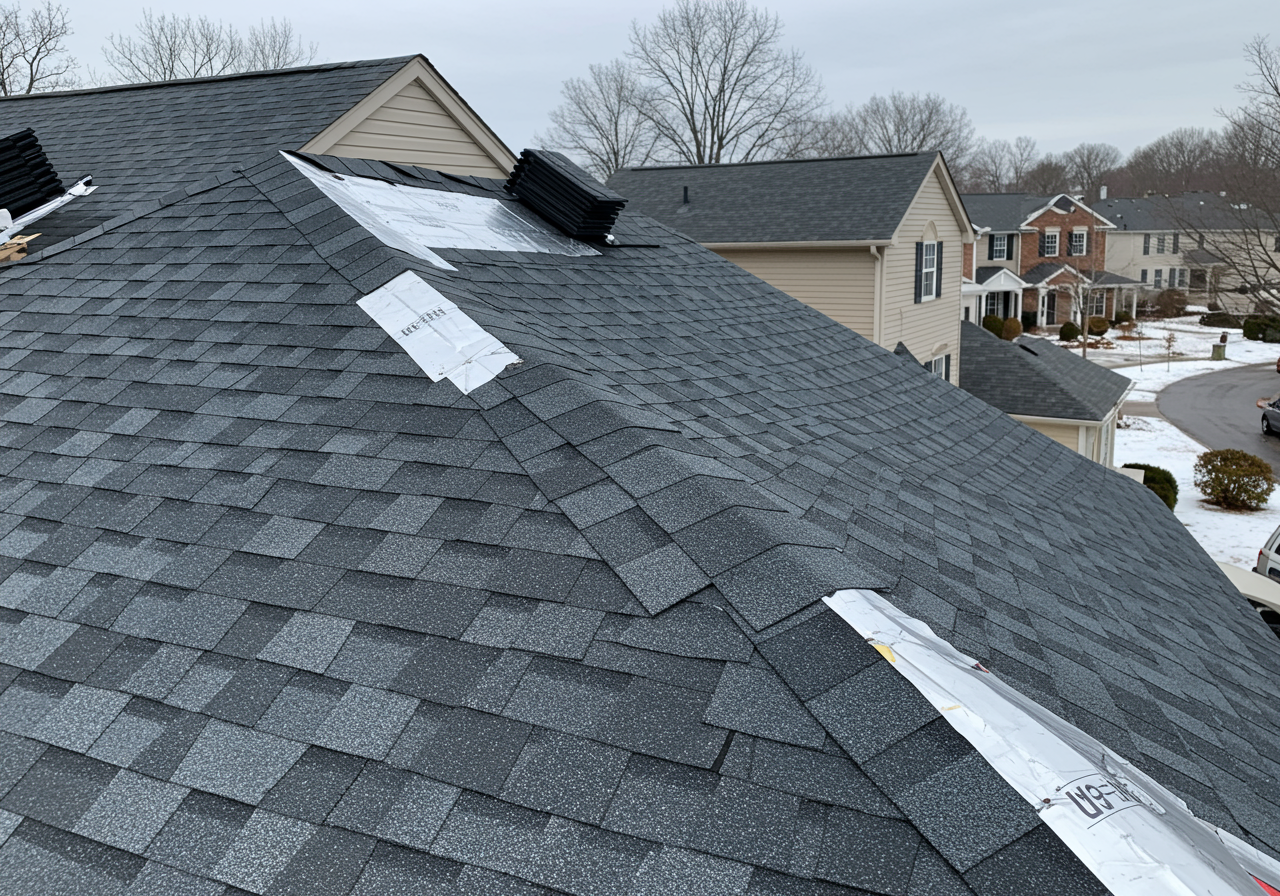
Professional Roofing Crew in Hartford
Managed communities in Hartford require strict adherence to both safety codes and aesthetic bylaws.
6. How to Negotiate with Your HOA Board
If you think the board's material requirement is ridiculous—say they want a wood shake roof that will cost you $35,000—you can fight back with data. Don't just complain; show the math.
I suggest a "Cost-Benefit Packet." Include:
Three Quotes
Show the price difference between their 'mandated' material and a modern, safer alternative.
Fire Rating Comparisons
HOAs love lower insurance premiums for the whole complex.
Material Sample
Show them the proposed material so they can see the color in the Hartford sun, not just on a computer screen.
I helped a family near Wethersfield Ave convince their board to move from cedar shakes to a high-end synthetic. We showed that the synthetic had a better wind rating and would lower the master insurance policy's risk profile. It took two meetings, but it saved the homeowner about $12,700 over the life of the roof.
Never Start Work Without Written Approval
7. Avoiding the Post-Installation Nightmare
The job isn't done when the shingles are on. Most Hartford HOAs require a "Final Inspection" by the board or a property manager. They are looking for things your city inspector doesn't care about: Does the drip edge color match the gutters? Are the vent pipes painted to blend in with the shingles?
I've seen a homeowner forced to pay a painter $800 to climb onto a brand-new roof just to spray-paint white PVC pipes to match "weathered wood" shingles. It sounds petty because it is, but it's part of the contract you signed when you bought the place. Before you make the final payment to your roofer, walk the perimeter with the HOA's checklist in hand. Make sure every "aesthetic" box is checked, or you'll be chasing that contractor to come back and paint a pipe while the HOA holds your $1,000 deposit hostage.
Don't let HOA red tape inflate your roofing bill
Get an instant, transparent estimate that accounts for Hartford's specific requirements today.
No credit card required • Free to use
I know it feels like the deck is stacked against you when you're dealing with a board, but remember: you're a member of that association. You have the right to see the "math" behind their decisions. Keep your records organized, get your approvals in writing, and don't let a "February planning session" turn into a "May legal battle." Hartford is a beautiful place to live, and with a little bit of prep, your new roof can be a part of that without breaking your bank account.
Get Your Free Roof Quote
Enter your zip code to get started
FAQ

About Dana Jackson
Verified ExpertDana Jackson is a Homeowner Advocate & Cost Analyst who helps Connecticut families navigate the financial aspects of roofing projects. She specializes in finding the best value and avoiding common pricing pitfalls.