If you took a walk down Pennywise Lane today, you'd feel that unmistakable damp chill. It's 38°F, a light rain is falling, and that 87% humidity is doing more than just making your coat feel heavy—it's actively testing every seal and shingle on your roof. For many of my neighbors here in Old Saybrook, this is the exact moment the "Best Roofing Contractor" search begins. You see a drip, you grab your phone, and you type those three little words into Google.
But here is the reality that most national home improvement blogs won't tell you: the "best" contractor on a search engine is often just the one with the biggest marketing budget, not the one who knows how the Long Island Sound breeze tries to lift the flashing off a colonial on North Cove Road. I've seen too many well-meaning homeowners in our corner of Middlesex County fall into the same traps, thinking they've found a pro when they've actually just found a great salesperson.
The mistake isn't wanting the best; the mistake is how we define it in a coastal town with unique architectural demands and a climate that eats standard materials for breakfast. We need to talk about why the search for a roofer goes sideways and how you can spot the red flags before the first bundle of shingles hits your driveway.
Key Takeaways
- National 'top 10' lists are often pay-to-play directories that ignore local shoreline requirements.
- Coastal Old Saybrook requires 120-130 mph wind-rated materials, not standard 3-tab shingles.
- Salt air corrosion can destroy cheap metal flashing in less than 7 years near the water.
- Comparing quotes without understanding scope of work leads to costly mid-project surprises.
- The cheapest bid is almost always the most expensive in the long run.
The "National Directory" Trap and the Local Shoreline Reality
The first error I see constantly is trusting those "Top 10" lists that pop up on the first page of your search results. These lists are rarely written by anyone who has ever set foot in Old Saybrook. They are often "pay-to-play" directories where contractors buy their way into the rankings. When you're looking for the best roofing contractors in Old Saybrook, you aren't just looking for someone who can swing a hammer—you're looking for someone who knows the specific building codes for the Connecticut shoreline.
Did You Know?
Old Saybrook falls within a high-wind zone where roofing installations must often meet 120-130 mph wind speed ratings, a much higher standard than homes just 20 miles inland.
I remember helping a friend near Saybrook Point who hired a "top-rated" firm from an online list. The crew was from out of state and used standard 3-tab shingles with a basic nailing pattern. Two winters later, a standard Nor'easter blew half the ridge caps into the neighbor's yard. They hadn't accounted for the wind uplift that we deal with every single February.
The "best" roofer for us is someone who treats your roof as a structural shield, not just a cosmetic lid. They should be able to talk to you about starter strips and six-nail patterns without looking at a manual. If they don't mention the wind zone requirements for Middlesex County during the first five minutes of your conversation, they aren't the "best" for your home.
Sheri's Tip
Ignoring the Coastal Micro-Climate and Salt Air Corrosion
The light rain falling right now at 38°F is a reminder of our "freeze-thaw" cycle. But there's a hidden enemy in Old Saybrook that homeowners often forget to discuss with their contractors: the salt. If you live anywhere near the water, that salt air is a silent killer for cheap metal components.
A common error is choosing a contractor who uses standard galvanized steel flashing and fasteners. On a home in the middle of the state, that might last 30 years. Here? You'll see rust streaks bleeding down your beautiful white trim in less than seven. When I renovated my own place, I insisted on copper or high-grade stainless steel for the chimney flashing. It cost about $1,450 more upfront, but I won't be replacing it for the rest of my life.
Longevity of Flashing Materials in Coastal Old Saybrook
According to FEMA's hurricane mitigation guide, proper roof attachment and material selection are the difference between a minor repair and a total loss during a coastal storm. If your "best" roofer isn't talking about salt-resistant coatings or the specific gauge of the metal they're using, they are setting you up for a rust-stained headache.
Furthermore, with our current 87% humidity, moss and algae thrive on the shaded North-facing slopes of our Old Saybrook roofs. I always tell homeowners to look for shingles with copper-infused granules (often marketed as "StreakFighter" or "StainGuard"). It's a small detail that keeps your curb appeal high and prevents you from having to power wash your roof every three years—which, by the way, is a great way to ruin your shingles.
The Vetting Vacuum: Why Three Quotes Aren't Enough
We've all heard the advice: "Get three quotes." But the error isn't in the number of quotes; it's in the lack of depth in the vetting process. A common mistake is comparing the bottom-line number without looking at the "scope of work."
One contractor might quote you $12,800 while another quotes $18,500. The $12,800 guy is likely planning to "roof over" your existing shingles, while the $18,500 professional is planning a full tear-off, replacing rotted plywood decking, and installing a modern ventilation system. In the roofing world, the cheapest bid is almost always the most expensive one in the long run.
Standard Quote vs. Shoreline-Ready Quote
| Feature | The 'Budget' Bid | The Shoreline Expert |
|---|---|---|
| Full Tear-off | ||
| Stainless Steel Fasteners | ||
| High-Wind Shingle Warranty | ||
| Ridge Vent Optimization | ||
| Local Permit Handling |
The reality is that finding a contractor who actually shows up and provides a detailed, line-itemed estimate is half the battle. When you see those line items, look for things like "ice and water shield" (required by CT code) and "drip edge." If those aren't there, the roofer is cutting corners to make their price look better.
I once worked with a couple in the Fenwick area who were convinced they'd found a "steal." The contractor didn't mention that their quote excluded the cost of replacing damaged decking. When the shingles came off and the rot was revealed (a common occurrence in our damp 87% humidity environment), the price jumped by $4,200 mid-job. They had no leverage because they hadn't used a vetted matching service to ensure they were dealing with a transparent professional from the start.
Design Disconnects: The Curb Appeal Blunder
As a home improvement editor, this is where I get a little passionate. Your roof is roughly 40% of your home's visible exterior. A massive error I see in Old Saybrook is homeowners choosing a shingle color or style that completely ignores the neighborhood context.
We have a beautiful mix of historic Colonials, shingle-style cottages, and modern coastal homes. Putting a stark, jet-black architectural shingle on a soft gray weathered-wood cottage near the water can look like a heavy hat on a delicate frame. I always suggest looking at how the roof meets the sky. In the light rain and gray light we have today, a "Driftwood" or "Weathered Wood" color palette often looks much more natural and high-end than a solid black or red.
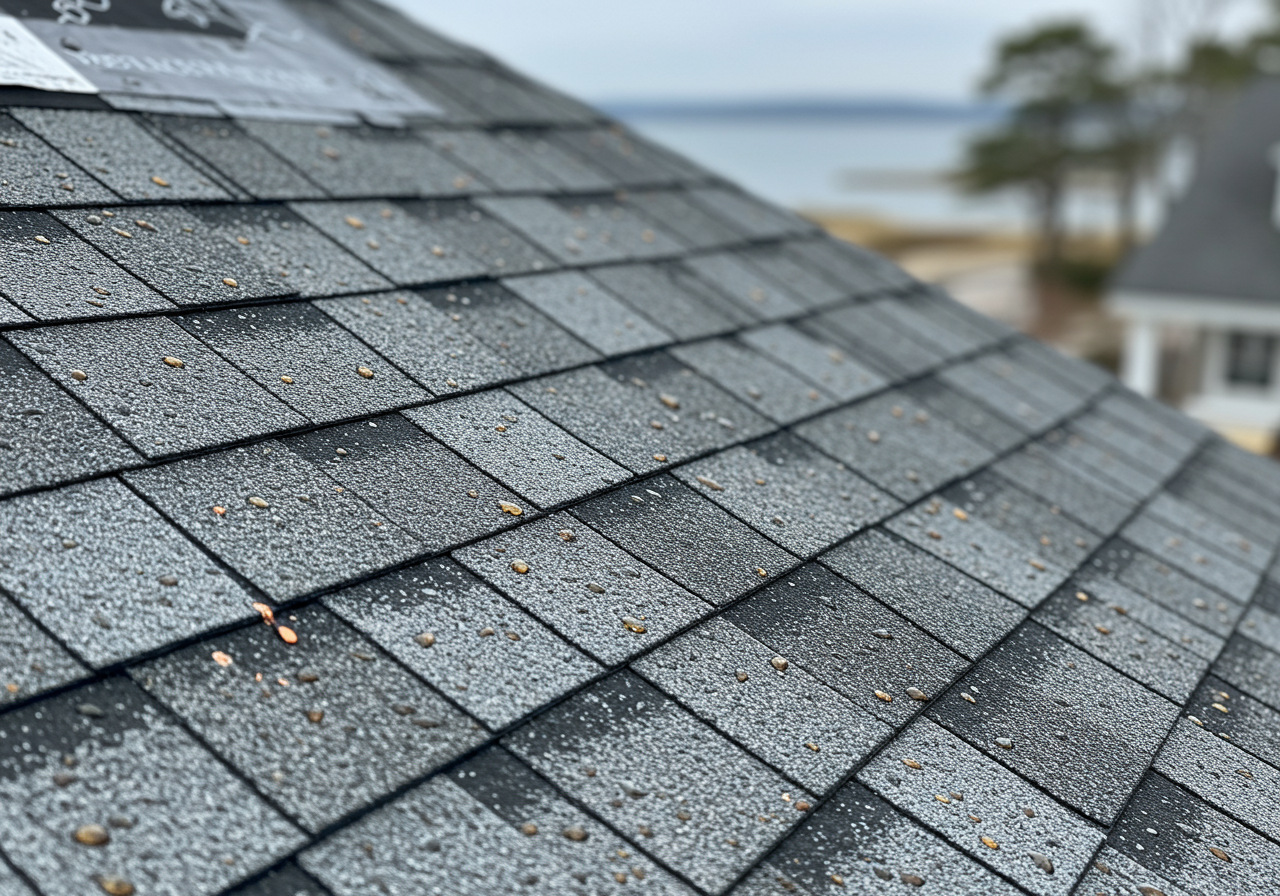
Coastal Shingle Integration
Architectural shingles in 'Weathered Wood' blend perfectly with the muted tones and natural light of the Connecticut shoreline.
Beyond color, there's the "Cool Roof" factor. Research from the EPA on heat islands shows that reflective roofing can significantly lower cooling costs. Even in a town like ours where winters are cold, our humid summers can send AC bills skyrocketing. Choosing a shingle that reflects UV rays while maintaining that classic New England aesthetic is the hallmark of a "best" roofer.
If you're dealing with a sudden issue because of today's rain, don't let the design side fall by the wayside in your rush. Even for emergency roofing repairs, you should ensure the replacement materials match the existing texture and "heft" of your roofline. A patch that stands out is a permanent scar on your home's value.
The Warranty and Financing Illusion
The final error is a two-parter: misunderstanding warranties and ignoring the "whole-house" approach. Many contractors will brag about a "50-year warranty." But if you read the fine print, that usually only covers the materials—and only if they were installed perfectly according to the manufacturer's 40-page manual. If the "best" roofer uses the wrong nails or messes up the attic ventilation, that warranty is as useful as a screen door on a submarine.
A real pro will offer a "workmanship warranty" backed by the manufacturer. This means if the roof leaks in 10 years because of an installation error, the manufacturer pays for the repair. This is the gold standard in Old Saybrook roofing.
Also, don't forget what's happening under the roof. The Department of Energy's insulation guide reminds us that a roof is only as good as the ventilation beneath it. I've seen brand-new, $20,000 roofs fail in five years because the contractor didn't fix the clogged soffit vents or insufficient ridge venting. The trapped heat and moisture "cook" the shingles from the inside out.
Verify the contractor's Connecticut License (HIC) and coastal-specific insurance.
Check their Home Improvement Contractor license status and ensure they carry wind damage coverage specific to coastal zones.
Request a 'Shoreline-Specific' materials list including stainless steel fasteners.
Ask for a detailed breakdown showing salt-resistant materials, high-wind rated shingles, and proper flashing specifications.
Inspect attic ventilation to ensure the new roof can 'breathe' in 87% humidity.
A professional should check your soffit vents, ridge venting, and attic insulation before quoting the job.
Get a workmanship warranty in writing, not just a materials warranty.
The warranty should cover installation errors, not just material defects, and be backed by the manufacturer.
Walk the perimeter with the contractor to discuss landscaping protection during tear-off.
Protect your gardens, decks, and outdoor furniture from falling debris and ensure cleanup is included in the contract.
Choosing Your Next Steps Wisely
Finding the right contractor doesn't have to be a full-time job. The goal is to move past the generic "best" lists and find the specific pro who understands the Middlesex County shoreline. Whether you're looking to boost your curb appeal with a new architectural shingle or you're bracing for the next big storm, start by asking the right questions about wind ratings, salt-resistant materials, and attic airflow.
Get Your Free Roof Quote
Enter your zip code to get started
The reality is that a roof is more than just a price tag; it's a conversation with your neighborhood and a shield for your family. Don't settle for the first name that pops up. Take the time to vet, compare, and look for the details that matter in our unique coastal climate.
FAQ

About Sheri Wilde
Verified ExpertSheri Wilde is a Home Improvement Editor with a background in interior design and sustainable living. She helps Connecticut homeowners make informed decisions about their biggest investments.