
Key Takeaways
- 32% of heat loss occurs through poorly insulated attics in Cromwell homes.
- Proper ventilation prevents moisture buildup that reduces insulation effectiveness by 40%.
- Ice dams are a symptom of heat loss—fixing the thermal envelope prevents both leaks and wasted energy.
- An energy-smart roof upgrade pays for itself in less than 5 years through reduced heating costs.
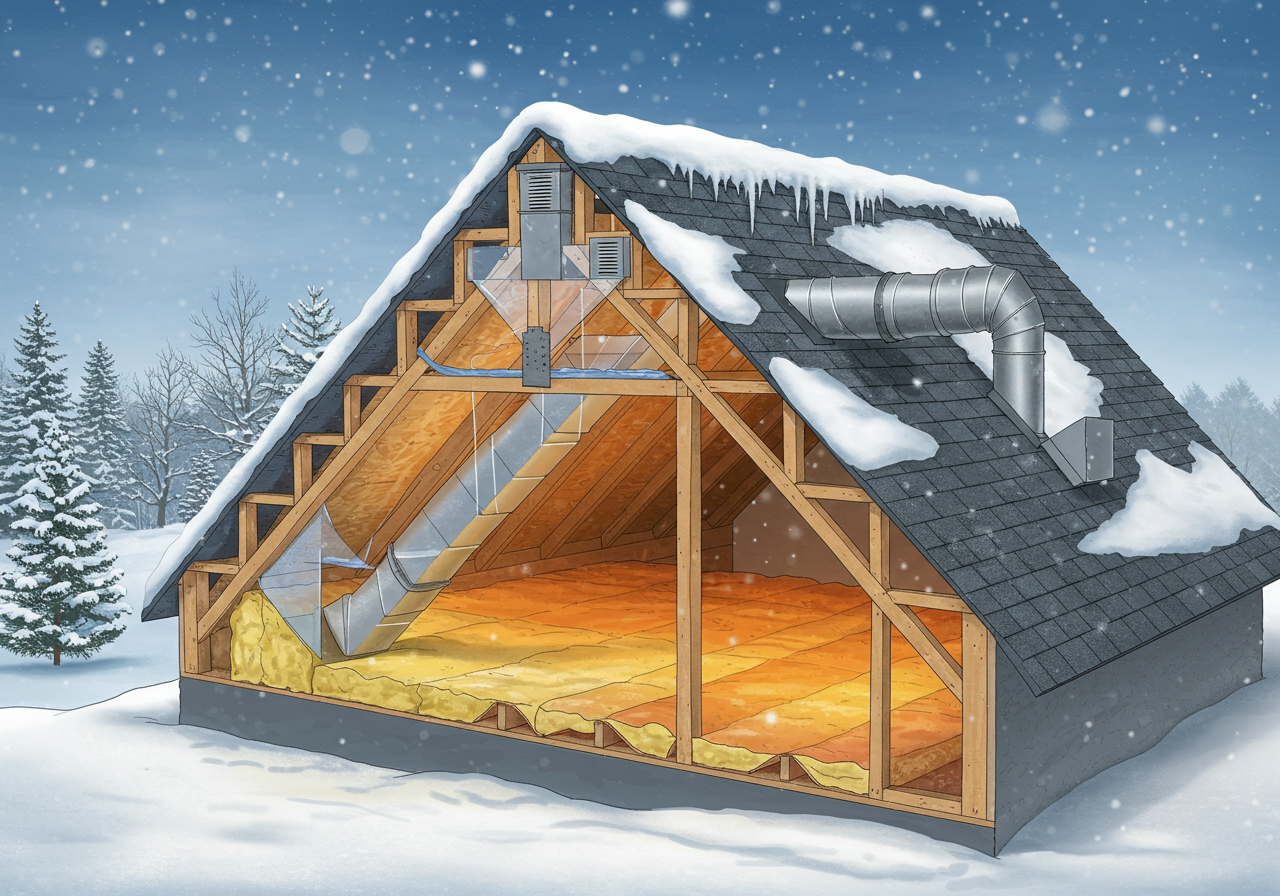
Energy-efficient roofing system in Cromwell, Connecticut
Proper insulation, ventilation, and high-performance underlayments create a complete thermal envelope that keeps heat inside your home.
Have you ever wondered why your heating bill in Cromwell stays stubbornly high even though you've dialed back the thermostat to 67 degrees? It's a common frustration I hear when I'm out near the TPC River Highlands area—homeowners assume their furnace is the culprit, but the reality is often hovering right over their heads. If your roof isn't working as a complete thermal envelope, you're essentially paying to heat the Middlesex County sky.
Here's the thing: a roof isn't just a rain shield. In a climate like ours, it's a critical component of your home's HVAC strategy. I've spent years looking at thermal imaging of local homes, and the amount of "bleeding" heat we see in January is staggering. When we talk about reducing heating costs, we aren't just talking about thick shingles; we're talking about a balanced system of insulation, ventilation, and high-performance underlayments that keep the BTU's where they belong—inside your living room.
The Thermal Escape: Why Cromwell Homes Lose Heat
The physics is simple but the consequences are expensive: heat rises. In many of the older Colonials and Cape-style homes we see in Cromwell, the attic serves as a giant chimney. If your attic floor isn't sealed and insulated correctly, that expensive warm air your furnace just produced travels straight through the ceiling and out the roof. I once inspected a property near Main Street where the homeowner had R-19 insulation—which was standard back in the day—but in 2026, that's like wearing a windbreaker in a nor'easter.
But it isn't just about the insulation depth. Air bypasses—small gaps around recessed lights, plumbing stacks, and chimney flues—can act like a vacuum, pulling conditioned air into the attic. I've documented cases where fixing these minor gaps saved homeowners more on their monthly Eversource bill than replacing the actual furnace. According to EPA data on cool roofs and energy efficiency, the synergy between reflective materials and thermal barriers is what actually moves the needle on your utility costs.
The Ventilation Paradox: Why Your Roof Needs to Breathe
It sounds counterintuitive to tell a homeowner that they need "cold air" in their attic to save on heating costs, but that's exactly how a healthy roof works. If you seal your attic so tight that no air can move, you create a moisture trap. In January, the temperature differential between your warm house and the cold outdoors creates condensation. That dampness mats down your insulation, and once fiberglass insulation gets wet, its R-value (thermal resistance) plummets by as much as 40%.
Roofing Components vs. Heat Retention
| Feature | R-60 Cellulose Insulation | Balanced Ridge/Soffit Vents | Reflective Underlayment | Proper Air Sealing |
|---|---|---|---|---|
| Impact on Heating | ||||
| Prevents Moisture/Ice Dams | ||||
| Maintenance Need |
I always check the intake vents—those small openings under your eaves—whenever I'm on a job site. In Cromwell, I frequently see "blown-in" insulation projects where the contractor accidentally covered the soffit vents. This chokes the roof. Without that intake air, the ridge vent at the top can't do its job, and you end up with a hot, stagnant attic that melts snow on your roof, leading to the dreaded ice dam.
The High Cost of Ice Dams in Middlesex County
Ice dams are the physical manifestation of a roof that is failing its energy efficiency test. When heat escapes into your attic, it warms the roof deck, melting the snow. That water runs down to the cold eaves (which are overhanging and unheated) and freezes into a block of ice. This isn't just a "leak" problem; it's a "wasted money" problem. Every inch of that ice dam was fueled by heat you paid for.
Critical Warning
Last winter, I worked with a family near the Cromwell Middle School who were dealing with recurring leaks. We found that their "hot roof" was costing them an extra $85 a month in wasted heating energy. By installing a proper GAF WeatherWatch ice and water shield and increasing their attic ventilation, we didn't just stop the leaks—we stabilized the temperature of the roof deck. You can check if your contractor is properly licensed to handle these technical upgrades via the CT eLicense portal to ensure they follow current state energy codes.
Insulation Specs: Beyond the Standard Shingle
When we talk about roofing for energy efficiency, the shingles are the final layer, but the "decking" and what lies beneath are the workhorses. Modern shingles from brands like Owens Corning now come with higher solar reflectance index (SRI) ratings, which help in the summer, but for our current January chill, we focus on the thermal break. I've started recommending synthetic underlayments over traditional felt because they provide an extra layer of air-tightness that old-school paper just can't match.
"A roof is a system, not a product. If a contractor quotes you for shingles but doesn't mention R-value or net-free ventilating area, they aren't saving you money—they're just changing the color of your house."
The Department of Energy now suggests that Connecticut homes aim for R-60 insulation in the attic. Most Cromwell homes I visit are sitting at R-30 or less. That gap represents hundreds of dollars in lost revenue for the homeowner every single year. When you see how our matching process works, you'll see we prioritize contractors who understand these technical nuances, ensuring your new roof is an investment in your home's efficiency, not just a cosmetic fix.
The ROI: How Fast Does an Efficient Roof Pay for Itself?
I'm a numbers guy, so let's look at the math. A typical roof replacement in Cromwell might cost between $12,400 and $18,700 depending on the square footage. If you opt for the "energy-smart" package—upgraded insulation, air sealing, and high-flow ventilation—you might add $2,200 to that total. However, if that system saves you $450 a year on heating and cooling, the upgrade pays for itself in less than five years.
Conduct a thermal attic inspection
Identify heat bypasses using thermal imaging to locate gaps around lights, pipes, and chimney flues.
Seal all penetrations
Use fire-rated foam to seal gaps around recessed lights, plumbing stacks, and chimney flues.
Verify soffit vents are clear
Ensure intake vents under eaves are not blocked by insulation and are properly baffled.
Install R-60 insulation
Upgrade to R-60 blown-in cellulose or fiberglass batts to meet current energy standards.
Balance ridge and soffit ventilation
Ensure the ridge vent matches the intake capacity for proper air flow and moisture control.
And that's not counting the extended lifespan of the shingles. A roof that stays cool in the winter and ventilated in the summer doesn't "cook" from the inside out. I've seen shingles last 35 years on well-vented homes, while the same product fails at 18 years on a "hot roof" setup. If you're ready to stop the thermal bleed, you can get an instant roof estimate today and see how Cromwell's top pros would handle your specific slope and attic configuration.
The bottom line is that your roof should be doing more than just keeping you dry. It should be keeping you warm without draining your bank account. Don't settle for a "shingle-and-go" job. Demand a system that accounts for the Middlesex County winters.
Stop Losing Heat Through Your Roof
Get an instant estimate from Cromwell's top-rated contractors who understand energy-efficient roofing systems.
No credit card required • Free to use