
Did you know a typical family of four releases between 2.5 and 4 gallons of water vapor into their home every single day just by breathing, showering, and cooking? In a place like Kent, where our winter air is often bone-dry, that moisture is on a desperate mission to find a cold surface to call home. Usually, that destination is the underside of your roof deck. If your attic isn't breathing correctly, you aren't just losing heat; you are essentially running a high-powered humidifier directly into your rafters. I've walked through historic homes near the Housatonic River where the attic looked like a frost-covered cave because of frozen condensation. It's a silent killer for shingles, and most homeowners don't realize there's a problem until they see the dreaded brown spots on their bedroom ceiling.
Key Takeaways
- Attic "stack effect" causes warm, moist air to rise, potentially rotting your roof deck from the inside out if ventilation is blocked.
- Proper insulation requires clear soffit vents; otherwise, you're trapping heat and inviting massive ice dams.
- A balanced 1:1 ratio of intake to exhaust air is the gold standard for preventing shingle 'cooking' during Connecticut summers.
- Local Kent building codes often require specific ventilation minimums that many older homes currently fail to meet.
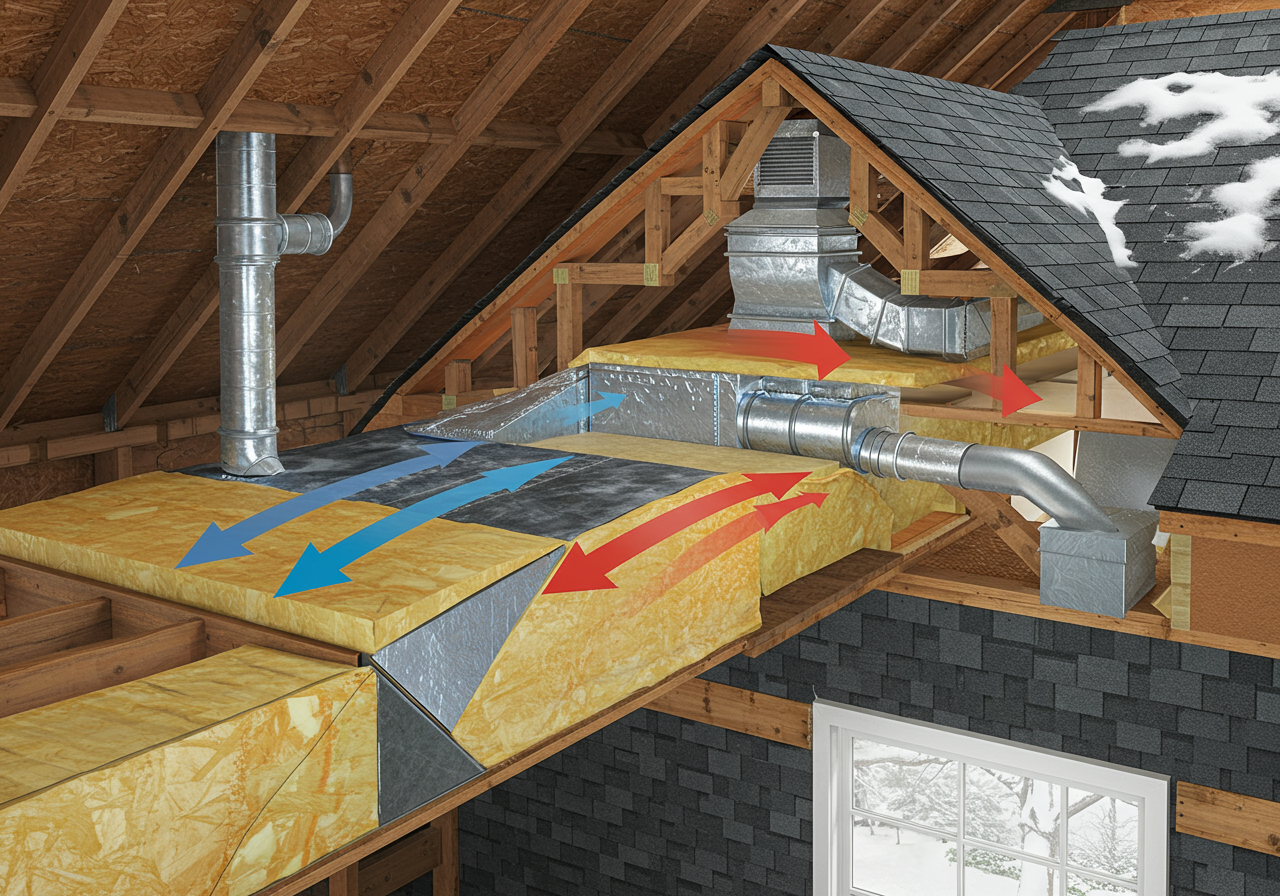
Proper Attic Ventilation in Kent Homes
Balanced intake and exhaust vents prevent moisture buildup and ice dam formation
The Physics of the Kent "Micro-Climate" and Your Roof
Living in the Northwest Hills, we deal with a specific brand of winter weather that I like to call the "Kent Seesaw." One day we're buried in snow from a Berkshire-borne system, and the next, a warm front pulls moisture off the sound, causing a rapid melt. This fluctuation is brutal on roofs. When your attic isn't properly ventilated, the heat from your living space escapes upward and warms the roof deck. This melts the bottom layer of snow on your roof, which then runs down to the cold eaves and freezes.
Why the "January Thaw" is Your Roof's Enemy
I remember a client on North Main Street who called me after a particularly nasty cycle of freezing and thawing. They had plenty of insulation, but their contractor had stuffed it all the way into the eaves, completely choking off the soffit vents. The result? A massive ice dam that looked like a frozen waterfall over their gutters. Because the air couldn't circulate, the attic stayed warm enough to keep the melting process going even when the outdoor air was well below freezing.
The Humidity Factor Near the River
If you're closer to the water or in one of the lower-lying valleys in Litchfield County, your ambient humidity is naturally higher. This increases the "vapor pressure" inside your home. According to the International Code Council (ICC), proper roof ventilation isn't just a suggestion; it's a structural requirement to manage this moisture. Without it, your plywood deck becomes a petri dish for mold.
The Insulation Gaps That Bleed Cash in Litchfield County
Most homeowners think "more is better" when it comes to pink fiberglass or cellulose. But in the roofing world, insulation is only as good as the air gap above it. I've seen $10,000 insulation jobs actually shorten the life of a roof because they created a "hot roof" scenario. When the shingles can't shed heat from the underside, the asphalt oils bake out, the granules pop off, and your 30-year shingle becomes a 15-year liability.
Identifying "Compression" and "Gaps"
I've spent a lot of time crawling through attics around the Kent Falls area, and the most common mistake is compressed insulation. If you step on your insulation or pile old high school yearbooks on top of it, you're crushing the air pockets that actually provide the R-value. Furthermore, if you have "dirty" insulation near your light fixtures, it's a sign that conditioned air is leaking through the ceiling—a phenomenon known as an "attic bypass."
The R-60 Standard in Connecticut
Modern recommendations for our climate zone suggest reaching an R-60 value. If you can see your floor joists in the attic, you're nowhere near that. However, before you blow in more material, you must ensure your baffles are in place. These plastic channels keep the insulation from sliding over your intake vents. If you're noticing your heating bills spiking despite a "new" roof, running the numbers on a budget tool for an attic retrofit might show you that the insulation is the real culprit, not the furnace.
The Ventilation Short Circuit
Balanced Ventilation: Why Your Roof Needs to Breathe
The "secret sauce" of a healthy roof is balance. You need an equal amount of air coming in through the bottom (soffits) as what is escaping through the top (ridge or gable vents). It's basic thermodynamics: as hot air rises and exits the top, it creates a vacuum that pulls cool air in from the bottom.
The Problem with "Trophy Homes" and Complex Rooflines
Kent has some stunning architecture, but many of the custom homes built in the 90s have "cut up" rooflines with multiple dormers and valleys. These designs often create "dead air" spaces where moisture gets trapped. I've seen roofs where the main ridge had a vent, but the secondary peaks were completely sealed off. Within seven years, the shingles on those unventilated sections were curling like potato chips.
Summer Benefits You Didn't Expect
While we're talking about January, don't forget the July heat. A well-ventilated attic can be 30 to 50 degrees cooler than a sealed one. This drastically reduces the load on your AC unit. Energy Star's research on cool roofing highlights how thermal management starts with the airflow under the deck. If your upstairs bedrooms feel like a sauna in the summer, your ventilation is likely failing you.
Average Attic Temps (90°F Day)
A Kent Case Study: The Cost of a "Suffocating" Attic
Last year, I looked at a beautiful colonial on Flanders Road. The owners were frustrated because they were seeing "shingle blow-offs" every time a stiff wind came through the valley. Upon inspection, the shingles weren't failing because of the wind; they were failing because the adhesive strips had never properly sealed.
The Forensic Diagnosis
Because the attic was unventilated, the roof deck was reaching extreme temperatures in the summer and staying damp in the winter. This caused the plywood to expand and contract so violently that it was literally backing the nails out of the wood—a process called "nail popping." Once the nails are loose, the wind does the rest.
The Repair vs. Replacement Dilemma
They were hoping for a quick patch, but the rot had set in. When the wood is soft, new nails won't hold. In their case, we had to discuss a full system replacement that included tearing off the old, moldy plywood and installing a modern ridge-and-soffit system. It was an expensive lesson that could have been avoided with $200 worth of plastic baffles and a few hours of labor ten years ago.
Baffled Insulation vs. Traditional Lay-in
Pros
- Maintains airflow to eaves
- Prevents mold on rafters
- Extends shingle life
Cons
- Higher initial labor cost
- Requires crawling into tight spaces
Get Your Free Roof Quote Today
Connect with verified CT pros in minutes.
No credit card required • Free to use
Your Mid-Winter Attic Action Plan
You don't have to wait for the spring thaw to see if your attic is healthy. In fact, January is the best time to play detective. Grab a flashlight and head up there (carefully!) during a cold snap. If you see frost on the nail heads poking through the plywood, you have a ventilation problem. If you see "rimes" of ice near the edges, your insulation is failing.
Steps to Take Right Now
If you find yourself in an urgent situation with active leaks from ice dams, don't climb up there with a shovel. You'll do more damage to the shingles than the ice will. Call a pro who uses steam. Long-term, you need to plan for a "top-down" audit. This involves checking the net free ventilating area (NFVA) of your current vents against the square footage of your attic.
Consulting the Professionals
Before you sign any contracts for upgrades, I always recommend checking the Better Business Bureau's guidelines for home improvement. You want a contractor who talks about "intake-to-exhaust ratios," not just someone who wants to sell you a bigger fan.
Inspect attic for frost or damp insulation during a cold snap.
Look for condensation on nail heads and ice formation near the eaves.
Clear any debris or insulation blocking the soffit vents.
Ensure there's a clear path for air to enter from the bottom of your roof.
Measure your attic floor space to calculate required vent area.
Most building codes require 1 square foot of vent area per 150 square feet of attic floor.
Install baffles to ensure permanent airflow channels.
These plastic channels prevent insulation from blocking soffit vents.
Verify ridge vent is clear of nested birds or debris.
Check that exhaust vents at the top of your roof are unobstructed.
If you're unsure where your roof stands, it's worth the time to get a professional evaluation. A healthy attic is the difference between a roof that lasts 30 years and one that fails before the kids finish high school. Keep those vents clear, and your roof will keep you dry.
Frequently Asked Questions
Get Your Free Roof Quote
Enter your zip code to get started