I'll never forget standing on a driveway near Silas Deane Highway last summer, watching a homeowner named Marcus stare at a bright orange "Stop Work" order taped to his front door. He had hired a "trunk slammer"—one of those guys who offers a price that seems too good to be true because it usually is—and they'd skipped the trip to the Rocky Hill Building Department. Now, his roof was half-stripped, a storm was rolling in, and the town was demanding he halt everything. It was a $14,000 headache that started with trying to save about $250 on a permit.
When we talk about roofing, we usually focus on the "pretty" stuff—the architectural shingles or that sleek standing seam metal that catches the morning light. But the paperwork? That's the foundation of your home's legal and structural integrity. Whether you're living in a classic Cape Cod near Ferry Park or a newer build in the West Hill area, the decision to pull a permit (or let your contractor handle it) isn't just a box to tick; it's a safeguard for your biggest investment.
Key Takeaways
- Skipping a permit in Rocky Hill can result in fines that triple the original fee and complications during home resale.
- The 2026 permit fees in Connecticut are typically based on the project's total valuation, averaging $15 to $18 per $1,000 of work.
- Only licensed and insured contractors should pull permits to ensure you aren't held liable for on-site accidents.
- A final inspection by the town building official is the only way to guarantee your roof meets current CT State Building Codes.
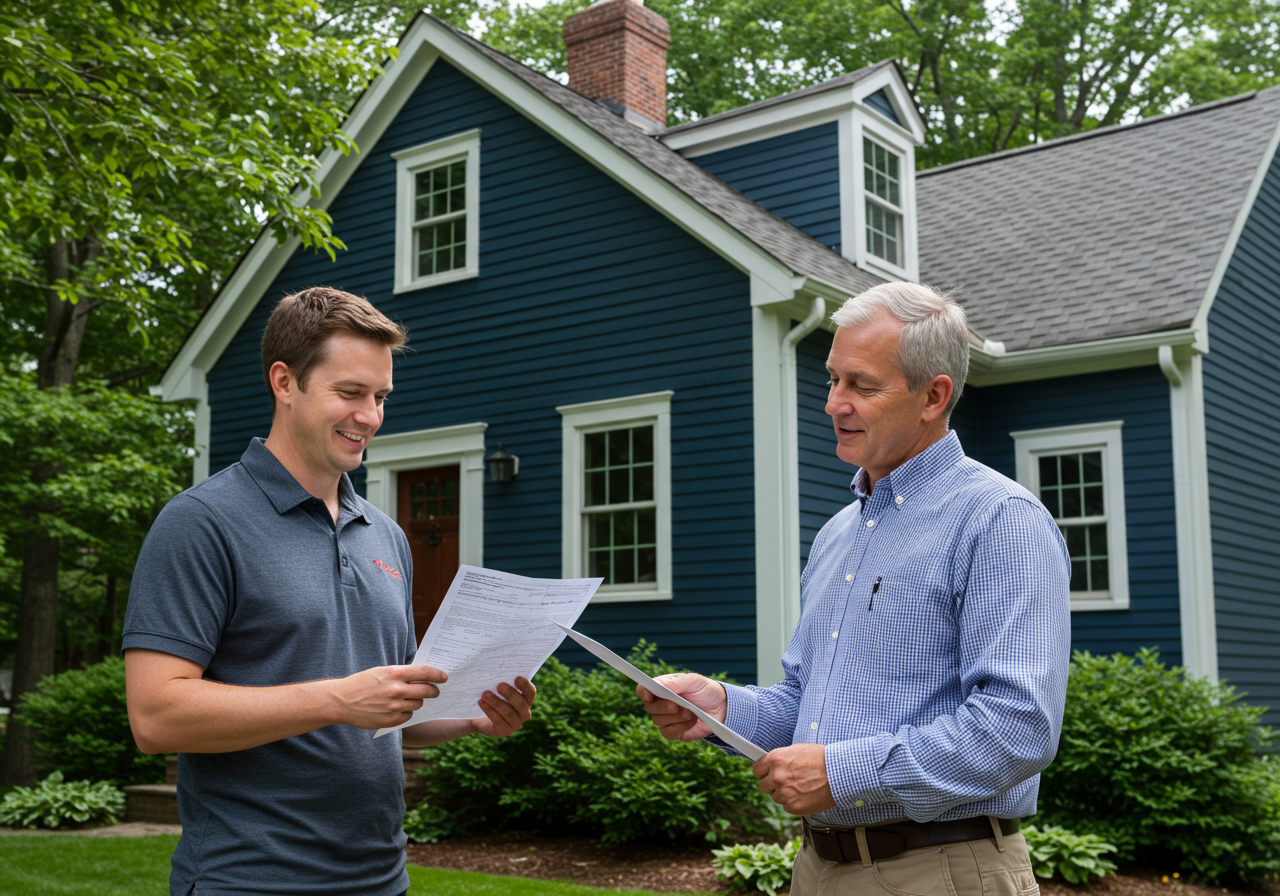
Rocky Hill Roofing Permit Compliance
Understanding permit requirements protects your home, your insurance, and your resale value.
Why a Rocky Hill Building Permit is Your Best Design Defense
In my years of looking at home exteriors, I've learned that a roof isn't just a lid—it's a statement about how your home meets the sky. But that statement needs to be legal. In Rocky Hill, any work that involves structural changes or a full tear-off requires a permit from the town hall on Old Main Street. Why? Because Connecticut codes are strict for a reason. We get heavy snow loads in February and humid, heavy air in June; your roof needs to handle both.
The Legal Safety Net for Your Property
When a permit is issued, it triggers a process of accountability. The town building official isn't there to annoy you; they are there to make sure the "ice and water shield" (that sticky membrane that prevents leaks) is installed correctly at the eaves. If you ever decide to sell your home, the buyer's title search will reveal open or missing permits. I've seen sales fall through because a roof was replaced "under the table," leaving the seller to pay for a retroactive inspection and potential repairs.
Insurance and Your Peace of Mind
Have you ever tried to file a claim for storm damage only to have the adjuster ask for the permit records? If your roof wasn't installed to code—and there's no permit to prove it was—the insurance company has a massive loophole to deny your claim. They might argue that the failure was due to improper installation rather than the storm itself. It's worth checking federal aid options for critical repairs if you're struggling with costs, but never skip the permit to save a buck.
Did You Know?
In Rocky Hill, permit fees contribute directly to the town's ability to maintain public records. This ensures that every renovation on your street is documented, protecting the overall property values of your neighborhood.
The Real Numbers: Compliance vs. Cutting Corners
The reality is this: permit fees are a drop in the bucket compared to the total cost of a roof replacement. In 2026, most Hartford County municipalities follow a sliding scale. For a standard $17,500 roof replacement, you're looking at a permit fee somewhere in the neighborhood of $275 to $315.
Cost Comparison: Permit Compliance vs. Failure
Estimated costs for a standard Rocky Hill roof replacement
Understanding Project Valuation
Your permit fee is calculated based on the total cost of labor and materials. I always advise homeowners to make sure their contractor isn't low-balling the project value on the permit application. If the town sees a $5,000 valuation for a massive roof on a 3,000-square-foot house, they'll flag it. It's better to be honest and pay the extra $40 in fees than to deal with an audit.
The "DIY" Permit Trap
Some contractors will ask you to pull the permit as a "homeowner-occupant." Here's my advice: Don't do it. When you pull the permit, you are legally assuming the role of the general contractor. If a worker falls, you—not the roofing company—might be the one answering to OSHA safety standards. When the professional pulls the permit, they are asserting that they are licensed by the state of Connecticut and carry the necessary workers' compensation insurance.
Contractor Pulls Permit vs. Homeowner Pulls Permit
Pros
- Contractor assumes all legal liability
- Ensures the pro's license is active
- Easier to pass final inspections
Cons
- Homeowner takes on project liability
- May void certain labor warranties
- Requires you to deal with town hall
Navigating the Approval Process in 2026
If you're looking at a low-slope or flat roof—maybe on a modern addition or a commercial space in Rocky Hill—the rules get even more specific. These systems have unique drainage and insulation requirements. I often point people toward the FEMA low-slope protection guide to understand why the town is so picky about ponding water and R-value insulation.
The Step-by-Step Path to Approval
Most of our local pros in Rocky Hill now use the town's online portal to submit plans. It's faster than the old paper-and-ink days, but it still requires a clear eye for detail.
Select a verified local contractor
Choose a contractor who understands Rocky Hill codes and can provide proof of Connecticut licensing and insurance.
Submit the application
Your contractor submits the application with project specs and proof of insurance to the Rocky Hill Building Department.
Town review period
The town reviews the application—usually takes 3 to 7 business days for a standard residential roof.
Display the permit on site
Once issued, the permit must be posted visibly on the job site before any work begins.
Schedule the final inspection
After work is completed, a final inspection is scheduled with the building official to close out the permit.
Don't Skip the Final Inspection!
Finding a professional who doesn't blink when you ask about permits is the first step. The trick is finding a contractor who actually shows up and handles the red tape so you don't have to. If you're dealing with sudden leaks that need immediate attention, the permit process can often be expedited for emergency repairs, but the paperwork still needs to follow.
"A permit is the only document that proves your roof isn't just a collection of shingles, but a system engineered to protect your family."
If you're ready to see how the numbers look for your specific roofline, getting an instant roof estimate can give you a clear starting point without the guesswork.
Get Your Free Roof Quote
Enter your zip code to get started
Frequently Asked Questions

About Sheri Wilde
Verified ExpertSheri Wilde is a Home Improvement Editor with a background in interior design and sustainable living. She helps Connecticut homeowners make informed decisions about their biggest investments.