March in Litchfield County usually brings that familiar, messy transition. As the snowpack finally retreats from the ridges of your Morris home, you're likely seeing more than just the first signs of mud season. This is the exact window when I start getting calls from homeowners eager to "go green" with their spring renovations. But here's the reality: sustainability in our corner of Connecticut isn't just about a badge of eco-friendliness; it's about surviving the next twenty nor'easters without sending half your furnace's output through the rafters. I've got a digital folder of documented "eco-friendly" installs in the Northwest Hills that failed within seven years because the installer prioritized the label over the local climate.
Key Takeaways
- Climate compatibility: Not all "green" materials handle the 45-degree temperature swings common in the Litchfield Hills.
- Structural load: Sustainable options like recycled slate or green roofs require deck reinforcement often overlooked in older Morris homes.
- Reflectivity balance: High-reflectivity cool roofs can increase heating costs during long Connecticut winters if not balanced correctly.
- Vetted installation: Specialized materials require crews trained in non-standard fasteners and thermal expansion gaps.
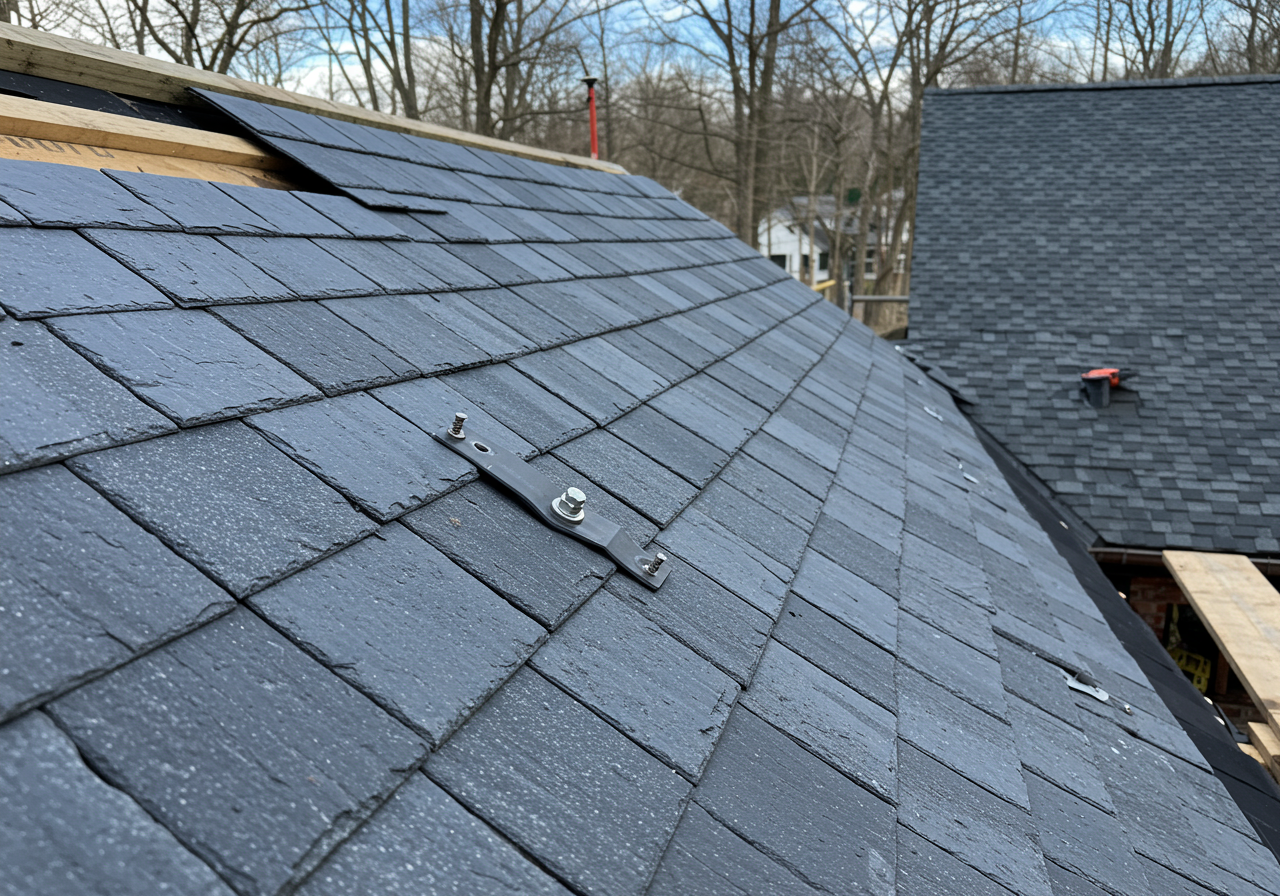
Sustainable Roofing Reality in Morris
Climate-fit materials, structure, and ventilation matter more than marketing badges in Litchfield County.
The "Cool Roof" Paradox in the Northwest Hills
One of the most frequent errors I encounter is the blind adoption of "cool roofing" technology without considering our latitude. The logic seems sound: use a highly reflective surface to bounce solar radiation away. According to the Energy Star guide on cool roofs, these systems are phenomenal at reducing peak cooling demand.
Why Reflectivity Isn't Always a Win
The trouble starts in November. In a place like Morris, we have significantly more heating degree days than cooling degree days. If you install a bright white TPO or highly reflective shingle, you lose the winter heating benefit—the passive solar gain that helps warm your attic during a frigid January. I've crunched the numbers on jobs where a "cool roof" saved $115 in summer electricity but added $185 to the winter heating oil bill.
Finding the Thermal Sweet Spot
For our climate, I usually recommend limited-reflective shingles or specific metal finishes. These provide enough emissivity to prevent your attic from hitting 140°F in July—which, as the EPA explains in their heat island research, helps the whole neighborhood—without making your house a literal ice box in the winter.
Ignoring the Structural Weight of Recycled Materials
Look, if you're living in one of the historic farmhouses near the Morris town center, your rafters were likely sized for cedar shakes or lightweight asphalt. A common mistake is switching to "sustainable" synthetic slate or recycled rubber tiles without a structural true-up.
The Math of Sustainable Mass
Composite slate, like those from DaVinci Roofscapes, is beautiful and lasts 50+ years, but it can weigh significantly more than a standard 3-tab shingle. I recently inspected a property where the homeowner hadn't accounted for the dead load of the new material plus a live load of two feet of wet March snow. The result? A sagging ridge line that cost $8,400 to jack and reinforce.
Fastener Failure in Green Materials
It's not just the weight; it's how they're attached. My crews use specific stainless steel ring-shank nails for most sustainable composites because standard galvanized fasteners can react with the recycled resins over a 30-year span. If a contractor tells you "standard nails are fine" for a specialized eco-product, they're guessing. I prefer working with crews who know manufacturer specs cold inside and out.
Structural warning
The Solar-Ready Fallacy
Everyone wants to be "solar-ready," but few understand what that actually means for the roof's lifespan. The biggest mistake is installing a "sustainable" roof and then immediately punching 40 holes in it for solar rack mounts using subpar flashing.
Integration Over Addition
If you're planning on solar within the next 3-5 years, your roofing choice needs to change today. For example, a standing-seam metal roof is the gold standard for sustainability in Morris because solar panels can be clamped directly to the seams. No holes. No leaks. I've seen integrated systems that look as good 20 years later as the day they were torqued down.
Flashing and Thermal Expansion
Metal moves. On a 90-degree day in July followed by a 50-degree night, a metal roof on a standard Morris colonial can expand and contract by nearly an inch. If your "sustainable" installer didn't use floating clips, those solar mounts are going to tear. You can dig into expansion specs and long-form material guides in our roofing library whenever you want the engineering detail.
Metal Roofing: The Sustainable Heavyweight
Pros
- 50+ year lifespan
- 100% recyclable at end-of-life
- Ideal for solar attachment
Cons
- Higher upfront cost ($14k - $22k)
- Can be noisy if insulation is thin
- Requires specialized installers
Plan Solar and Roofing Together
Match your roof system to panels before you drill a single hole.
No credit card required • Free to use
Lifespan vs. "Green-Washing"
The most sustainable roof is the one you only install once. I get frustrated when I see "eco-friendly" shingles that are marketed as sustainable simply because they contain 10% recycled content, yet they only last 18 years.
The True Cost of Replacement
Every time you tear off a roof, you're sending roughly 2.5 tons of debris to a Connecticut landfill. True sustainability is longevity. I'd rather see a homeowner spend $16,800 on a high-end metal or thick composite that lasts 50 years than $9,500 on a "green" asphalt shingle that ends up in a dumpster before 2045.
Calculating Lifecycle Value
When you break down the cost per year, the "expensive" sustainable options almost always win. I've tracked the performance of several Northwest Hills installs, and the long-term ROI is undeniable when you factor in the avoided cost of a second replacement. Don't just take my word for it— see how other Connecticut homeowners rate their long-term roofing investments.
Projected Material Lifespan in CT
The Ventilation Oversight
You can have the most sustainable shingles in the world, but if your attic isn't breathing, those materials will cook from the inside out. In Morris, where humidity spikes in the summer and drops in the winter, ventilation is the lungs of your home.
Passive vs. Active Systems
I often see homeowners install high-end sustainable materials but keep their 40-year-old intake vents. This leads to moisture entrapment. Even FEMA's mitigation guidelines on sloped roof systems emphasize that proper pressure balancing in the attic is key to preventing shingle blow-offs and structural rot during high-wind events.
Ridge Vents and Baffles
In my field notes, the most common cause of premature "green" roof failure isn't the sun—it's ice dams. If your sustainable roof isn't paired with proper baffles and a continuous ridge vent, the heat loss from your home will melt the snow, which then refreezes at the eaves. That cycle destroys even the best materials.
"Sustainability isn't a product you buy; it's a system you engineer. If the ventilation doesn't match the material, you're just buying an expensive mistake."
Choosing the Right Local Partner
The final mistake is hiring a jack-of-all-trades who treats a sustainable install like a standard 3-tab job. These materials have specific instruction manuals that must be followed to maintain the manufacturer's warranty.
Verification Matters
In Litchfield County, we have a lot of tailgate contractors who disappear once the check clears. I always insist on seeing a crew's certification for specific brands like GAF or CertainTeed. If they aren't Master Elite or a similar tier, they likely haven't been trained on the nuances of sustainable underlayments or specialized flashing.
Get Your Free Roof Quote
Enter your zip code to get started
The road to a sustainable home in Morris is paved with good intentions but often littered with technical errors. By focusing on climate-appropriate reflectivity, structural integrity, and long-term durability, you're not just helping the planet—you're protecting your biggest investment. Look for solutions that account for the unique demands of the Northwest Hills, and don't be afraid to ask for the data behind the "green" claims.
FAQ

About Daniel Roberts
Verified ExpertDaniel Roberts is a Senior Roofing Consultant with over 15 years of experience in the New England residential construction industry. He specializes in storm damage assessment and energy-efficient roofing systems.