Key Takeaways
- A standard asphalt shingle replacement in Columbia typically recoups 61% to 68% of its cost at resale.
- Energy-efficient "cool roofs" can qualify for federal tax credits, directly offsetting the initial line-item expense.
- Local buyers in wooded areas like Columbia prioritize moss-resistant shingles and proper ventilation to avoid moisture rot.
- Timing your project for the spring window allows for thermal sealing before the humid Connecticut summer arrives.
Driving down Route 87 toward the center of Columbia this time of year, you start to see exactly which houses took a beating over the winter. As the March sun hits those colonial-style rooflines, the missing granules and lifted shingles become impossible to ignore. If you're looking at your own roof thinking it's time for a change—especially if you're eyeing a "For Sale" sign by the summer—you're likely asking the $20,000 question: will I actually see this money again? In Tolland County, the answer isn't a simple "yes" or "no." It's about the math of the neighborhood and the specific technical upgrades that catch a buyer's eye during a home inspection.
The "Tolland County Premium": Why Roof ROI Hits Different Here
When we talk about ROI, we have to look at the local landscape. In more urban parts of Connecticut, a roof is just a roof. But here in Columbia, where many of us are on multi-acre wooded lots, your roof is fighting a constant battle against shade, moisture, and falling debris.
Understanding buyer psychology in Columbia
If I'm representing a buyer looking at a property near Mono Pond, the first thing I'm checking is the age of that roof. A 20-year-old roof isn't just a maintenance item; it's a $19,000 liability that will be used to hammer you down during negotiations. By replacing it before listing, you aren't just adding value—you're protecting your asking price. I've seen deals in Tolland County nearly collapse because a seller refused to address a roof that was clearly at the end of its life.
The curb appeal multiplier
Let's be honest: a streaky, moss-covered roof makes the whole house look neglected. I recently helped a homeowner off Route 66 who spent about $17,800 on a high-definition architectural shingle. The house looked a decade younger overnight. They ended up selling for $12,000 over asking, partly because the "new roof" bullet point on the listing acted like a magnet for cautious buyers.
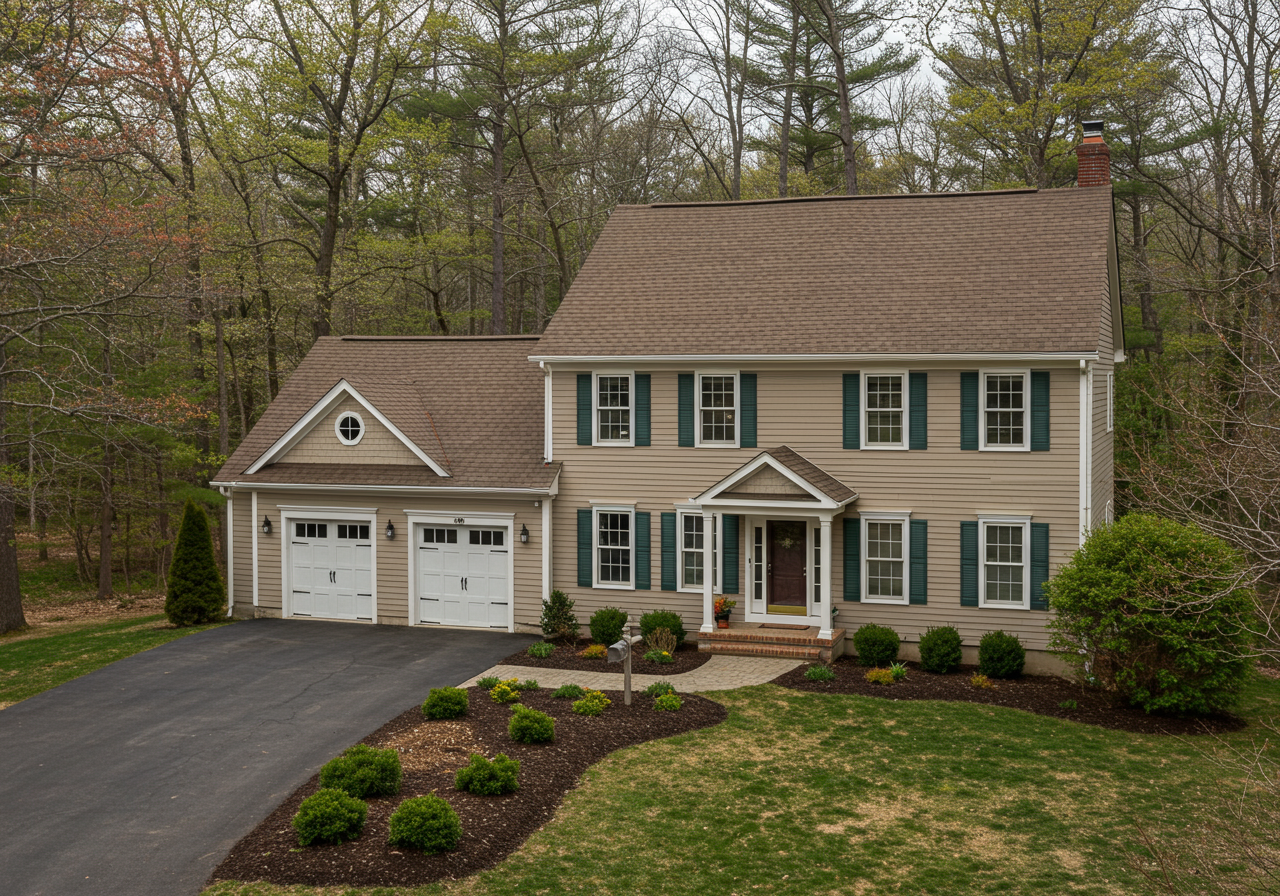
Curb appeal after a strategic roof upgrade
A clean architectural install signals maintenance pride to Tolland County buyers long before they read the inspection report.
Material gains: Comparing the recovery percentages
Not all materials offer the same financial return. You might be tempted by the 50-year lifespan of a standing seam metal roof, but you have to ask if the Columbia market will pay you back for it.
Asphalt shingles: The safe bet
Standard architectural shingles remain the ROI king because they are the most affordable to install while still offering a "new roof" warranty to the buyer. For a 2,200-square-foot home in Columbia, you're looking at an average investment of $15,500 to $21,000.
Metal and premium materials
Metal roofs are fantastic for longevity, but the initial cost can be double or triple that of asphalt. Unless you plan on staying in your home for the next 30 years, the ROI at resale often drops because buyers aren't always willing to pay the massive premium.
Estimated ROI by Roofing Material (2026)
Efficiency is a line item: How tech pays for itself
The real hidden ROI comes from what you save while you're still living in the house. Most people think a roof just keeps the rain out, but in Connecticut's fluctuating climate, it's actually your primary thermal barrier.
Federal incentives and cool roofs
If you opt for shingles that meet specific solar reflectance standards, you aren't just saving on AC bills. Under current guidelines, IRS Form 5695 instructions outline how homeowners can claim credits for certain energy-efficient improvements. It's not a massive windfall, but when you're looking at a $20,000 project, every few hundred dollars back in your pocket matters.
Lowering the monthly nut
I always tell people to skim the Energy Star overview of reflective cool roofs before picking a color. A cool roof can reduce peak cooling demand roughly 10–15%. In a town like Columbia, where many homes rely on older HVAC systems or window units, that reduction in attic temperature shows up in your June and July Eversource bills.
Pro tip: Ask for the SRI
The transferable warranty trap: Protecting the next owner
One of the biggest mistakes I see Columbia homeowners make is failing to read the fine print on their warranty. If you spend $18,000 on a roof but the warranty doesn't transfer to the next owner, you've just flushed a major selling point down the drain.
Documentation is everything
When you're ready to sell, you need a "roof binder." This should include your contract, the permit from the Columbia Building Department, and the manufacturer's warranty registration. Buyers in Tolland County are savvy; they will ask if the workmanship warranty is still valid. If you can show them a 10-year workmanship guarantee from a vetted local roofing crew, you've just removed a massive hurdle from their risk list.
Building code compliance
Make sure your contractor isn't cutting corners on deck preparation. According to the International Code Council I-Codes, proper flashing and ice dam protection are non-negotiable in our climate zone. If a home inspector finds that your new roof was "nailed over" old shingles or lacks a proper drip edge, your ROI can vanish as the buyer demands a credit to fix it.
The 'Second Layer' ROI Killer
Negotiation scripts: Getting the value on paper
You've done the work and paid the bill—now how do you ensure the appraiser or buyer actually credits you for it? You have to lead them to the water.
Talking to your appraiser
Don't let the appraiser wander without context. Hand them a sheet that says: "New Roof Installed March 2026 - $19,450. Features high-wind rated shingles (130mph) and upgraded ridge ventilation." That nudges them to record the capital improvement instead of quietly marking the roof as average condition.
The sales pitch
I suggest using language like this with your realtor: "We invested in a full system replacement, not just a shingle swap. That includes a transferable 25-year workmanship warranty and Energy Star-rated materials. This isn't a maintenance item the buyer will have to worry about until the 2050s."
If you're still trying to figure out whether the numbers work for your specific square footage, browse the expert roofing guides and pricing breakdowns in our library before a salesperson lands at your kitchen table. It's easier to negotiate when you already know what your neighbors are paying.
Wrapping it up
Maximizing your roof's ROI in Columbia isn't about chasing the cheapest bid—it's about strategic spending. Choose materials that survive our wooded microclimate, stack energy credits where you can, and make sure warranties transfer cleanly. That turns a necessary expense into a balance-sheet asset.
Before you sign any contracts this spring, read what other Connecticut homeowners said they paid—and whether the workmanship matched the pitch. That peer proof is the fastest way to avoid overpaying for peace of mind.
Get Your Free Roof Quote
Enter your zip code to get started
FAQ

About Dana Jackson
Verified ExpertDana Jackson is a Homeowner Advocate & Cost Analyst who helps Connecticut families navigate the financial aspects of roofing projects. She specializes in finding the best value and avoiding common pricing pitfalls.