Key Takeaways
- DIY roofing saves roughly 45% upfront but typically voids 100% of manufacturer wind warranties.
- Professional installation in Lakeville includes bundled disposal and permit fees that DIYers often underestimate by $1,200+—the hidden side of the "$8,400 DIY gap."
- Homeowners insurance may deny claims for interior water damage if the roof was not installed by a licensed Connecticut contractor.
- March in Lakeville offers a narrow seal-down window where shingle adhesives need specific solar heat to bond before Northwest Hills gusts test the roof.
While a weekend warrior in Lakeville might look at a pallet of architectural shingles and see a $4,800 savings in labor, a seasoned cost analyst looks at that same roof and sees a $12,000 liability waiting for the first Northwest Hills windstorm. There is a massive psychological gap between "I can nail a shingle" and "I can waterproof a structure for twenty-five years." In my years auditing repair bills across Litchfield County, the most expensive roofs I have ever seen were not the ones installed by high-end pros—they were the DIY projects that failed three years in, requiring a total tear-off and redo at 1.5× the original price.
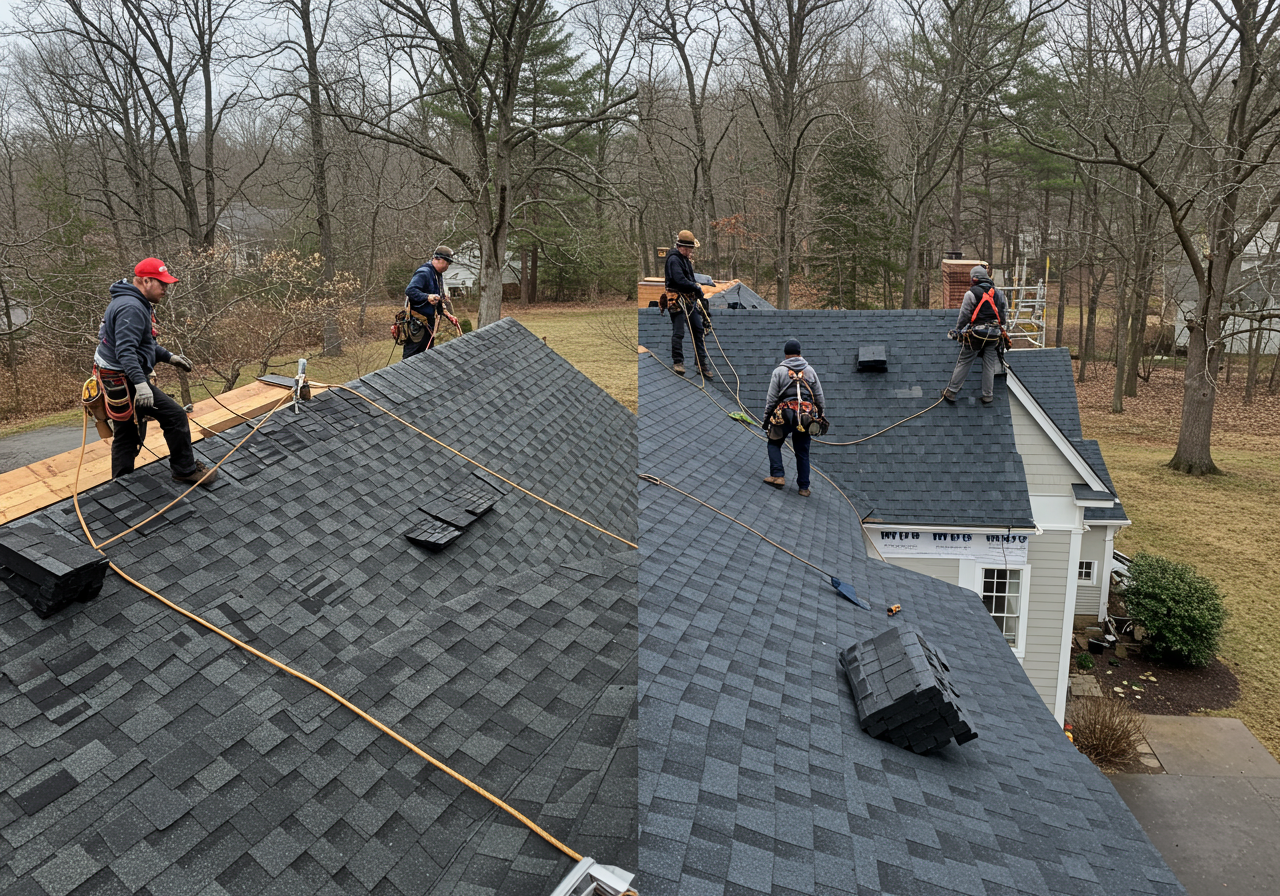
DIY vs. Pro Roofing Reality in Lakeville
Steep Litchfield County pitches, wind exposure, and warranty rules change what “savings” really means on the balance sheet.
The Raw Math of DIY vs. Pro Roofing in Lakeville
If you are walking the aisles of a big-box store in Torrington or over in Great Barrington, the price of a square of shingles (100 square feet) looks manageable. But the retail price you pay is vastly different from the wholesale volume pricing a high-capacity contractor gets. Here is a typical 2,200-square-foot colonial in the Lakeville area.
Material Costs at Local Suppliers
For a DIYer, you are paying retail. You also have to factor in the "waste tax." Amateurs typically waste 15% of materials on bad cuts and starter strips, while pros hover around 5–7%. In March 2026, we are seeing retail shingle prices in Connecticut holding steady, but the hidden components—drip edge, ice and water shield, and synthetic underlayment—add about $1,450 to a standard Lakeville project that most homeowners forget to budget for.
The "Invisible" Tool Rental Expenses
Unless you own a pneumatic coil nailer, a 40-foot extension ladder, and a roof-safe fall protection kit, you are heading to the rental center. I recently reviewed a budget where a homeowner spent $840 just on equipment rentals and a dumpster drop-off. When you hire out, those costs are absorbed into the labor rate. If you want real stories from Connecticut homeowners who skipped the rental circus, you will see that convenience carries a measurable dollar value.
Total Project Cost: DIY vs. Pro (2,500 sq ft Roof)
Why Litchfield County Steep Slopes Aren't for Amateurs
Lakeville is not the flat suburbs of the Midwest. We have Northwest Hills architecture—steep pitches, dormers, and complex valleys designed to shed heavy Litchfield County snow.
Safety Standards and OSHA Realities
The average roof pitch in the older sections of Lakeville is 10/12 or steeper. That is not a walkable roof for someone in sneakers. I have seen homeowners try to DIY a repair only to realize they are terrified once they get twelve feet off the ground. Professional crews follow strict OSHA residential fall protection guidance, using harnesses and roof anchors. If a friend helping you DIY falls off your roof, your standard homeowners policy might not cover the medical liability, leaving you personally exposed.
The March Weather Window in Lakeville
March is a transition month. One day it is 50 degrees; the next we have a dusting of snow. Shingles have a thermal-set adhesive strip. If you install them on a cold Lakeville morning and do not get enough direct sunlight to seal them down, a 40-mph gust coming off Lake Wononscopomuc can lift those shingles right off the deck. Pros know how to hand-seal with asphalt cement when the temperature does not cooperate; most DIYers do not even know that is a requirement.
Warranty Wars: What Happens When a DIY Roof Leaks?
This is where the protection part of my job gets loud. If you buy shingles from a warehouse and nail them up yourself, you get a material-only warranty. If the shingle fails because of a manufacturing defect, they might give you a few bundles of shingles. But they will not pay for the labor to fix it, and they certainly will not pay for your ruined ceiling.
Manufacturer Requirements for Shingle Returns
To get a Lifetime Limited Warranty from brands like GAF or CertainTeed, you usually need to use three to five of their specific system components (starter shingles, ridge vents, and so on) and have them installed by a credentialed installer. When you pair with crews vetted for licensing and track record, you are often getting a labor warranty that lasts 10 to 25 years. A DIY roof has a labor warranty of exactly zero minutes.
Homeowners Insurance and Self-Installed Systems
Insurance adjusters are skeptical by nature. If a storm hits and you claim wind damage, the first thing they look for is improper installation. If they see nails driven too deep (over-driven) or placed in the wrong spot on the shingle (high-nailing), they can deny the claim. They will argue the roof failed because of your craftsmanship, not the wind. You can use the NOAA storm events database to see how often northwest Connecticut sees high-wind reports—it is more frequent than many homeowners assume.
The DIY vs. Pro Trade-off
Pros
- Immediate $7k–$9k cash savings
- Complete control over schedule
- Personal satisfaction
Cons
- No labor warranty protection
- High risk of insurance claim denial
- Physical danger on steep CT pitches
- Potential for $1,200+ in tool and dumpster overruns
The 2026 Negotiation Script for Lakeville Homeowners
If you have decided that climbing a 28-foot ladder is not your idea of a fun March Saturday, your next job is making sure you do not get overcharged. In 2026, Lakeville prices run slightly above the state average because of travel distances for crews, but you should not pay a luxury tax just because of your zip code.
How to Vet a Lakeville Contractor
Do not just ask if they are licensed; ask for their Connecticut Home Improvement Contractor (HIC) number and verify it against Connecticut Department of Consumer Protection guidance for home improvement consumers. A real pro will provide a line-item estimate that separates labor, materials, and disposal fees. If they give you a single lump-sum number on a napkin, walk away.
Line-Item Cost Breakdown Checklist
When you get that quote, look for these three things:
- Ice and Water Shield: In Litchfield County, this should be installed at least 3 feet up from the eave and in all valleys.
- Flashing: Are they reusing old, rusty chimney flashing or installing new lead or copper?
- Decking Replacement: Ask what the per-sheet cost is for plywood if they find rot. In 2026, $85–$110 per sheet is a fair installed price range in Lakeville.
"The most expensive roof is the one you have to pay for twice. In Lakeville's climate, 'good enough' installation fails the first time a heavy ice dam sits in your gutters."
If you want to skip the guesswork on materials budgets and wind-rated assemblies, our Connecticut roofing guides walk through value picks by climate so you are not learning expensive lessons on a ladder.
Dana's Bottom Line
Get apples-to-apples quotes from licensed Litchfield crews
Tell us about your roofline and compare line-item bids without the DIY guesswork.
No credit card required • Free to use
Get Your Free Roof Quote
Enter your zip code to get started
Frequently Asked Questions

About Dana Jackson
Verified ExpertDana Jackson is a Homeowner Advocate & Cost Analyst who helps Connecticut families navigate the financial aspects of roofing projects. She specializes in finding the best value and avoiding common pricing pitfalls.