
Key Takeaways
- Six-nail patterns increase wind resistance from 110 mph to 130 mph for standard architectural shingles.
- Synthetic underlayment prevents $15,000+ interior mold remediation jobs by staying waterproof even after shingles fail.
- Sealed roof decks turn your entire roof into a waterproof lid, protecting against horizontal rain during 70+ mph winds.
- Heavy-gauge drip edge reinforcement prevents wind from getting a 'fingerhold' that peels entire sections.
While we are currently navigating the slushy mornings and gray skies of February in West Hartford, the calendar has a funny way of fast-forwarding. Most of us are thinking about heating bills and when the frost will finally leave the ground at Elizabeth Park, but in my line of work, I'm already looking at the Atlantic forecast. Hurricane season doesn't wait for us to be ready; it just arrives. In Connecticut, we have a long history of being caught off guard, from the 1938 Express to the more recent reminders like Isaias.
Some homeowners take the "wait and see" approach, crossing their fingers that the mature oaks on Mountain Road don't decide to take a nap on their rafters. Others—the ones who usually save about $4,200 in long-term repair costs—take the pre-emptive fortification route. The difference between a roof that survives a 75-mph gust and one that ends up in the neighbor's yard often comes down to the choices you make during a quiet month like this one.
West Hartford Building Code Standards
The High-Wind Nailing Alternative to Standard Shingle Installation
Most shingles come with a "nail line" that assumes a standard weather pattern. But here in the Hartford County corridor, wind can whip through the valleys and accelerate between homes in neighborhoods like Blue Back Square. A standard installation typically uses four nails per shingle. In a hurricane-prone zone, we look at the six-nail pattern. It sounds like a small change, but it increases the wind resistance of a standard architectural shingle from 110 mph to 130 mph.
I remember inspecting a colonial over on Fern Street after a particularly nasty nor'easter. Half the roof was bare wood because the installer had used a pneumatic nailer set too high, punching right through the shingle. The alternative—and what I always recommend—is ensuring your contractor uses hand-set precision or at least calibrated tools for that six-nail per shingle pattern. When the pressure drops and the wind starts howling, those two extra nails are the only thing keeping your attic dry. If you are worried about your current shingles, screening for local West Hartford crews who know CT code is the first step toward getting that peace of mind.
Synthetic Underlayment vs. Traditional Felt Paper
If a hurricane peels back your shingles, your underlayment is the last line of defense. For decades, the industry standard was #15 or #30 felt paper. It's basically paper soaked in asphalt. The problem? If it gets wet, it wrinkles, tears, and degrades. In a high-wind event, felt paper offers about as much protection as a wet paper bag.
The modern alternative is synthetic underlayment. These are woven polymer sheets that are nearly impossible to tear by hand. I've seen synthetic underlayment stay pinned to a roof deck through 60-mph gusts even after the shingles were long gone. It doesn't absorb water, so even if you lose a few tabs, your plywood decking stays dry. It's about 15% more expensive upfront, but considering it can prevent a $15,000 interior mold remediation job, it's the easiest "yes" in the business.
Felt Paper vs. Synthetic Underlayment
| Feature | Traditional Felt | Synthetic Polymer |
|---|---|---|
| Tear Resistance | ||
| Water Absorption | ||
| UV Stability | ||
| Walkability (Safety) |
Sealed Roof Decks and the Secondary Water Barrier
One of the biggest failures we saw during past Connecticut storms wasn't just shingles flying off—it was water being driven through the gaps in the plywood decking. When the wind hits 70 mph, rain doesn't fall; it moves horizontally. It finds every crack between your roof sheets.
The alternative to a standard "dry" deck is a sealed roof deck. This involves applying a high-temperature "ice and water" shield or specialized flashing tape over every single seam in the roof deck. It turns your entire roof into a waterproof lid. I once worked with a family near the West Hartford reservoir who had this done during their 2024 replacement. When a microburst hit and took out a section of their ridge cap, they didn't have a single drop of water in the house. You can check NOAA's database of Connecticut wind events to see how frequently these local wind spikes actually happen—it's more often than you'd think.
"In West Hartford, it's not just the wind you're fighting; it's the debris. A sealed roof deck ensures that even if a limb punctures a shingle, the house stays dry until we can get a crew out there."
Edge Metal and Drip Edge Reinforcement
The edges of your roof are where the wind gets a "fingerhold." Think of it like trying to peel a sticker off a laptop; if the edge is tight, it's hard to get it started. Most standard drip edges are thin aluminum, barely tacked down. In a hurricane, the wind gets under that metal, curls it up, and then starts a chain reaction that peels the shingles back like an orange.
The alternative is a heavy-gauge (24-gauge or thicker) steel drip edge, secured with staggered fasteners every 4 to 6 inches. I've seen 20-year-old roofs fail because the drip edge was just "gravity fit" into the gutter. When we do a hurricane-ready install, we make sure that metal is integrated into the starter strip. If you've noticed your gutters pulling away or the metal at the edge looking wavy, it's time to get a localized roof estimate to see what it would take to shore up those perimeters before June 1st.
Gutter Integrity and High-Capacity Drainage
West Hartford is famous for its tree canopy. It's what makes the neighborhoods beautiful, but it's a nightmare for roofs during a storm. In a hurricane, you aren't just dealing with rain; you're dealing with three inches of rain per hour mixed with shredded leaves and twigs. Standard 5-inch gutters can't keep up.
The alternative is moving to 6-inch seamless "K-style" gutters with oversized 3x4-inch downspouts. If the water can't get off the roof fast enough, it backs up under the shingles at the eave. I've been on roofs where the gutters were so backed up that the water was literally "wicking" six inches up the roof slope into the soffits. Adding hidden hangers every 12 inches—rather than the standard 24—ensures the weight of the water and debris doesn't rip the gutters right off the fascia board.
Clean all gutters of winter debris by mid-March
Ensure clear drainage paths before the spring storm season arrives.
Inspect the fascia board for soft spots
Check where gutter hangers might pull loose under heavy water weight.
Upgrade to oversized 3x4-inch downspouts
Handle high-velocity hurricane rainfall that standard downspouts can't manage.
Install high-flow leaf guards
Prevent clogs during the peak of the storm when debris is flying.
Strategic Tree Management and Roof Clearances
You can have the most expensive roof in Connecticut, but if a 60-foot Norway Maple falls on it, the material doesn't matter. In West Hartford, we have a lot of "legacy" trees that are reaching the end of their lifespan. I always tell homeowners that the best roofing tool you can buy is a good arborist.
The alternative to reactive tree removal is "structural pruning." This involves thinning the canopy so the wind can blow through the tree rather than hitting it like a solid sail. You want at least a 10-foot clearance between any branch and your roof surface. If you see branches scraping your shingles during a light breeze, they will be hammers during a hurricane. If a tree does come down, you'll need to look into fixing storm-damaged flashing before the sky opens up to prevent interior loss. For those who might struggle with the cost of these major preventive measures, the federal home repair assistance portal can sometimes provide leads on grants for low-to-moderate-income seniors or families.
Fortified Roofing vs. Standard Installation
Pros
- Potential 15-22% insurance premium discounts
- Peace of mind during the 130+ mph gust events
- Higher resale value in West Hartford markets
Cons
- Initial cost increase of 12-18%
- Requires specialized contractors who follow strict NOAA/FEMA protocols
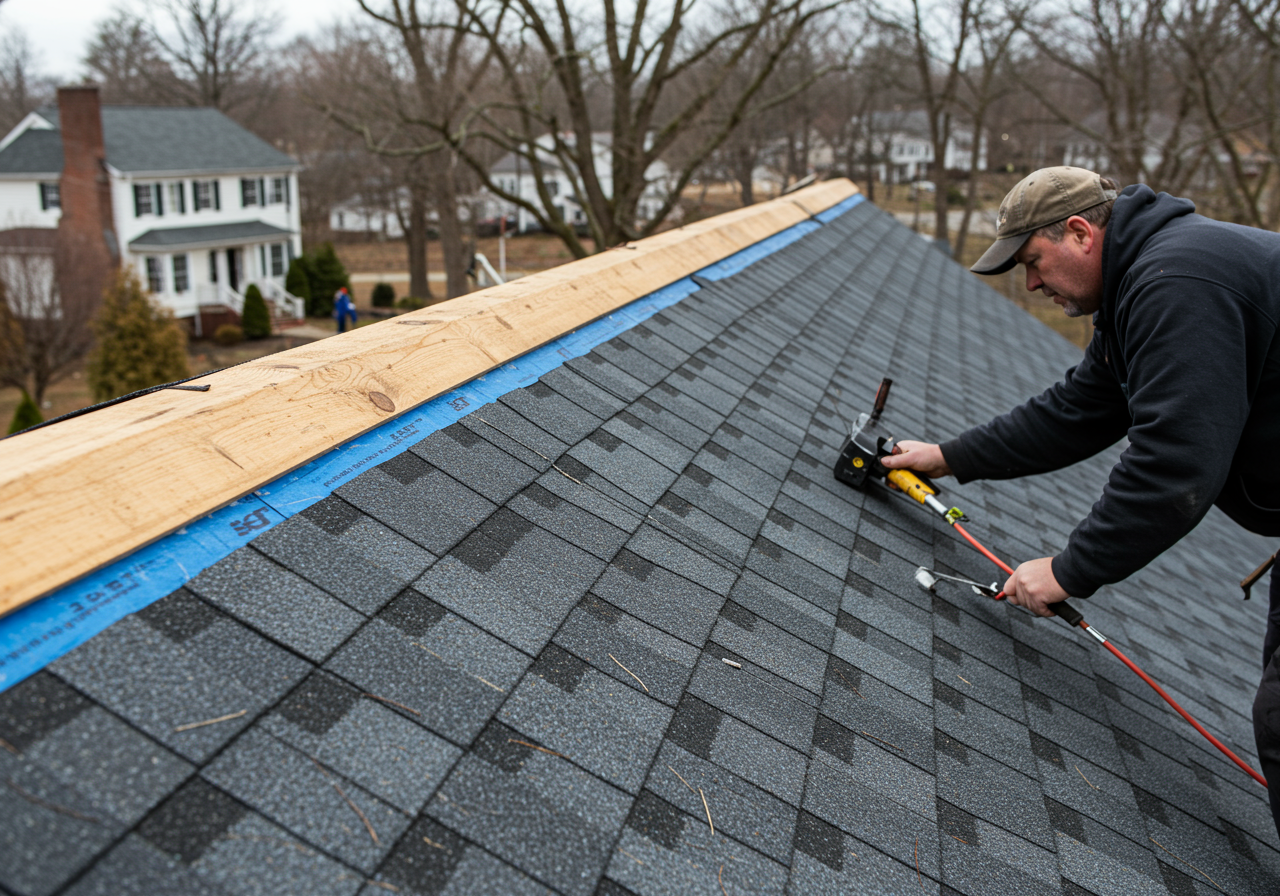
High-Wind Shingle Installation on a West Hartford Home
Notice the precise six-nail pattern and the heavy-duty drip edge being used to secure this roof against the Connecticut wind corridor.
Conclusion
Preparing your West Hartford roof for a hurricane isn't about being paranoid; it's about being practical. We live in a region where weather extremes are becoming the "new normal," and the roofs that were built in the 90s simply weren't designed for the wind speeds we're seeing now. By focusing on reinforced nailing, synthetic underlayments, and proper edge metal, you are building a system that protects your biggest investment.
Don't wait until the local news starts showing those red cones of uncertainty. February is the time to look at your roof with a critical eye. If you want to see how your specific home stacks up against these hurricane standards, ZikQuote can match you with local contractors who actually understand the nuances of Hartford County weather.
Get Your Free Roof Quote
Enter your zip code to get started