
Key Takeaways
- Coastal salt mist reaches up to 5 miles inland, affecting nearly every neighborhood in Orange, CT.
- Stainless steel fasteners are a non-negotiable requirement for homes within the high-corrosion zone.
- Choosing the wrong shingle grade can lead to premature granule loss and wind uplift during spring nor'easters.
- March is the ideal month for inspection before the heavy humidity of a New Haven County summer sets in.
Driving past the High Plains Community Center this morning, I noticed the heavy mist hanging over the rolling hills of Orange. While we aren't technically "waterfront" like our neighbors in Milford or West Haven, the air here still carries the weight of the Long Island Sound. Most homeowners I talk to in New Haven County assume they don't need coastal-grade protection because they can't see the waves from their kitchen window. That's a mistake that ends up costing about $4,200 in premature shingle failure more often than I'd like to see. March 2026 is shaping up to be a damp one, and if your roof isn't built for the unique atmospheric chemistry of our corner of Connecticut, you're basically inviting the weather inside for coffee.
1. Why Orange Homeowners Can't Ignore the Sound
You might think Racebrook Road is far enough inland to be safe from the Atlantic's reach, but the NOAA data suggests otherwise. Salt spray doesn't just stop at the shoreline; it atomizes. In my field notes from the last decade, I've documented significant oxidation on roofing components as far north as the Derby line. When the wind kicks up from the south—which it loves to do during our March transitions—it carries a fine, microscopic brine.
This salt mist settles into your roofing system. If you have standard galvanized flashing or low-tier shingles, that salt acts like a slow-motion sandpaper. It's not just about the water hitting your roof; it's about the chemical reaction happening when that water evaporates and leaves behind sodium chloride. I've seen 15-year-old roofs in Orange looking like 30-year-old roofs because the owners treated them like they were in the middle of the Midwest instead of five miles from the coast.
2. The Chemistry of Salt Mist on Connecticut Asphalt
Asphalt shingles are essentially a sandwich of fiberglass, bitumen (the gooey black stuff), and ceramic granules. When salt air hits these materials, it can cause the asphalt to "outgas" or lose its flexibility faster than usual. Once that happens, the shingles become brittle.
Did You Know?
Did you know that salt air can accelerate the degradation of standard asphalt shingles by up to 22% compared to homes further inland in Litchfield County?
But it's the granules that really suffer. Those tiny rocks protect the asphalt from UV rays. In a coastal environment like ours, the salt crystals can actually get under the granules and "pop" them off during freeze-thaw cycles. I was looking at a roof near Fred Wolfe Park last week where the south-facing slope had lost nearly half its protection. That homeowner was looking at a full replacement years ahead of schedule. Before you find yourself in that spot, it's worth taking a look at roofing guides in our blog to see how different materials hold up under these specific stresses.
3. Understanding New Haven County Wind Load Requirements
In Orange, we aren't just dealing with salt; we're dealing with the "venturi effect" created by the local topography. As wind moves off the Sound and hits our rising elevations, it speeds up. This is why the International Code Council (ICC) standards for our area are so specific about how shingles are nailed down.
Standard installation involves four nails per shingle. For a "coastal-aware" roof in Orange, I always advocate for a six-nail pattern. It's a minor labor increase that can be the difference between your roof staying put or becoming a kite during a tropical remnant storm. I've walked enough post-storm neighborhoods to know that the "code minimum" is rarely enough for a homeowner who wants peace of mind. Every time I see a "high wind rated" shingle installed with a four-nail pattern, I want to pull my hair out. It's like buying a Ferrari and putting budget tires on it.
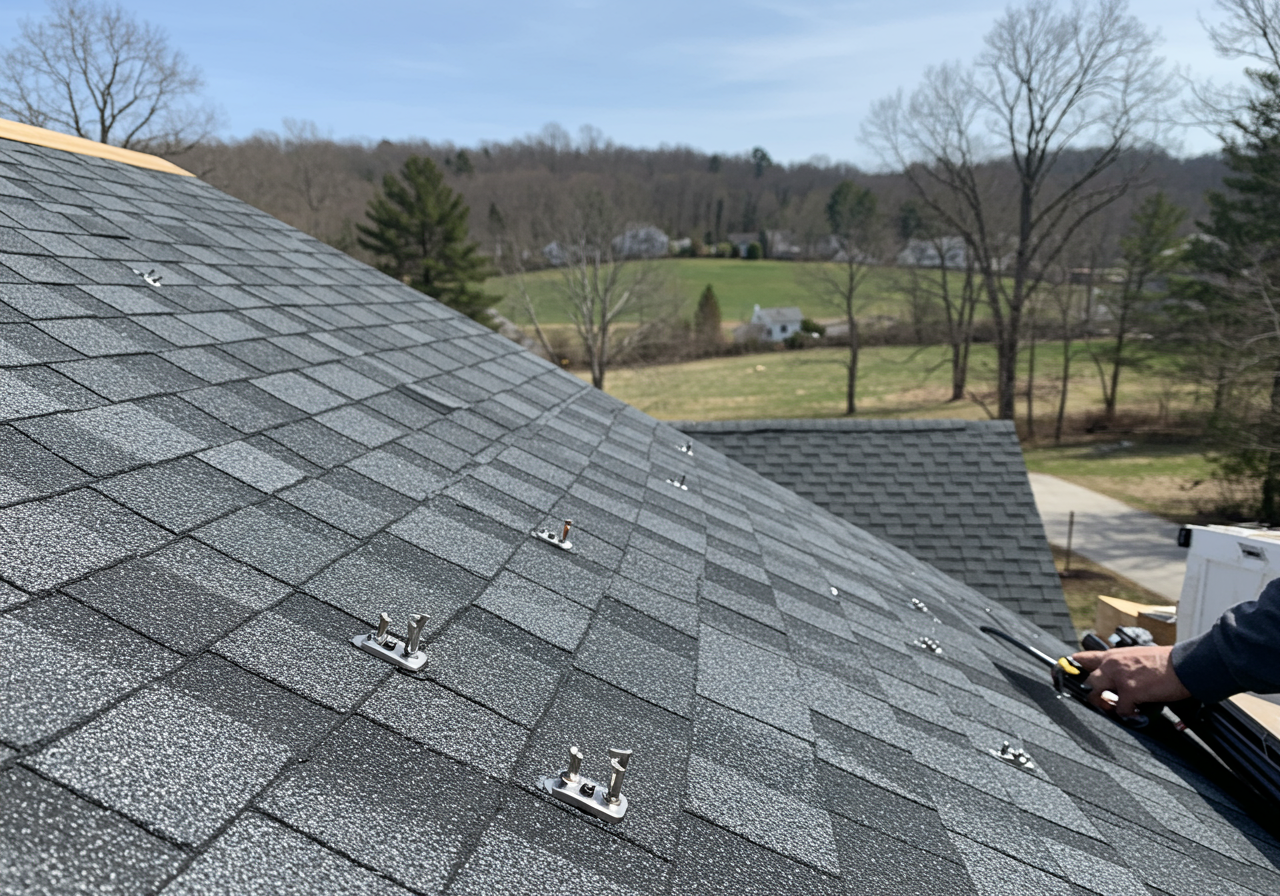
Coastal roofing considerations for Orange, Connecticut homes
Understanding how salt spray and wind patterns affect roofing systems in New Haven County
4. Choosing Materials That Handle the March "Thaw and Freeze"
March is the most schizophrenic month in Connecticut. We get a 55-degree day followed by a hard freeze at night. For a roof, this is a nightmare. Water gets into the microscopic cracks in your shingles, freezes, and expands. If you're using a material that isn't rated for these rapid fluctuations, you're going to see "cupping" and "clawing" by April.
Coastal Roofing Material Comparison
| Feature | Standard Shingle | Coastal-Grade Asphalt | Metal (Standing Seam) |
|---|---|---|---|
| Salt Corrosion Resistance | |||
| High-Wind Rating (130mph+) | |||
| Algae Resistance (Coastal Dampness) | |||
| Stainless Steel Fastener Compatible |
If you're weighing these options, I usually tell people to look at the long-term ROI. A standard shingle might save you $1,500 today, but if it fails seven years early, you haven't actually saved a dime.
5. Why Your Fasteners Matter More Than Your Shingles
This is the hill I will die on: the most expensive shingles in the world are useless if the nails holding them down rust away. In a high-moisture, high-salt environment like Orange, galvanized nails are a ticking time bomb. They have a thin coating of zinc that eventually wears off, and once the steel underneath meets our salt-heavy air, it's over.
The Rust Trap
I always recommend hot-dipped galvanized or, ideally, stainless steel fasteners. Yes, they cost more. No, most contractors won't offer them unless you ask. But when you read our real-world reviews, you'll notice that the homeowners who are happiest five years later are the ones who paid attention to these small, technical details.
6. Vetting Contractors for Coastal Compliance
Not all contractors are created equal, especially when it comes to "coastal" knowledge. I've seen crews from inland towns come down to New Haven County and apply the same techniques they use in the valley. That doesn't work here. You need someone who understands the specific humidity and wind profiles of the shoreline.
Before you sign anything, check the CT eLicense portal to ensure they are actually registered and in good standing. Then, look for specific certifications. I always tell homeowners to verify their contractor's license and ask specifically about their experience with coastal fastener requirements. If they roll their eyes when you mention stainless steel nails, find a new contractor.
Tired of the Coastal Roofing Guesswork?
Get matched with Orange-verified contractors who actually know the difference between 'code minimum' and 'coastal ready.' No sales pressure, just expert matches.
No credit card required • Free to use
7. The Strategic March Timeline for Roof Replacement
If you're seeing granules in your gutters this March, you're on the clock. The humidity of a Connecticut summer is the enemy of a compromised roof. Once the dew points start climbing in June, any existing leaks will lead to mold growth in your attic faster than you can say "New Haven pizza."
Ground Inspection
Check your downspouts for excessive asphalt granules and look for 'shingle shadows' on your lawn.
Attic Check
Look for daylight peeking through the ridge or dark water stains on the rafters during a March rainstorm.
Fastener Review
If you can safely see your eaves, look for rust streaks coming from under the shingles.
Local Matching
Use an automated tool to find a contractor who specializes in New Haven County coastal environments.
Installation Window
Aim for a late-March or April install to beat the summer heat and high humidity.
Getting this done now means you're protected before hurricane season kicks off. It's about being proactive rather than reactive. I've never met a homeowner who regretted replacing their roof a year early, but I've met hundreds who regretted waiting a year too long. According to the Better Business Bureau advice, having a clear project plan and a verified contractor is the best way to avoid the "storm chaser" scams that inevitably follow a big CT nor'easter.
Get Your Free Roof Quote
Enter your zip code to get started
March in Orange is a beautiful, messy time of year. But while you're watching the crocuses pop up in your yard, don't forget to look up. Your roof is the only thing standing between your family and the increasingly volatile Atlantic weather patterns. Make sure it's built to last.