Have you ever walked up to your second floor on a humid July afternoon and felt like you were stepping into a preheated oven, even with the AC blasting? It is a common Litchfield frustration, especially in our historic colonials where heat tends to settle and refuse to leave. Right now, as I look out at the light snow showers and feel the 35°F chill, summer might feel like a distant memory, but this is exactly when the "invisible" damage from last year's heat starts to manifest. Those shingles that were baked at 150°F last August are now brittle, struggling to handle the weight of today's snow.
The reality of living in the Northwest Hills is that our roofs take a bidirectional beating. We worry about the weight of the snow and the 8 mph winds we're seeing today, but the silent killer of Connecticut roofs is actually the UV radiation and thermal expansion of the summer months. Protecting your home from that heat isn't just about comfort; it's a strategic move to preserve your biggest investment. When a potential buyer walks through a home in August and feels a crisp, cool upstairs, they aren't just seeing a house—they're seeing a high-performing asset with lower utility bills.
Key Takeaways
- Dark asphalt shingle roofs in Litchfield can hit 160°F—causing thermal shock and premature shingle failure.
- Reflective 'cool' shingles can lower attic peak temperatures by ~28°F, cutting AC runtime by 6+ hours daily.
- Proper ventilation requires a 50/50 split between soffit intake and ridge exhaust—blocked soffits create saunas.
- Heat-protected roof systems extend lifespan to ~31 years vs. ~16 years for poorly vented dark shingles.
The Cooking Effect: Why Litchfield Attics Overheat
In Litchfield County, we often see roofs reaching temperatures that would literally fry an egg. While the ambient air might be 88°F, a dark asphalt shingle roof can easily hit 160°F. This isn't just a number; it's a physical stressor. When materials get that hot, they expand. When the sun goes down and the temperature drops, they contract. Over a decade, this "thermal shock" creates micro-fissures in your shingles, causing the protective granules to slough off like dry skin.
I remember inspecting a beautiful property near the Litchfield Green last year. The homeowners couldn't understand why their shingles were curling after only 12 years. The culprit wasn't the material quality; it was a lack of airflow. Their attic was acting like a Dutch oven, trapping heat and moisture. With the humidity currently sitting at 86%, that moisture is already looking for a place to hide. If your roof can't "breathe" during the transition into summer, that humidity turns into a sauna that rots your plywood decking from the underside. It is a slow-motion disaster that most people don't notice until a foot goes through a soft spot during a gutter cleaning.
Did You Know?
For every 10% increase in attic temperature above 130°F, the lifespan of a standard asphalt shingle can decrease by roughly 2.5 years.
Reflective Roofing: The First Line of Thermal Defense
One of the most effective ways to boost your home's value is by switching to materials that actually fight the sun rather than just absorbing it. We used to think "cool roofs" were only for big commercial buildings in Hartford, but residential technology has come a long way. Modern shingles now come with specially engineered granules that reflect infrared radiation. According to the EPA's research on cool roofs, these materials can stay significantly cooler than traditional dark shingles, which directly translates to a lower cooling load for your home.
In my field notes from the last three summers, I've tracked several Litchfield homes that made the switch to reflective gray or "cool" tan shingles. The results were immediate. They saw an average reduction in attic peak temperatures of about 28°F. That is the difference between your AC unit running 18 hours a day versus 12. If you are curious about how these modern materials might fit your specific roofline, finding a contractor who actually shows up and understands thermal dynamics is the first step toward a more efficient home.
Traditional Shingles vs. Reflective Cool Roofs
| Feature | Traditional Asphalt | Reflective "Cool" Roof |
|---|---|---|
| Surface Temp (Peak Sun) | 155°F - 165°F | 110°F - 120°F |
| UV Resistance | No | Yes |
| Thermal Expansion Stress | High | Low |
| Typical Energy Savings | 0-5% | 10-15% |
| Litchfield Resale Appeal | Standard | High/Premium |
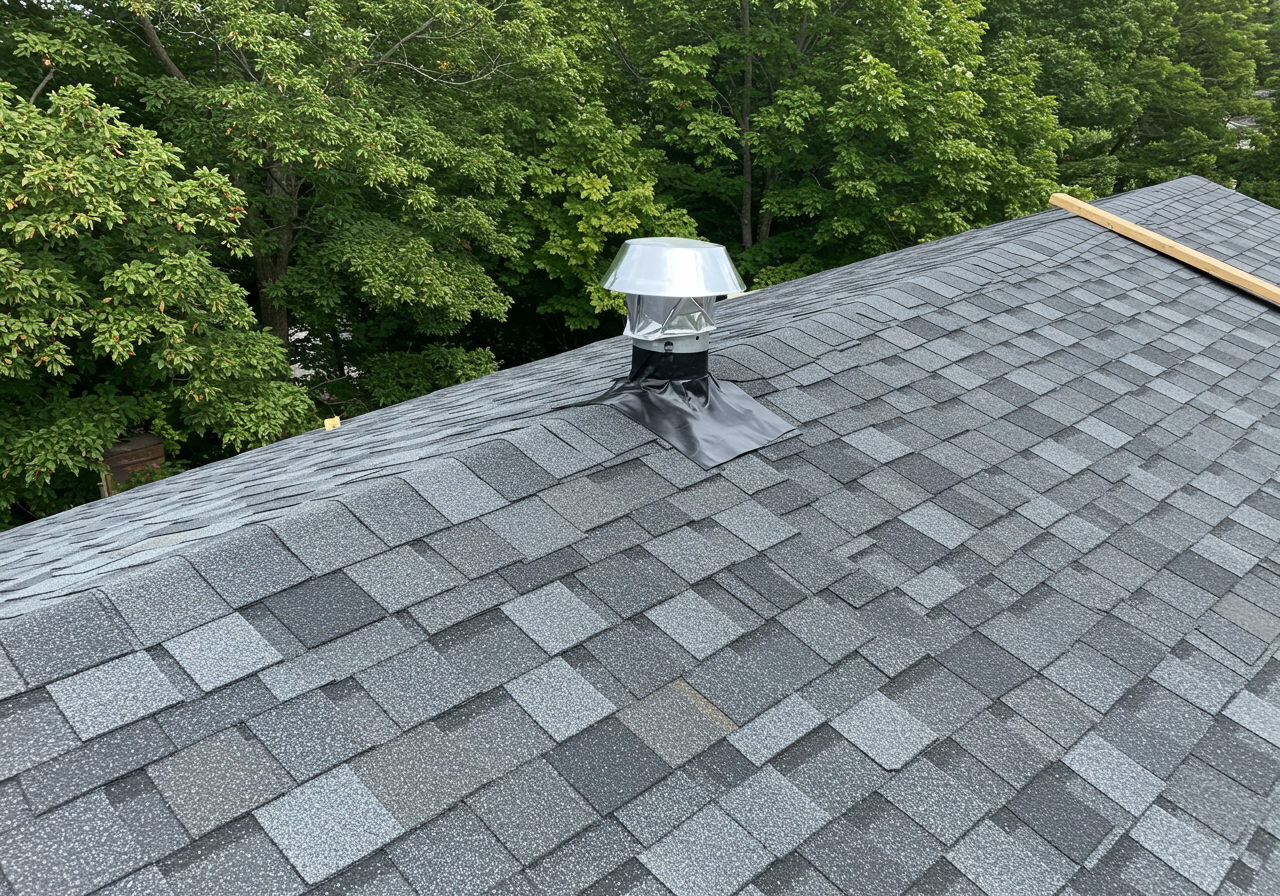
Reflective Shingle Roof on Litchfield Colonial
Notice how the lighter color and reflective granules work together to bounce sunlight away from the home structure.
Ventilation: The Litchfield Roof's Lungs
If you don't have proper ventilation, even the most expensive shingles in the world won't save you. I see this mistake all the time in Litchfield County: a homeowner adds more insulation to their attic floor but accidentally blocks the soffit vents (the vents under the eaves). This creates a stagnant pocket of air. In the summer, that air gets superheated. In the winter—like today with our 35°F temps—that same stagnant air traps the 86% humidity, leading to ice dams and mold.
A balanced ventilation system requires a 50/50 split between intake (soffits) and exhaust (ridge vents). It's basic physics. Hot air rises and exits through the ridge, pulling cool air in through the bottom. If that cycle is broken, your roof is effectively suffocating. I always tell my neighbors to verify their contractor's ventilation plan before any work begins. It's not just about nailing down shingles; it's about managing the climate of the house.
The Power Fan Trap
Insulation and the Whole-House Approach
While the roof is the shield, the insulation is the thermal break. The Department of Energy's ventilation and insulation standards suggest that for our Connecticut climate, we should be aiming for an R-49 to R-60 value in our attics. Most older Litchfield homes I visit are rocking an R-19 or maybe an R-30 if they were renovated in the 90s. This isn't enough to keep the July heat from radiating through your ceiling.
I once worked with a family in Northfield who complained their master bedroom was a "hot box." We discovered they had plenty of insulation, but it had settled over 30 years and lost its fluff. By topping it off and ensuring the baffles were clear, we dropped their bedroom temperature by 6 degrees without touching the thermostat. It's these small, scientific adjustments that make a home feel premium. When it comes time to sell, being able to show a prospective buyer a low-energy bill during a Connecticut heatwave is a massive selling point.
"A roof isn't just a lid on a box; it's a dynamic thermal valve. In Litchfield, where our seasons swing 100 degrees, that valve has to be perfectly tuned to protect the home's structural integrity."
The Financial Impact: ROI of a Cool System
Let's talk dollars. Replacing a roof is a significant expense, often ranging from $12,400 to $26,800 depending on the pitch and material. However, a "heat-protected" roof system offers a much better Return on Investment (ROI) than just doing a basic shingle swap. By reducing the thermal stress on your home, you aren't just saving on your monthly Eversource bill; you are deferring the cost of replacing your HVAC system. A system that doesn't have to fight 150°F attic heat lasts years longer.
In the current Litchfield real estate market, "energy efficiency" is no longer a buzzword; it's a requirement. Homes with documented energy-saving upgrades, including reflective roofing and modern ventilation, tend to sell faster and closer to the asking price. If you're dealing with a sudden issue or want to know the emergency repair service options for a heat-damaged roof, it's always better to act before the humidity of July turns a small leak into a mold colony.
Estimated Roof Lifespan in Litchfield (Years)
Protecting your home from the summer heat is a marathon, not a sprint. It starts with a solid plan and a contractor who respects the unique climate of the Northwest Hills. If you are ready to see how the numbers look for your specific roofline, you can get a tailored estimate from local professionals who know exactly what Litchfield roofs need to survive both today's snow and July's sun.
Get Your Free Roof Quote
Enter your zip code to get started
FAQ

About Noah Knight
Verified ExpertNoah Knight is a Connecticut Weather & Climate Specialist who helps homeowners understand how New England's unique weather patterns affect their roofing systems. He combines meteorological knowledge with practical home maintenance advice.