
Key Takeaways
- Sustainable roofing materials like recycled composites carry ASTM D3161 Class F wind ratings, matching or exceeding traditional materials.
- Cool roof technology can reduce peak cooling demand by up to 15%, with attic temperatures dropping from 134°F to 108°F.
- While upfront costs are higher, sustainable roofs offer 50-year lifespans versus 15-year asphalt, making them superior long-term investments.
- Synthetic sustainable options like recycled rubber weigh the same as asphalt but offer 300% more impact resistance without requiring structural reinforcement.
The conversation at the Bethlehem Town Hall last month regarding the new "Green Hills Initiative" highlighted a shift I've been seeing across Litchfield County for the last three seasons. Homeowners aren't just asking about leaks anymore; they're asking about embodied carbon and 50-year lifecycle costs. Here's the thing: most people in our corner of Connecticut assume "sustainable" means "fragile" or "prohibitively expensive." I've spent the last few weeks reviewing performance data from localized installs near the Woodbury line, and the numbers tell a very different story. If you're looking at a roof replacement this year, ignoring the shift toward high-efficiency materials isn't just bad for the planet—it's a quantifiable drain on your home equity.
The Fragility Myth and the Litchfield Wind Reality
The biggest hurdle I encounter when discussing sustainable materials—specifically recycled rubber or composite slates—is the belief that they won't hold up to a standard New England winter. But the engineering suggests otherwise. In fact, many recycled composites carry an ASTM D3161 Class F wind rating (that's the gold standard for resisting 110 mph gusts). When you're living on an exposed ridge in Bethlehem, that wind resistance is more than a "green" perk; it's a structural necessity.
I recently inspected a home near the Bellamy-Ferriday House that had installed a synthetic slate made from 80% post-consumer recycled content. After that heavy ice storm we had last season, the standard asphalt roofs nearby were shedding granules like crazy. The composite? Not a scratch. The reason lies in the polymer density. These materials don't become brittle at sub-zero temperatures the way petroleum-based asphalt does. If you want to dive deeper into specific metal gauges and paint finishes that handle our ice dams, our blog library has detailed guides that break down the technical specs.
Fastener Specification Tip
Thermal Performance and the 14.3% Cooling Gap
Bethlehem's elevation means we deal with a unique microclimate. We get the biting Northwest Hills wind, but our summer sun hits those south-facing slopes with surprising intensity. Standard black asphalt shingles act as a thermal sponge, soaking up heat and forcing your AC to work overtime. This is where "Cool Roof" technology—materials designed with high solar reflectance—changes the math.
According to Energy Star's guide on cool roofs, reflective roofing can reduce peak cooling demand by up to 15%. In my field notes from a project on Munger Lane, we saw attic temperatures drop from 134°F to a much more manageable 108°F just by switching to a reflective standing-seam metal system. That's not just a comfort issue; it's about preventing your plywood decking from "cooking" and delaminating over time.
Average Peak Attic Temperatures in July (CT)
The Lifecycle Cost Trap: Upfront vs. Long-Term
I get it. Seeing a quote for $28,400 for a sustainable metal roof when a "contractor special" asphalt job comes in at $14,200 is a tough pill to swallow. But the "cheap" roof is a 15-year liability. In Bethlehem, the freeze-thaw cycle is particularly aggressive. Water gets into the granules, freezes, expands, and pops the surface off. By year 12, you're looking at a replacement.
When you look at the total cost of ownership over 40 years, the sustainable option wins every single time. You're also likely to see a significant bump in property value. I always tell homeowners to verify their contractor's license before signing anything, especially with specialized materials like Tesla Solar Shingles or Davinci Roofscapes, because the installation requires a level of precision that your average "three guys and a truck" crew simply can't match.
"In the roofing world, 'cheap' is just another word for 'temporary.' A sustainable roof in Connecticut isn't an expense; it's a 50-year hedge against inflation and rising material costs."
Beyond the longevity, there's the tax angle. If you're looking at solar-integrated roofing, the IRS Form 5695 instructions outline how you can claim a 30% credit on both the materials and the labor. For a high-end $35,000 solar roof, that's over $10,000 back in your pocket.
Structural Weight and the Snow Load Equation
One "hidden" fact about sustainable roofing—specifically traditional clay tile or heavy slate—is the weight. Bethlehem homes, particularly the older Colonials, weren't always framed to handle 1,000 pounds per square (a 10x10 area). If you put a heavy "green" material on a roof with 2x6 rafters spaced 24 inches apart, you're asking for a structural failure when three feet of wet snow lands on it in February.
This is why I'm a huge advocate for "synthetic" sustainable options. Products like Euroshield, made from recycled tires, weigh about the same as standard asphalt but offer 300% more impact resistance. They give you that heavy, architectural look without requiring you to spend $8,000 on structural sistering of your rafters.
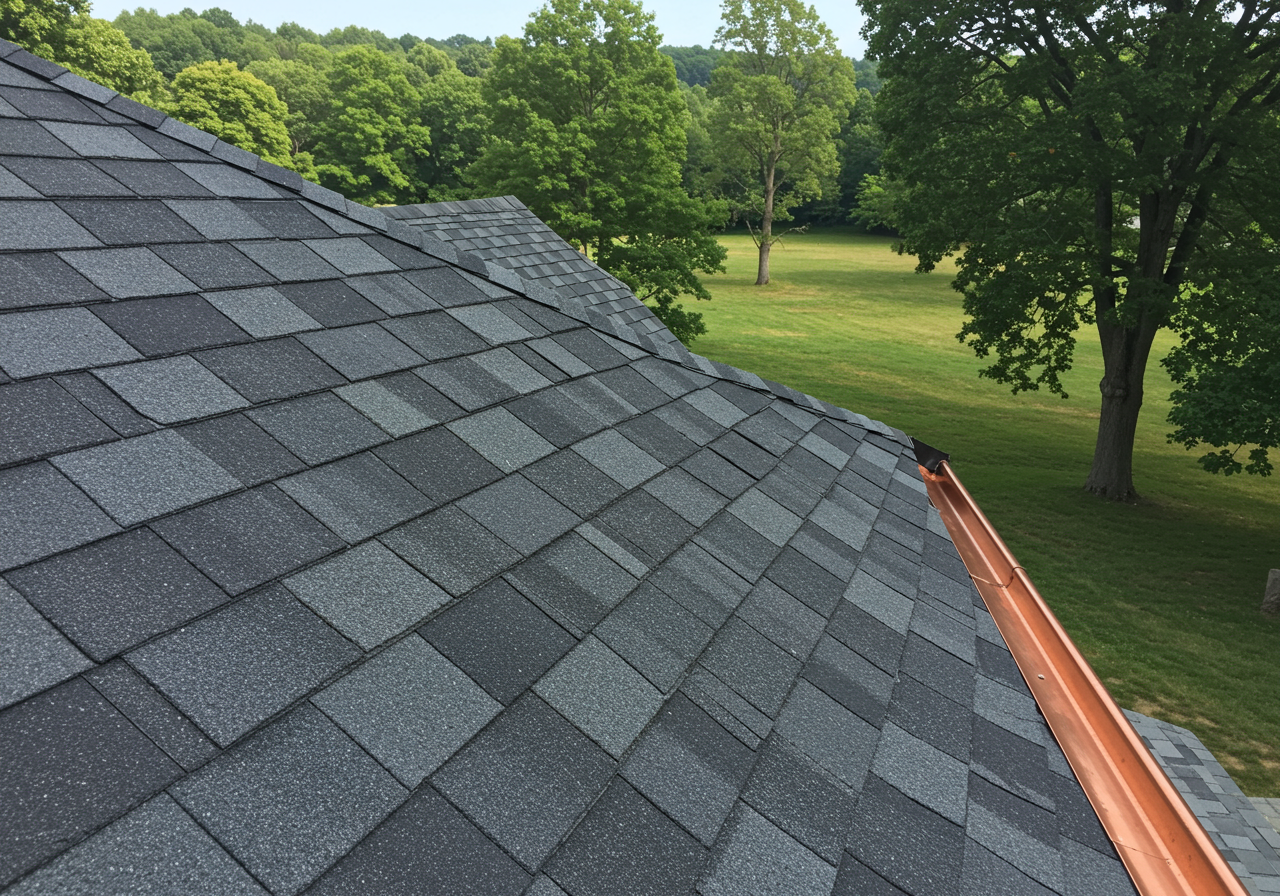
Sustainable Modern Colonial
A Bethlehem home featuring a matte charcoal standing-seam metal roof designed for maximum snow shed and 50-year durability.
Conduct a structural attic inspection
Check rafter spacing and load-bearing capacity to ensure your home can handle the material weight.
Compare 'Embodied Carbon' scores
Evaluate local vs. imported materials to minimize transport emissions and support regional manufacturing.
Apply for the 30% federal tax credit
If integrating solar or specific thermal barriers, document all eligible expenses for maximum savings.
Hire a manufacturer-certified installer
Ensure the 50-year warranty remains valid by working with certified professionals who follow installation protocols.
Integration with Modern Fastening and Solar-Ready Systems
The final piece of the puzzle is how the roof interacts with the rest of your home's envelope. A sustainable roof is useless if it's ventilated poorly. In the Northwest Hills, we see a lot of "sick attic" syndrome—moisture trapped under eco-friendly shingles because the contractor didn't balance the intake and exhaust.
If you're planning for the future, you want a "solar-ready" roof. This means using specific flashing kits and standing seams that allow for solar panels to be "clipped" on rather than bolted through the roof deck. According to FEMA's guide on sloped roof mitigation, minimizing penetrations is the single best way to prevent catastrophic failure during high-wind events. Don't just take my word for it— see what other CT homeowners experienced when they switched to integrated systems; the peace of mind during a Nor'easter is worth the investment alone.
Sustainable Material Breakdown
| Feature | Recycled Rubber | Standing Seam Metal | Reflective Asphalt |
|---|---|---|---|
| Lifespan | |||
| Recycled Content | |||
| Solar-Ready |
Looking ahead to 2026, the cost of raw petroleum is only going one way, and it isn't down. Investing in a material that doesn't rely on the oil market for its primary composition is a smart play. Whether you're on a quiet backroad or right near the town center, a roof that works with the environment rather than against it is the only way to build long-term value in Bethlehem.
Get Your Free Roof Quote
Enter your zip code to get started