Most Greenwich homeowners assume a roof failure is a sudden, dramatic event—a tree limb through the attic or a ceiling collapse during a spring downpour. The reality is much quieter and more expensive. In neighborhoods from Riverside to Back Country, I see people ignoring the "silent" signals until a $15,800 repair job balloons into a $48,200 structural nightmare. May is the sweet spot in Connecticut for an honest assessment before the humidity and late-summer storm season arrive. If you're looking at your shingles and wondering if they've got another five years, you're already asking the right question. But the mistake isn't just waiting too long; it's misreading the signs that dictate whether you need a minor patch or a full tear-off.
Key Takeaways
- The "18-Year Wall": Most 25-year shingles in Fairfield County fail significantly earlier due to coastal salt air and temperature swings.
- Granule loss in gutters isn't just "dirt"—it's the literal armor of your home washing away, leaving the fiberglass mat exposed.
- Interior spotting is often the last sign of failure, not the first; by then, mold and deck rot have usually set in.
- Greenwich building codes are strict; ensure your contractor isn't skipping the ice and water shield requirements.
The "Invisible" Lifespan vs. Visual Decay
I've looked at thousands of line-item estimates across the Gold Coast, and the biggest financial blunder is trusting the "warranty" printed on the shingle package. If a manufacturer says "30-year shingle," they aren't talking about your home near the Long Island Sound. Between the high humidity we see in May and the brutal UV exposure on unshaded Greenwich estates, shingles age in "dog years."
Age Math: The 18-Year Wall
In my experience, the average asphalt shingle roof in Fairfield County hits a wall around year 17 or 18. This is when the oils in the asphalt have dried out enough that the shingles become brittle. If you try to nail into a shingle that's 20 years old, it often cracks like a cracker. That's why I tell homeowners: if your roof was installed before 2008, you aren't looking for signs of failure—you're living in a failure state already. You can read what other Connecticut homeowners went through when they waited too long versus when they moved on a replacement early.
Greenwich Weather Wear: The Salt & Sun Factor
Living in Greenwich means your roof handles more than just rain. The salt air near Old Greenwich accelerates the corrosion of flashing and the degradation of lower-end shingles. I've seen 15-year-old roofs in Mid-Country look decades older because of moss growth caused by the heavy tree canopy. Moss isn't just an aesthetic issue; it's a root system that lifts shingle tabs, allowing wind to get underneath.
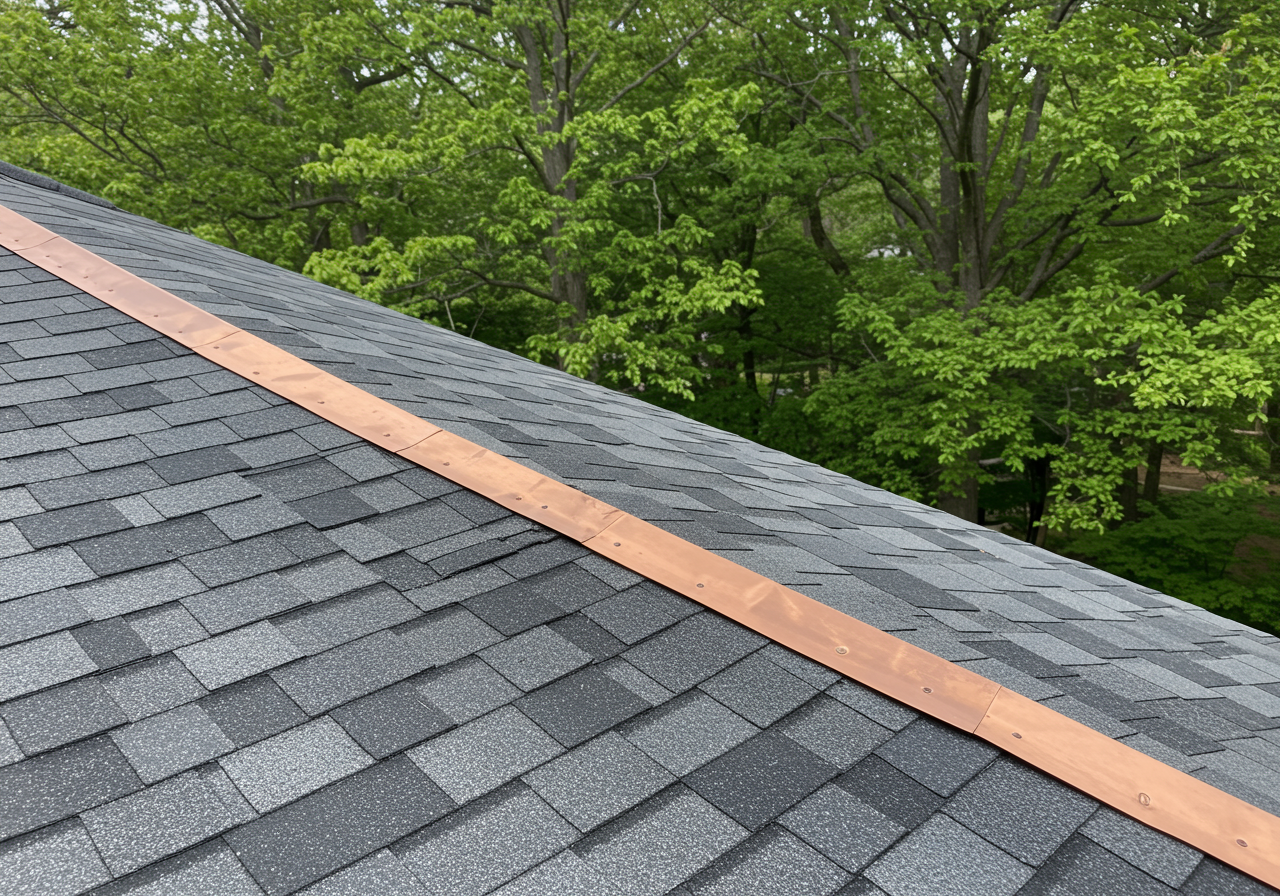
Greenwich timing signals on a Fairfield County roof
Salt air, shade, and UV stack up faster than the label on the bundle suggests.
Comparing "Patch" vs. "Replace" Financials
One of the most common questions I get is, "Can't I just replace the back slope?" It sounds like a money-saving move, but the math rarely checks out. When you hire a crew to come out for a $3,200 patch job, you're paying a premium for mobilization.
The $2,800 Band-Aid
A patch usually involves replacing a few squares of shingles and some flashing. However, the new shingles won't seal properly against the old, brittle ones. You end up with a franken-roof that looks terrible and often fails at the seam within 24 months. According to Connecticut's home improvement consumer protection guidance, your contract must be explicit about the scope of work. Don't let a contractor "fix" a roof that is structurally timed out.
Why Secondary Damage Costs 3x More
If you wait until you see a brown spot on your ceiling in the primary bedroom, the damage has already moved through three layers: the shingles, the underlayment, and the plywood decking. If the plywood is delaminated, it has to be replaced. At roughly $85 to $115 per sheet (installed), a cheap delay can add $4,000 to your bill in lumber alone.
Repairing vs. Replacing in 2026
| Feature | Patching | Full Replacement |
|---|---|---|
| Stop-gap solution | ||
| Full Warranty Coverage | ||
| Increased Home Value | ||
| Prevents Decking Rot |
See line-item pricing from Greenwich-area pros
Match with a local Greenwich pro who provides a transparent, line-item estimate in seconds—no sales pressure, just the data.
No credit card required • Free to use
Vetting the "Signs" (and the contractors who find them)
Here is where the negotiation starts. When a contractor tells you that you need a new roof, ask them to show you the math. I don't mean a total price—I mean the physical evidence. A reputable pro will take photos of the specific failure points. If they can't show you alligatoring (cracking that looks like lizard skin) or cupping (shingle edges turning up), they might just be hungry for a job.
Granule Loss vs. Structural Rot
Go look at your downspouts. If you see a pile of sand that looks like it belongs at Tod's Point, that's your shingle's UV protection. Once those granules are gone, the sun bakes the asphalt, and the roof becomes a leak magnet. But don't just take a contractor's word for it; I always suggest you confirm license status and complaint history before anyone sets foot on a ladder.
Negotiation Scripts for Inspections
When a contractor is on your roof, use this script: "I want a line-item breakdown of the decking replacement cost per sheet if you find rot. Also, show me the photos of the flashing around the chimney—is it being replaced or just resealed?" If they hesitate to give a per-sheet price for plywood, they're planning to change-order you once the shingles are off. Ice dams and freeze-thaw cycles make valleys and chimney flashing common failure zones; the National Weather Service ice dam overview is a useful primer on why that detail matters in Fairfield County winters.
Should You Wait One More Season?
Pros
- Saves immediate cash flow
- Allows more time for material research
Cons
- Risk of interior water damage
- Lumber and shingle prices typically rise 5-8% annually
- Mold remediation costs can exceed $5,000
Dana's Pro Tip
Before you commit to a full replacement, check the NWS Storm Events Database for your specific Greenwich zip code. If there was a documented hail or high-wind event in the last year, your insurance might cover a significant portion of the replacement cost.
Get Your Free Roof Quote
Enter your zip code to get started
The reality of 2026 is that roofing materials aren't getting cheaper, and Connecticut weather isn't getting milder. If your roof is showing signs of cupping, heavy granule loss, or is approaching its 20th birthday, the most expensive thing you can do is wait for a leak. Get the numbers on paper now. If you need more deep dives into specific material costs, browse our full library of roofing breakdowns on everything from architectural shingles to standing seam metal.
Stay skeptical and keep your checkbook closed until you see the math.
FAQ

About Dana Jackson
Verified ExpertDana Jackson is a Homeowner Advocate & Cost Analyst who helps Connecticut families navigate the financial aspects of roofing projects. She specializes in finding the best value and avoiding common pricing pitfalls.