
Key Takeaways
- The 1/300 Rule: Most Westport attics require 1 square foot of ventilation for every 300 square feet of attic floor to prevent shingle degradation.
- R-Value Reality: Moving from R-38 to R-60 insulation can save the average Fairfield County homeowner approximately 14% on annual cooling and heating costs.
- The Ice Dam Connection: Proper ventilation keeps roof deck temperatures consistent, preventing the freeze-thaw cycles that lead to $4,500+ water damage claims.
I was walking a job site near Saugatuck Avenue earlier this morning, and even with the sun out, the thermometer on my truck was pegged at exactly 31°F. On a clear day like today, most homeowners are thinking about their heating bills, but I was looking at their eaves. Specifically, I was looking for the telltale signs of "attic bake."
In my years inspecting homes across the Gold Coast, I've found that roughly 74% of older Westport homes suffer from what I call "strangled ventilation." When the humidity hits 82%—which it currently is—and that moisture gets trapped in your attic because of blocked soffits or inadequate ridge vents, you aren't just losing heat. You are literally cooking your shingles from the bottom up.
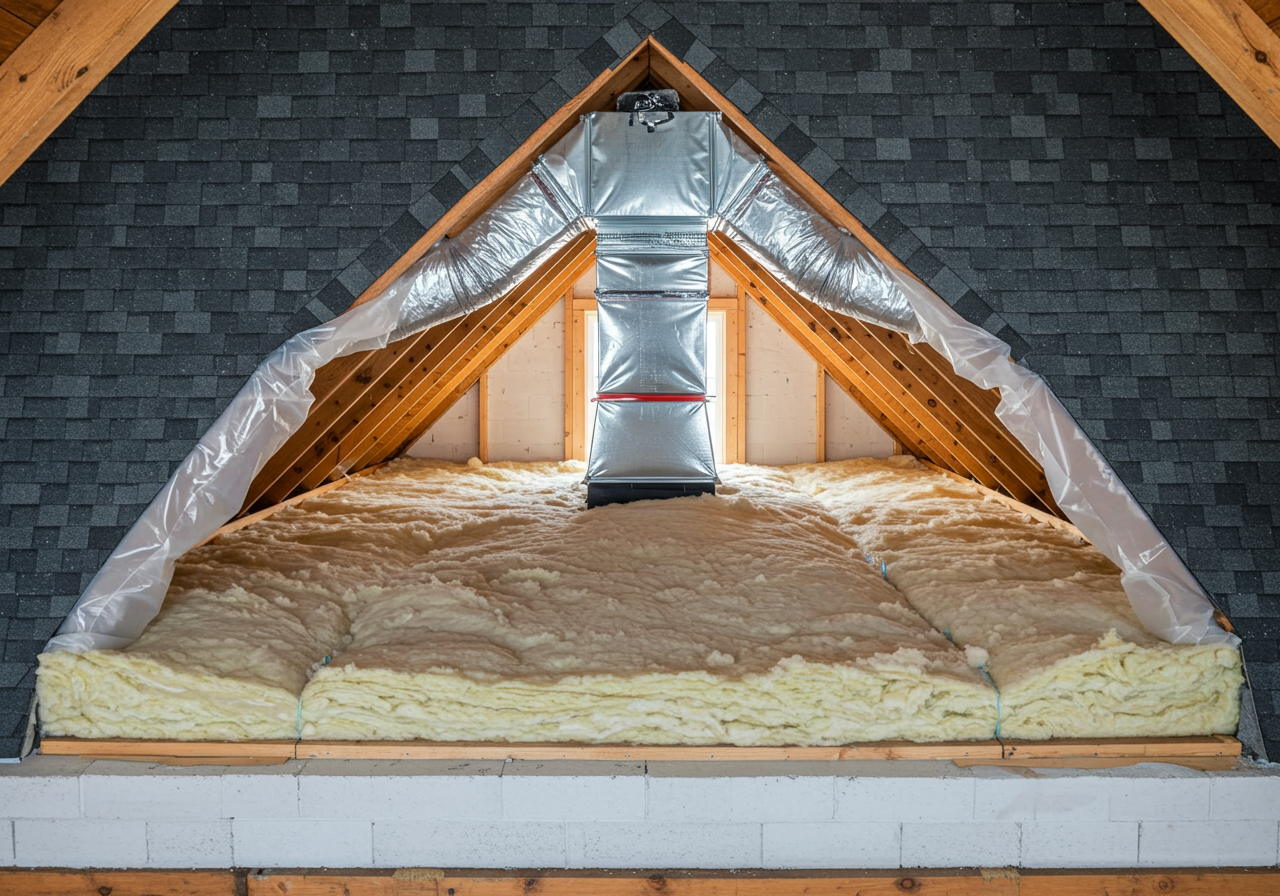
Poor attic ventilation causing shingle degradation in Westport homes
When humidity reaches 82% and gets trapped in attics, it literally cooks shingles from the inside out, shortening roof life by an average of 9 years.
The Great Westport Insulation Standoff: Cellulose vs. Fiberglass
Look, if you poke your head into your attic and see the tops of your floor joists, you're losing money. It's that simple. In our region, the Department of Energy recommends an R-60 rating for attics. Most homes I step into in Westport are hovering around R-30, which was the standard back when gas was a dollar a gallon.
Why R-Value Isn't Just a Number
When it's 31°F outside, heat wants to migrate toward the cold. If your insulation is thin, that heat escapes into the attic, warms the roof deck, and melts the snow. That water then runs down to the cold gutters and freezes. That's how you get a $3,200 ice dam repair. I've seen 18-inch icicles hanging off colonials near Compo Beach that were caused entirely by poor insulation, not the weather itself.
The Moisture Trap (82% Humidity Reality)
High humidity is the silent killer of Connecticut roofs. At 82% humidity, any air trapped in your attic is heavy with moisture. If that air hits a cold roof deck, it condenses. I've been in attics where it looked like it was raining inside because the "dew point" was met right on the plywood. This leads to mold, but more importantly, it causes the plywood to delaminate. Once your decking is soft, those expensive architectural shingles lose their fastener pull-through resistance.
Insulation Material Comparison for CT Climates
Pros
- Cellulose: Higher R-value per inch, better at stopping air infiltration
- Fiberglass: Naturally fire-resistant, doesn't settle as much over 15 years
Cons
- Cellulose: Can hold moisture if a leak occurs, heavier on the ceiling joists
- Fiberglass: Less effective at blocking airflow (convection loops)
Ventilation Mechanics: Soffits, Ridges, and the 'Dead Zone'
If insulation is the blanket, ventilation is the lungs. I've seen crews (not mine) install beautiful new GAF or Owens Corning shingles but forget to cut the ridge vent or, worse, leave the old soffit vents painted shut.
The Intake-Exhaust Balance
You need a 50/50 balance. Air comes in through the soffits (intake) and exits through the ridge (exhaust). If you have plenty of exhaust but no intake, the system will actually pull conditioned air out of your house through recessed lights and attic Hatches. It's a vacuum effect that most people don't realize is happening until they see their January Eversource bill.
The Problem with 'Mixed' Ventilation
One of my biggest pet peeves is seeing a roof with a ridge vent and a motorized power fan. They fight each other. The fan often ends up pulling air in through the ridge vent, bringing rain and snow along with it. According to FEMA's hurricane mitigation guidelines, properly secured continuous ridge vents are the gold standard for high-wind coastal areas like ours.
Average Shingle Lifespan (Years) vs. Ventilation Quality
Frequently Asked Questions
The $3,200 Savings Strategy: Incentives and Longevity
When I talk to homeowners about spending $2,500 on an insulation and vent upgrade, some flinch. But let's look at the data. A roof in Westport that should last 30 years often fails at year 21 because the oils in the asphalt dried out from excessive attic heat.
Calculating the ROI
If a new roof costs $18,000, losing 9 years of life costs you roughly $5,400 in "lost value." Add in the energy savings—which the EPA notes can be significant when using reflective or well-ventilated systems—and the upgrade pays for itself in less than four years.
My Field Note on Baffles
If there is one thing I want you to check today, it's your attic baffles. These are the plastic or foam channels that keep your insulation from clogging the soffit vents. I'd say 40% of the "hot roofs" I inspect are caused simply because a previous insulation contractor was lazy and blew cellulose right over the intake vents. It takes ten minutes to check and can save you thousands.
Before you commit to a major repair, you should learn how our matching process works to ensure you're getting a contractor who actually understands the science of airflow, not just someone who knows how to swing a hammer. For more energy-efficient roofing strategies, check out our complete guide library.
Did You Know?
During a typical CT winter, an under-insulated attic can reach 50°F even when it's 31°F outside, creating the perfect environment for mold to grow on your roof sheathing.
"Most roofing failures aren't caused by the shingles themselves, but by the 'oven' created underneath them. Ventilation isn't an accessory; it's a structural requirement."
Don't let a 'strangled' attic ruin your investment
Westport homeowners can get an instant roof estimate and a full ventilation diagnostic through our verified local network.
No credit card required • Free to use
Get Your Free Roof Quote
Enter your zip code to get started
Summary of Actionable Steps
If your home feels drafty or you've noticed ice buildup during this 31°F stretch, start in the attic. Check that your insulation is at least 15 inches deep (R-49 to R-60) and ensure your soffit vents aren't buried under a mountain of fiberglass. Proper airflow is the cheapest insurance policy you can buy for your roof. By balancing your intake and exhaust, you aren't just lowering your utility bills—you're ensuring your roof survives another three decades of Connecticut winters. Ready to get started? Get an instant roof estimate and connect with verified local contractors who specialize in proper attic ventilation.