
Key Takeaways
- Proper attic ventilation can reduce annual heating and cooling costs by roughly 12% to 15% in the Connecticut shoreline climate.
- Snow melting quickly on your roof (while others stay white) is a primary indicator of 'bypass leaks' and insufficient R-value insulation.
- Investing in high-performance underlayment and ridge vents often pays for itself through energy savings within 7.4 years.
I was driving across the Haddam-East Haddam Swing Bridge the other morning, looking up at the houses perched on the hills overlooking the river. It's January, and the Connecticut winter isn't pulling any punches. But here's what caught my eye as a roofing consultant: half of those rooftops were covered in a thick, beautiful blanket of snow, while the other half were bone dry and steaming.
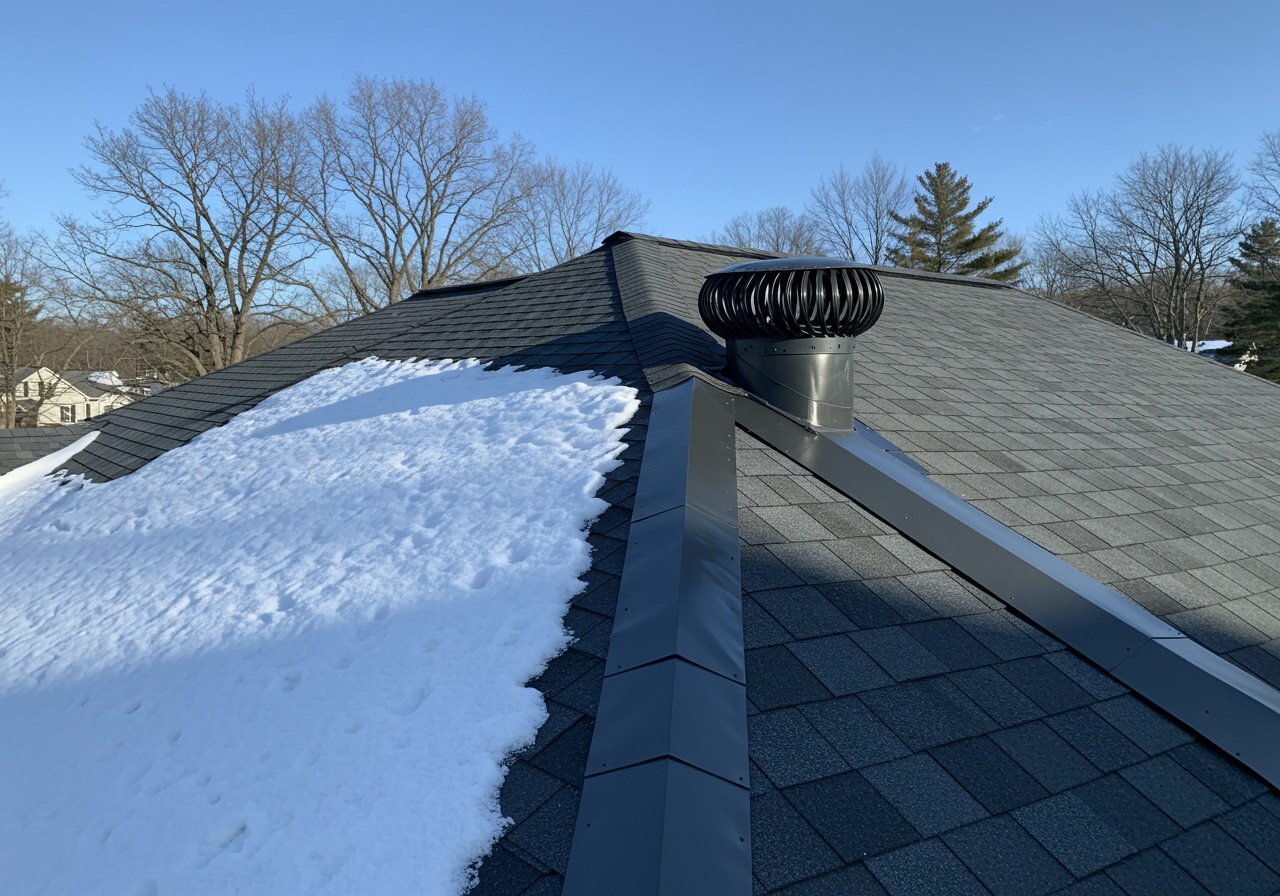
That's not just a difference in microclimates. It's a thermal X-ray of who is wasting money. If your neighbor's roof has snow and yours doesn't, you aren't "lucky" to have a clear roof; you're actually paying to heat the atmosphere. In my field notes from a recent inspection in Higganum, I found that a poorly ventilated attic was hitting 88°F while the outside air was hovering in the low 30s. That's a massive failure of the building envelope.
The "Haddam Shingle Melt" and Your Heating Bill
When heat escapes from your living room into your attic, it doesn't just sit there. It rises, warms the roof deck, and melts the underside of the snow. This creates two problems: a higher Eversource bill and the dreaded ice dam. I've seen 18-inch icicles hanging off gutters in Haddam that look like decorations but are actually symptoms of a roof that's "leaking" cash.
The reality is that your roof isn't just a lid; it's a component of a balanced thermal system. According to the Department of Energy's insulation guidelines, most older homes in Middlesex County are significantly under-insulated. If you haven't checked your attic floor lately, you might find your insulation has settled or been compressed, losing its effectiveness.
Attic Temperature Analysis in Haddam
Poor ventilation and insulation lead to excessive heat loss and higher energy bills.
I remember a project off Saybrook Road where the homeowner complained about a $600 monthly heating bill. We pulled up a few courses of shingles and found the plywood decking was actually charred from years of excessive heat buildup. By installing a balanced system of soffit and ridge vents, we dropped their attic temperature by 24 degrees in the summer and kept it at a steady "ambient plus 10" in the winter.
Ventilation: The Invisible Money Pit
Most people think a roof's job is to keep water out. That's only half the story. A roof's second job is to breathe. In our humid Connecticut shoreline environment, trapped moisture in the winter is a silent killer. When you shower or cook, that warm, moist air travels upward. If your roof doesn't have a 1/150 ventilation ratio (1 square foot of vent for every 150 square feet of attic floor), that moisture hits the cold roof deck and turns into frost.
Did You Know?
A standard 2,000-square-foot home in Connecticut can release up to 4 gallons of water vapor into the attic every single day during the winter.
But here's the thing: many local contractors just "pop a vent on" and call it a day. You need a balance. If you have too much exhaust and not enough intake at the eaves, the roof will actually suck warm air out of your bedrooms through your recessed lighting fixtures. I've measured this with a smoke pen; it's like having a window cracked open all winter long. To avoid these traps, I always suggest learning how our matching process works so you can find a pro who actually understands the science of airflow.
The Visual Snow Test
After the next dusting, compare your roof to your neighbors'. Fast melting equals high heat loss.
Attic Probe
Measure the depth of your insulation. In CT, you generally want R-49 to R-60, which is about 16-20 inches of blown-in cellulose.
Baffle Inspection
Ensure your soffit vents aren't clogged by insulation. Air needs a clear path from the gutters to the peak.
Seal the Bypasses
Use spray foam to seal gaps around chimneys and plumbing stacks where air escapes the house.
Material Choices That Fight Energy Loss
When it's time for a full replacement, the shingles you choose matter, but the underlayment is the unsung hero. I've started recommending synthetic underlayments over traditional felt for my shoreline clients. Why? Because they act as a much more effective secondary air barrier.
And don't get me started on "cool roofs." While often marketed for the South, certain shingles like the GAF Timberline CS or Owens Corning's Duration Cool series reflect solar energy. In the summer, this keeps your AC from working overtime, but in the winter, the focus shifts to the "Thermal Seal" of the installation. If a contractor isn't using a starter strip and a proper six-nail pattern, the shingles won't seal correctly, allowing "wind-wash" to pull heat right out from under the tabs.
Pro Tip from the Field
Before you commit to a major upgrade, make sure you get an instant roof estimate that accounts for the specific structural needs of a Connecticut home. I've torn apart too many roofs after five years because the original installer ignored the ventilation math.
The 15-Year Payback: Why "Cheap" Roofs Cost More
Let's look at the data. A "cheap" roof in Haddam might save you $2,400 upfront. But if that roof lacks proper ventilation and high-quality flashing, your heating bills will stay $45 higher per month than they should be. Over 15 years, that's $8,100 in wasted energy—not to mention the shortened lifespan of the shingles due to "baking" from the inside out.
Annual Energy Waste Comparison
Lifetime Savings (15 Years): $5,475 savings
The FEMA guidelines for sloped roofs emphasize that a well-fastened and properly vented roof is the first line of defense for a home's structural integrity. It's not just about the shingles; it's about the entire assembly.
I always tell folks in Middlesex County: don't just hire a guy with a truck. Before you sign anything, use the CT eLicense portal to verify that your contractor is actually registered and in good standing.
If you're tired of seeing the snow melt off your roof faster than a Higganum ice cream cone in July, it might be time to look at your attic's ecosystem. A few smart adjustments can save you thousands in the long run and keep your home feeling like a sanctuary instead of a drafty barn.
Get Your Free Roof Quote
Enter your zip code to get started