
Key Takeaways
- Design Context: Cedar shakes offer a unique texture that increases curb appeal specifically for Trumbull's colonial and transitional architecture.
- Maintenance Mandate: Unlike asphalt, cedar requires a professional cleaning and 'soft wash' every 5 to 7 years to prevent rot.
- Installation Nuance: Proper airflow through 'cedar breather' mats or spaced sheathing is the single most important factor in roof lifespan.
- Insurance Impact: Some CT insurers require specific fire-retardant treatments (Class A) which can alter the initial material cost.
January in Trumbull has a very specific look. When I drive through neighborhoods like Nichols or up toward Tashua, the landscape is a palette of greys, browns, and the deep green of our coastal-adjacent pines. It's the time of year when a home's "bones" really show. I was walking my golden retriever near the town hall last Tuesday, looking at a stunning colonial, and it hit me: nothing warms up a Connecticut winter quite like the honeyed hue of a well-maintained cedar roof. But there's a massive gap between the "magazine look" and the reality of owning one of these systems in Fairfield County.
Most contractors are quick to sell you on the prestige—and it is prestigious—but they often skip the part about what happens after the check clears. If you're weighing the charm of wood against the practicality of asphalt, you need the full picture before the spring thaw arrives.
The Aesthetic Signature of Fairfield County
In our corner of the "Gold Coast," your roof isn't just a lid for your house; it's about 40% of your home's visual profile. When I'm consulting with homeowners in the Tashua Knolls area, we talk a lot about how a roof meets the sky. Cedar shakes provide a heavy shadow line that you simply cannot replicate with flat shingles.
The "Silvering" Timeline
One thing a lot of people don't realize is that the "new" cedar look—that warm, golden tan—only lasts about a year or two in our climate. Eventually, the sun and the January salt air turn the wood into a sophisticated silvery-grey. I actually prefer this stage. It looks "settled" and historic. However, if you're expecting it to stay orange-gold forever without heavy staining, you're in for a surprise.
Texture and Neighborhood Context
If you live in a neighborhood with a lot of mature oaks and maples, cedar blends into the environment. It feels organic. I remember a project last year where a couple wanted to switch to black asphalt, and I had to gently point out that their house would look like it was wearing a heavy hat that didn't match its shoes. Cedar keeps the design light and breathable.
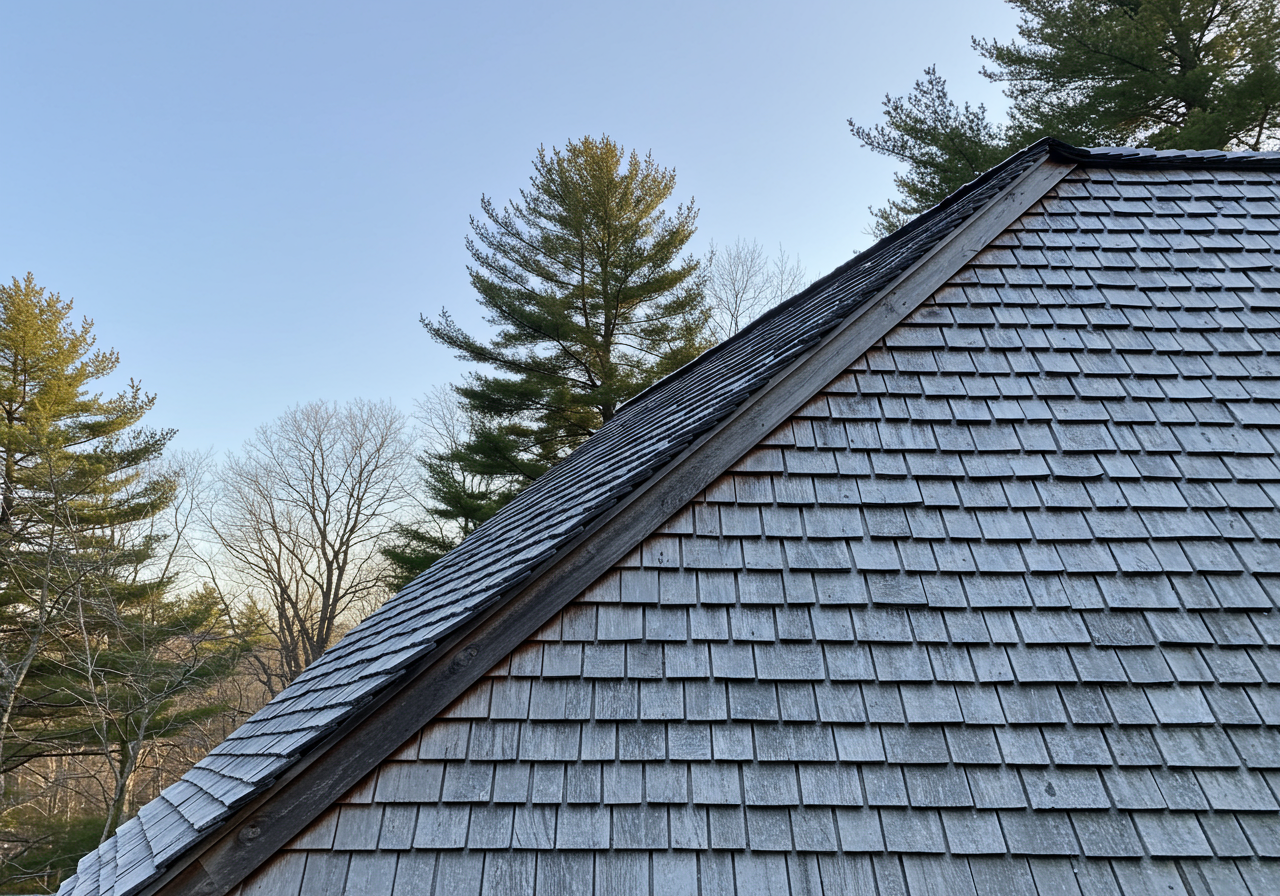
Cedar Shake Roofing in Trumbull
The natural texture and color variations of cedar shakes create a timeless aesthetic that complements Connecticut's colonial architecture.
The Maintenance Reality: Avoiding the "Tashua Moss" Trap
Here is the part where I get a little "tough love" with my readers. A cedar roof is a living thing. Because Trumbull gets a fair amount of shade and moisture, our roofs are prime real estate for moss and lichen.
The 5-Year Soft Wash
I once visited a friend's home near Pinewood Lake who was complaining about a leak. When I looked at her roof, it was literally fuzzy. Moss acts like a sponge, holding water against the wood and fast-tracking rot. You have to commit to a professional cleaning every few years. But—and this is a big "but"—you can't let a generic power washing crew near it. High pressure will shredded the wood fibers. You need a pH-balanced chemical treatment that kills the spores without destroying the grain.
Leaf Debris and Valley Rot
Because we have so many beautiful trees in Trumbull, our gutters and roof valleys fill up fast. For a cedar roof, this is a death sentence. When leaves sit in a valley, they trap moisture, and the cedar stays damp for weeks. I always tell homeowners to verify their contractor's license and ask specifically about their experience with cedar-specific flashing and valley protection.
The Cedar Shake Trade-Off
Pros
- Unmatched curb appeal and property value boost
- Natural insulation (stays cooler in summer, warmer in winter)
- Impact resistant against Fairfield County hail
- Sustainable and biodegradable material
Cons
- Requires specialized labor for installation
- Higher upfront cost than architectural shingles
- Needs regular chemical treatments to prevent rot
- Higher insurance premiums in some coastal zones
Fire Resistance and Insurance Nuances
Let's talk about the "boring" stuff that actually matters: safety and money. Connecticut isn't California—we aren't usually worried about massive wildfires—but fire safety is still a major factor in building codes.
Class A vs. Class C
Standard cedar shakes are naturally Class C fire rated. However, many insurance companies in Fairfield County are starting to push for Class A pressure-treated shakes. These are infused with fire retardants during manufacturing. It adds to the cost, but it can significantly lower your annual premium. I've seen homeowners save $400 a year just by opting for the treated wood.
Professional Standards
When your crew is up there, safety is paramount. According to the OSHA guidelines for residential fall protection, cedar installations require specific staging because the wood can be incredibly slick, especially if there's a morning frost in January. If you see a crew hopping around your 12-pitch roof without harnesses, that's a red flag for the quality of the entire job.
The Installation Secret: Why Airflow is Everything
If a contractor tells you they can just "nail the shakes to the plywood," please, show them the door. Cedar needs to breathe. When wood gets wet, it expands; when it dries, it contracts. If the underside of the shake is trapped against solid wood, it stays wet, and the shingle will curl and "cup" within ten years.
Spaced Sheathing (Lath)
In older Trumbull homes, you'll often see "skip sheathing," which looks like a wooden ladder. This is the gold standard. It allows air to circulate under the shingles. If you have a modern home with a solid plywood deck, your contractor must use a synthetic breather mat. It creates a 1/4 inch gap that allows moisture to escape.
The Cost of Cutting Corners
I've seen $30,000 cedar roofs fail in 12 years because of poor ventilation. It's heartbreaking. If you're budgeting for this, make sure your roofing cost calculator account includes the price of specialized underlayments or re-sheathing.
"A cedar roof is an investment in the architecture of the home. If you treat it like a commodity, it will fail like one. The secret is in the airspace behind the wood."
Choosing the Right Grade: Shakes vs. Shingles
Not all cedar is created equal. In Trumbull, we mostly see "shaked" (hand-split and resawn) or "shingles" (sawn on both sides).
The "Taper-Split" Advantage
For that rugged, historic look, you want a heavy-weight hand-split shake. They are thicker and can withstand our heavy snow loads better. Shingles are thinner and provide a much smoother, more tailored look—great for a modern farmhouse but maybe less "grand" for a big colonial on the Old Post Road.
Wood Species
Western Red Cedar is the king of the market, but you'll also see Alaskan Yellow Cedar. Yellow cedar is denser and naturally more resistant to rot, though it turns a very bright silvery-white much faster.
Estimated Lifespan in Connecticut Climate
The Investment Reality for Trumbull Estates
Let's get down to the brass tacks. Is it worth it? If you are planning on staying in your home for the next 20 years and you value the "Gold Coast" aesthetic, the answer is usually yes. Cedar roofs can provide a 10% to 15% bump in resale value compared to a standard asphalt roof in high-end neighborhoods.
ROI and Efficiency
Cedar is actually a fantastic insulator. I've noticed that homes with wood roofs stay significantly cooler in the humid July heat we get here in CT. The wood fibers have natural air pockets that act as a thermal barrier.
Emergency Considerations
One thing to keep in mind during our winter storms: if a heavy branch comes down, cedar is surprisingly tough, but repairs aren't DIY. If you experience a strike, you'll need emergency roofing services that understand how to lace in new shakes without disturbing the surrounding weathered wood. For those looking at major renovations or needing financial paths for high-end repairs, the USA.gov home repair portal offers resources on financing critical improvements.
While cedar is a steep-slope specialist, if your Trumbull home has a flat-roof garage or sunroom addition, make sure that section follows the FEMA guidelines for low-slope roof protection to ensure the whole system is watertight.
Get Your Free Roof Quote
Enter your zip code to get started
I always tell my neighbors: don't let the price tag scare you off, but don't let the beauty blind you to the work. A cedar roof is a relationship. If you take care of it, it will be the most beautiful thing on your block for decades to face the Connecticut sky.