Most people in Tolland County believe that roof maintenance is a chore reserved for those few weeks in May when the black flies start biting and the sun finally warms up Bigelow Hollow. The common wisdom says, "If it didn't leak during the January blizzards, it's fine until spring." That logic is exactly how a $400 gutter cleaning turns into a $14,800 structural repair.
In reality, waiting for the thaw is the most expensive mistake you can make. By the time you see a brown spot on your ceiling in April, the damage—likely from ice dams or shingle fatigue—has been "cooking" for three months. In Union, where our elevation often keeps us a few degrees colder than the rest of the state, our maintenance schedule has to be dictated by the barometer, not the calendar.
Key Takeaways
- Thermal Shock Management: Understanding how 4°F temperatures affect shingle flexibility.
- The Two-Visit Rule: Why Union homes require professional inspections in both November and late March.
- Gutter Hygiene: The specific impact of oak and pine debris on Tolland County drainage systems.
- Ventilation Audits: How to prevent attic heat from creating the dreaded February ice dam cycle.
Union Roof Maintenance in Winter
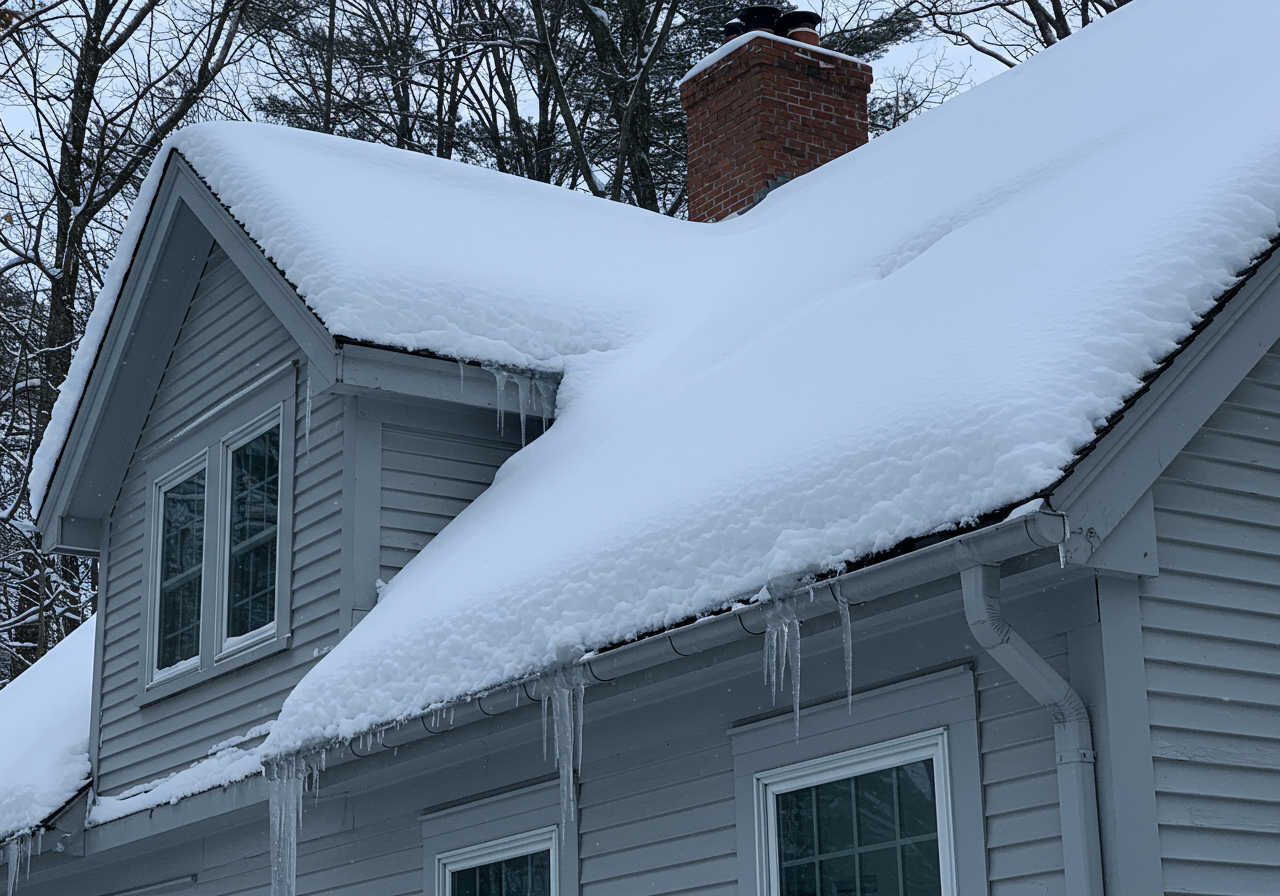
A Union home showing proper roof maintenance practices during Connecticut's harsh winter months, highlighting the importance of year-round care.
The February Freeze: Why Union Roofs Fail in 4°F Temps
Right now, the thermometer in Union is hovering at a bone-chilling 4°F. While you're worried about your heating bill, your roof is fighting a different battle. At these temperatures, asphalt shingles lose their "memory"—the ability to flex and return to their original shape.
With the wind hitting 12 mph today, any shingle that isn't perfectly sealed is being lifted. In warmer weather, that's fine. At 4°F, a lifted shingle is brittle; it doesn't bend, it snaps. I've seen 14-year-old roofs in Union lose entire sections because the sealants gave out during a cold snap just like this one.
The Ice Dam Threat
Humidity is sitting at 70% today, and while it's cloudy, the heat escaping from poorly insulated Union attics is hitting the underside of your roof deck. This creates a micro-climate where snow melts, runs down to the eaves (which are 4°F), and freezes instantly. This isn't just a "winter problem"—it's a maintenance failure. A clean gutter and a ventilated soffit are your only defenses against the ice that's currently trying to crawl under your shingles.
Spring Awakening: The Post-Thaw Integrity Audit
Once we hit that first real stretch of 50°F weather in late March, the "Great Union Thaw" begins. This is when you need to be on the ground with a pair of binoculars. I don't recommend homeowners get on ladders—especially with the damp, mossy conditions we get in Tolland County—but you can spot the big issues from the lawn.
Look for "granule shedding." If your downspouts are spitting out what looks like coffee grounds, your shingles are reaching the end of their UV-protection life. I remember a client over on Buckley Highway who ignored the "sand" in their gutters for two years; they ended up with a total loss after a standard spring thunderstorm because the shingles had no protective layer left.
Vetting Your Spring Help
If you spot issues, don't just hire the first guy with a truck who knocks on your door. Make sure you verify their contractor's license through the state's official portal. It takes thirty seconds and can save you from a world of liability issues.
Pros and Cons of April Maintenance
Pros
- Early detection of winter stress
- Cheaper repair rates before peak season
- Ensures warranty compliance
Cons
- Unpredictable CT spring rain can delay work
- Higher demand for reputable contractors
Summer Heat: Defending Against Tolland County Humidity
Union might be "The Union of the Forest," but that shade doesn't protect you from the 80% humidity we see in July. When the dew point climbs, your roof deck expands. If your attic ventilation isn't pulling that moist air out, you're essentially steaming your roof from the inside.
I've walked into attics in Union during August where the plywood was literally dripping. That's not a leak; that's condensation. Part of your summer maintenance should be a simple "light test" in the attic. If you can't see daylight through your ridge vents or soffits, they're clogged with dust or insulation, and your shingles are "cooking" at 150°F.
The Autumn Rush: Gutter Hygiene and Hurricane Prep
In Union, we have more trees per square mile than most of the state. While it's beautiful, it's a nightmare for roofing. The "fall" maintenance window here is tight—usually between the last leaf drop and the first hard freeze in November.
You need to clear those gutters. If they're full of damp oak leaves when that 4°F weather hits, they'll freeze solid. The weight of a frozen, leaf-filled gutter can exceed 300 pounds, often pulling the fascia board right off the house. According to the NWS Storm Events Database, Tolland County frequently sees high-wind events in late autumn that can turn a loose gutter into a dangerous projectile.
"A single clogged downspout in a Union November is more dangerous to your foundation than a foot of snow in January."
Calculating the Value: Why $425 Saves $12,000
I often hear people complain that a professional maintenance visit is "too expensive." Let's look at the math. A typical Union roof replacement for a 2,500-square-foot home can easily run $16,000 to $22,000 in 2026.
If you spend $425 a year on a professional tune-up—sealing pipe boots, clearing debris, and checking flashing—you can realistically extend the life of that roof by 7 to 10 years. You can even calculate the cost of replacement compared to preventative maintenance to see how the price of replacement compares to the cost of simple preventative maintenance over time.
Contractor Vetting: Finding a Union Specialist
Don't hire a guy from the coast to fix a roof in the hills. Union has a specific climate. You need someone who understands "snow load" and "ice damming" as lived experiences, not just textbook definitions.
The BBB Roofing HQ is a great place to start looking at local reputations, but nothing beats asking about their experience with Tolland County winters. When you're ready to connect with verified local contractors, make sure they have a local track record of working on homes that face the same wind and cold as yours.
The Ice Dam Prevention Protocol
If you've had ice dams in the past, your maintenance schedule needs to include an "insulation audit." Most of the older homes near the Union town center are under-insulated by modern standards.
Inspect attic insulation levels for R-49 or higher
Connecticut's climate requires higher R-values than many homeowners realize. Check your current insulation depth and upgrade if needed.
Seal all bypasses where warm air leaks into the attic
Common culprits include recessed lighting fixtures, plumbing vents, and gaps around chimneys. Use expanding foam or caulk to seal these areas.
Clear all soffit vents of debris or insulation blockages
Blocked vents prevent proper airflow, leading to heat buildup. Ensure at least 1 inch of clearance around all vent openings.
Install a water-and-ice shield membrane at the eaves if missing
This self-adhering membrane provides an extra layer of protection against water intrusion from ice dams, especially critical in Union's elevation.
This protocol isn't just about the roof; it's about the thermal envelope of the whole house. If you skip these steps, you're just paying for a temporary fix.
Creating Your 2026 Maintenance Roadmap
The best way to handle this is to treat your roof like your car. You wouldn't drive 50,000 miles without an oil change, so don't let two years of CT weather go by without a check-up.
- Late March: Post-winter inspection and gutter clearing.
- June: Attic ventilation and humidity check.
- November: Final gutter cleaning and storm-prep audit.
If you ever find yourself in a situation where a storm has caused immediate damage, don't wait for the weekend. Getting emergency roofing help during a weather event can prevent a small leak from ruining your hardwood floors or electrical system.
Get Your Free Roof Quote
Enter your zip code to get started
In a town as small and rugged as Union, we have to look out for our neighbors and our homes. Our weather doesn't give many second chances. Stick to a schedule, keep your gutters clear, and respect the power of a 4°F Connecticut night. Your roof will thank you for it.
FAQ

About Noah Knight
Verified ExpertNoah Knight is a Connecticut Weather & Climate Specialist who helps homeowners understand how New England's unique weather patterns affect their roofing systems. He combines meteorological knowledge with practical home maintenance advice.