Did you know that a wind gust doesn't actually have to hit hurricane speeds to start peeling back your shingles like an orange? It's a bit of a shocker, but most standard asphalt shingles in our neck of the woods are only rated for a certain "seal" strength, and once a gust over 58 mph hits a loose corner, the mechanical bond is compromised forever. In East Hampton, where the wind tends to swirl around the hills and whip across the lake, we see a lot of "chatter" damage—where shingles flap just enough to break the sealant without flying off. It's the kind of sneaky problem that doesn't show up until you have a puddle in the attic three months later.
I've seen too many neighbors assume that if they don't see shingles on the lawn, they're in the clear. But the reality of Middlesex County weather is that wind is rarely a one-and-done event; it's a cumulative stressor on your home's curb appeal and structural integrity. Let's walk through what you should be looking for before the next February storm rolls through.
Key Takeaways
- Wind damage can start at just 50-60 mph gusts, especially on roofs over 10 years old.
- Uplift damage—where shingles break their seal but don't fall off—is the most common hidden problem.
- Granule loss in gutters is an early warning sign that your roof is being scoured by wind.
- Professional inspection provides documentation needed for insurance claims and catches hidden damage.
1. The "Lift and Peek" Shingle Mystery
Most people look for missing shingles, but the real danger is "uplift." This happens when wind gets underneath the shingle and breaks the tar strip bond. I remember helping a friend over on Main Street who couldn't figure out why her bedroom ceiling had a damp spot. From the curb, her roof looked pristine. When we got a pro up there, we found that about 14% of her shingles were "unsealed." They looked fine but offered about as much water protection as a loose deck of cards.
If you're brave enough to get on a ladder (and please, be careful!), you can gently try to lift the edges of the shingles. If they come up easily, the wind has already won that round. It's a design nightmare because it ruins the sleek, uniform lines of a well-maintained roof.
2. Granule Loss and the Gutter "Coffee Grounds"
After a heavy wind event, take a walk around your downspouts. Are you seeing what looks like dark coffee grounds or coarse sand? Those are the granules that protect your shingles from UV rays. Wind doesn't just lift shingles; it "scours" them. High-velocity air can literally sandblast the life out of your roof.
When those granules go, the asphalt underneath is exposed to the sun and becomes brittle. From a design perspective, this is where your roof starts to look "bald" and patchy, losing that rich texture that makes a home stand out. You can find more deep dives into material longevity in our collection of Connecticut roofing guides.
3. The "Hinge" Effect on Shingle Tabs
Wind doesn't always rip the shingle off; sometimes it just bends it back. This creates a "hinge" line—a faint horizontal crack across the top of the shingle tab. You might not see it unless the sun hits it at just the right angle, usually in the late afternoon. But once that hinge forms, the shingle is structurally dead.
I once saw a beautiful Victorian near the lake where the owner ignored these "faint lines" for a year. By the time they called someone, the underlying wood had started to rot. It's always cheaper to fix a few tabs than to replace a whole slope of plywood. To get an idea of the history of storms in our area, you can check NOAA's historical storm database to see just how often East Hampton gets hit with these high-wind events.
4. Chimney Flashing and the Metal Tug-of-War
Your chimney is basically a giant sail sticking out of your roof. When the wind howls, the house moves just a tiny bit, and the chimney moves a different way. This tension often pulls the metal flashing away from the brick or the shingles.
I always tell people to look for "daylight" around the chimney base or any puckering in the metal. If the flashing is bent or pulled, wind-driven rain will find its way in. It's a small repair that saves a massive headache. If you're curious about how these repairs hold up over time, I'd suggest reading what your neighbors in Middlesex County are saying about their recent storm restoration projects.
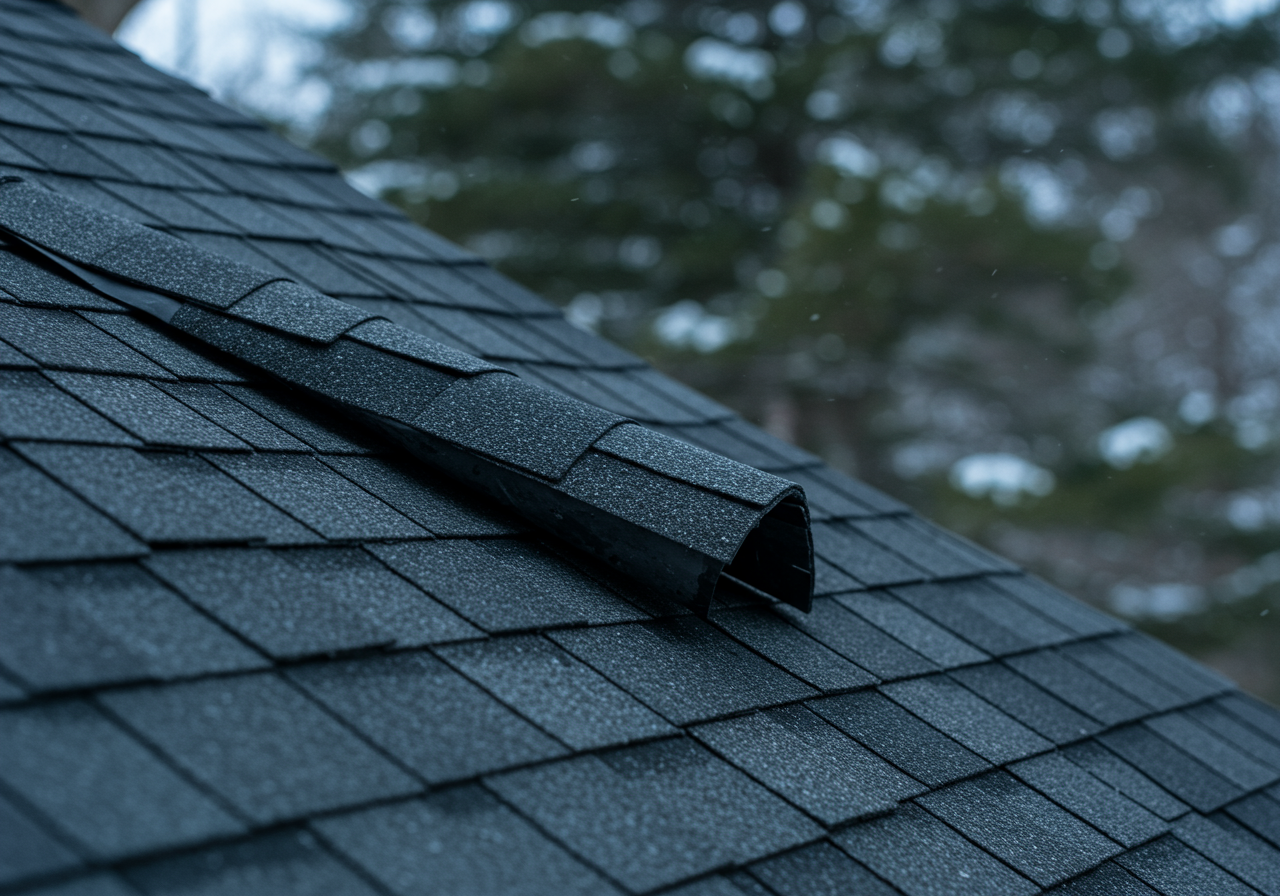
Wind Damage Assessment
Professional inspection reveals hidden uplift damage that isn't visible from the ground
5. Tree Limb "Scuffing" Near the Lake
East Hampton is gorgeous because of its trees, but those oaks and maples are a roof's worst enemy in February. Even if a limb doesn't fall, the wind can whip branches against your shingles for hours. This "scuffing" creates bald spots and can even tear the shingle mat.
I recently talked to a couple who had a beautiful maple overhanging their garage. They loved the shade, but after one particularly windy weekend, the branch had literally "erased" the shingles in a three-foot arc. If you have branches within five feet of your roof, it's time for a trim. Keep in mind that Connecticut's home improvement regulations offer some protections when you're hiring folks for these types of preventative maintenance jobs.
6. DIY Inspection vs. Professional Assessment
Look, I love a good DIY project, but wind damage is notoriously hard to document for insurance if you don't know what you're looking for. A professional roofer knows how to spot the "crease" that indicates a shingle has been flipped up and laid back down.
Professional Roof Inspection
Pros
- Catches hidden 'uplift' damage
- Provides documentation for insurance
- Identifies secondary issues like flashing gaps
Cons
- Might cost a small inspection fee
- Takes time to schedule
"Wind damage is the 'silent killer' of Connecticut roofs. It rarely looks as bad as it is until the first big thaw or rainstorm reveals the leaks."
7. Navigating the Repair Paperwork
If you do find damage, don't rush into a handshake deal with the first guy who knocks on your door after a storm. In Connecticut, we have very specific laws about who can work on your home. You should always verify their license status through the state's official portal before any work begins.
The 3-Day Rule
When you're ready to move forward, checking for verified roofing credentials is the best way to ensure your East Hampton home is back to its beautiful, weather-tight self without the drama.
Get Your Free Roof Quote
Enter your zip code to get started
Common Wind Damage Questions

About Sheri Wilde
Verified ExpertSheri Wilde is a Home Improvement Editor with a background in interior design and sustainable living. She helps Connecticut homeowners make informed decisions about their biggest investments.