Driving down Route 156 toward Hamburg Cove, it's easy to admire the colonial architecture and the way the light hits the Connecticut River. But as someone who has spent the better part of two decades analyzing rafter failures and shingle uplift, I see something else: a high-wind corridor that doesn't care about curb appeal. In Lyme, we aren't just dealing with "New England weather"; we are situated in a geographical "pinch point" where shoreline gusts can easily hit triple digits. Most homeowners I talk to in Middlesex County wait until the first tropical storm warning appears on the evening news to think about their roof. By then, the reputable crews are already booked out six weeks. The reality is that hurricane preparation is a game of technical inches—specifically, how many inches of nail penetration you have into your decking.
Key Takeaways
- Lyme homeowners can reduce storm-related repair costs by 18-22% through proactive fastener reinforcement and edge-metal upgrades.
- Standard 4-nail patterns often fail in shoreline wind zones; a 6-nail high-wind installation is the technical gold standard for Middlesex County.
- Attic pressure regulation is as critical as shingle quality; improper ventilation can lead to roof 'blow-off' during high-velocity wind events.
- Verifying contractor registration via CT eLicense is a non-negotiable step before signing any storm-prep contract.
1. The Technical Truth About Fastener Patterns
The biggest mistake I see in Lyme is the "standard" installation. Most shingles are rated for 110 mph, but that rating is entirely dependent on the fastening method. On a typical day, a 4-nail pattern is fine. But when you're facing a shoreline northeaster or a Category 1 hurricane, you need a 6-nail high-wind pattern. I've personally inspected roofs in the Joshuatown Road area where the shingles literally unzipped from the deck because the installers used a pneumatic gun set to the wrong PSI, blowing the nail heads right through the asphalt.
Here is the thing: if your roofer isn't talking about "nailing zones" and "enhanced fastener schedules," they aren't preparing you for a hurricane. We use a 1.25-inch stainless steel coil nail for most shoreline jobs because the salt air in Middlesex County eats through standard galvanized fasteners in about 12 years. If you're unsure if your current roof was built to these specs, getting a professional repair assessment can identify if your fasteners are reaching the end of their lifecycle before the wind does the job for you.
2. Reinforced Edge Metal and Drip Edge Specs
Hurricane winds don't usually start by punching a hole in the middle of your roof; they start by grabbing the edge. Think of it like a bag of chips—once you get that first little tear at the corner, the whole thing rips open. In Lyme, many older homes have flimsy 0.019-inch aluminum drip edges that bend like a soda can under pressure. I recommend upgrading to a 24-gauge steel or a heavy-duty 0.032-inch aluminum edge guard.
I remember a job near the Old Lyme border where the homeowner lost half their roof during a freak wind event. The culprit? The drip edge wasn't fastened every 4 inches as required by high-wind codes; it was tacked on every 12 inches. When the wind got under that metal, it acted like a crowbar, prying the starter shingles right off the deck. It's a $400 upgrade that can save a $25,000 roof replacement.
3. The Role of Attic Pressure in Roof Blow-Offs
This is the "hidden" physics of roofing that most contractors ignore. When high winds hit your home, they create a massive pressure differential. If wind gets into your attic through gable vents or poorly secured soffits, it pushes up while the wind outside is pulling up. This "internal pressurization" is what causes entire roof structures to lift off the plates.
I've used smoke testers in Lyme attics to show homeowners exactly where the air is leaking. You want a balanced system: ridge vents combined with baffled soffit vents. If you have a gable vent, I often recommend installing a permanent internal shutter that can be closed during a storm. According to the Better Business Bureau's home improvement guidelines, ensuring your contractor understands these structural dynamics is key to a long-lasting contract.
Wind Resistance Ratings by Material (MPH)
4. Sealant Bonding and the February Factor
Since we're currently in February 2026, we have to talk about "thermal sealing." Asphalt shingles have a strip of adhesive that needs heat to bond. In a cold Connecticut February, those shingles aren't sealing themselves. If a storm hits now, your roof is essentially a deck of cards.
I've had my crews out in Lyme using handheld heat applicators to manually seal shingles on winter installs. It's tedious, but if you don't get that bond, the wind will lift the shingle, dust will get under the adhesive, and it will never seal properly, even when July rolls around. If you're budgeting for a full replacement this season, make sure your quote includes a provision for manual sealing if the temperature is below 45°F.
5. Secondary Water Barriers (The "Tape the Seams" Method)
If the shingles go, your house shouldn't be ruined. This is where a secondary water barrier comes in. In the industry, we call it "sealing the deck." Instead of just slapping down felt paper, we use a high-temp, self-adhering membrane (ice and water shield) over the entire deck or, at the very least, tape the seams of the plywood with a 4-inch flashing tape.
I once saw a house in the Middlesex shoreline area that lost 30% of its shingles during a tropical storm, but because we had taped the seams of the OSB, the interior stayed bone dry. The homeowner was out about $1,200 for shingle repairs instead of $40,000 for a total interior gut job. That's the kind of data-driven decision making that pays off.
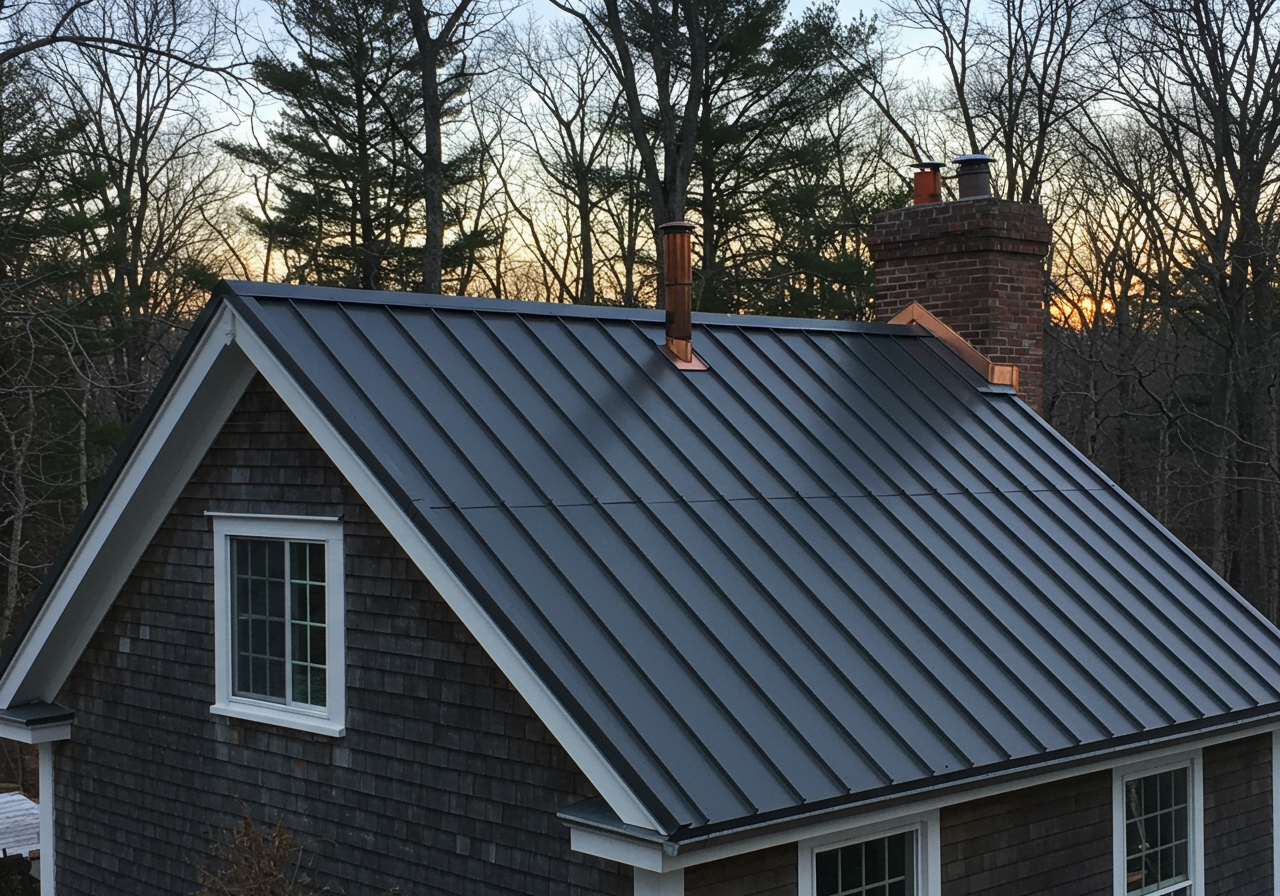
High-Wind Shingle Installation
A close-up of a high-wind shingle installation showing the 6-nail pattern and reinforced drip edge
6. Tree Mitigation and "The Canopy Trap"
Lyme is beautiful because of its trees, but those oaks and maples are roof killers. I've seen 80-year-old oaks come down on roofs in the Hadlyme area like a sledgehammer. But even if the tree doesn't fall, the "scour" effect of branches rubbing against your shingles will strip the granules off in a single afternoon.
Look, a shingle without granules is just a piece of paper. It has zero UV protection and zero fire resistance. I tell my clients to keep a 10-foot "air gap" between any branch and the roof surface. If you can't do it yourself, hire a licensed arborist. It's cheaper than a new roof. Also, remember that Connecticut consumer protection laws protect you when hiring these services, so always check for that HIC registration.
7. Flashing Failures in Historic Masonry
Many homes in Lyme feature beautiful stone or brick chimneys. These are notorious for "step flashing" failures during wind-driven rain. A hurricane doesn't just push rain down; it pushes it up and sideways. If your flashing isn't "counter-flashed" (meaning the metal is actually tucked into a groove cut into the mortar), the wind will drive water right behind the metal.
I've found that 70% of the "roof leaks" reported after storms in Middlesex County are actually masonry or flashing leaks. I always carry a moisture meter when I'm out on the shoreline, and it's incredible how often the shingles are fine but the chimney transition is a sponge. If your roof is more than 15 years old, a full replacement with upgraded flashing is often the only way to guarantee a dry attic.
Storm-Ready Roofing Materials
Pros
- Highest wind resistance (up to 140 mph)
- Reflects heat in summer
- 50+ year lifespan
Cons
- Higher upfront cost
- Can be noisy if not insulated properly
- Specialized labor required
8. Vetting Your Storm-Prep Contractor
When a storm is looming, "storm chasers" from out of state descend on Connecticut. They show up in unmarked trucks and promise a "free roof" through your insurance. Don't fall for it. These crews often skip the high-wind fastening patterns because they're trying to move fast.
I always tell my neighbors in Lyme to use the CT eLicense portal to verify that a contractor isn't just "insured," but actually registered with the state. A real pro will show you their specific wind-load calculations for your zip code. If they can't tell you the difference between a "starter strip" and a "shingle course," keep looking.
Get Your Free Roof Quote
Enter your zip code to get started
The peace of mind that comes from knowing your roof is mechanically fastened to withstand a Category 2 blow is worth the extra few hundred dollars in specialized labor and materials. Lyme is a rugged, beautiful place to live, but it requires a rugged approach to home maintenance. Don't wait for the wind to tell you where your roof is weak. Take a walk around your perimeter this weekend, look for loose metal or curling shingle corners, and get ahead of the 2026 storm season. A little proactive data-gathering now saves a lot of dry-walling later.
FAQ

About Daniel Roberts
Verified ExpertDaniel Roberts is a Senior Roofing Consultant with over 15 years of experience in the New England residential construction industry. He specializes in storm damage assessment and energy-efficient roofing systems.