
Key Takeaways
- Ventilation is Vital: Passive airflow is the only way to break the thermal cycle that destroys shingle adhesives.
- Material Matters: Reflective "cool" shingles can reduce roof surface temperatures by nearly 48 degrees compared to traditional dark asphalt.
- Insulation's Dual Role: Proper R-value insulation doesn't just keep you warm in January; it prevents living space heat from compounding attic thermal loads.
- Early Detection: Shingle "blistering" is a specific heat-related failure that most Bethlehem homeowners mistake for storm damage.
While most of us in Bethlehem are busy prepping for the Bethlehem Fair or enjoying the quiet greenery of the Litchfield Hills, a silent thermal war is being waged just a few feet above our heads. Here's a reality check that usually catches people off guard: on a standard July afternoon in Connecticut, your roof surface can easily reach temperatures that would literally fry an egg, but it's the air underneath the shingles that does the most damage. I've seen attic temperatures in Litchfield County climb into the 150-degree range, effectively baking the asphalt shingles from both sides. This "heat trap" doesn't just make your AC work harder; it chemically alters your roof, stripping away the essential oils that keep shingles flexible and waterproof.
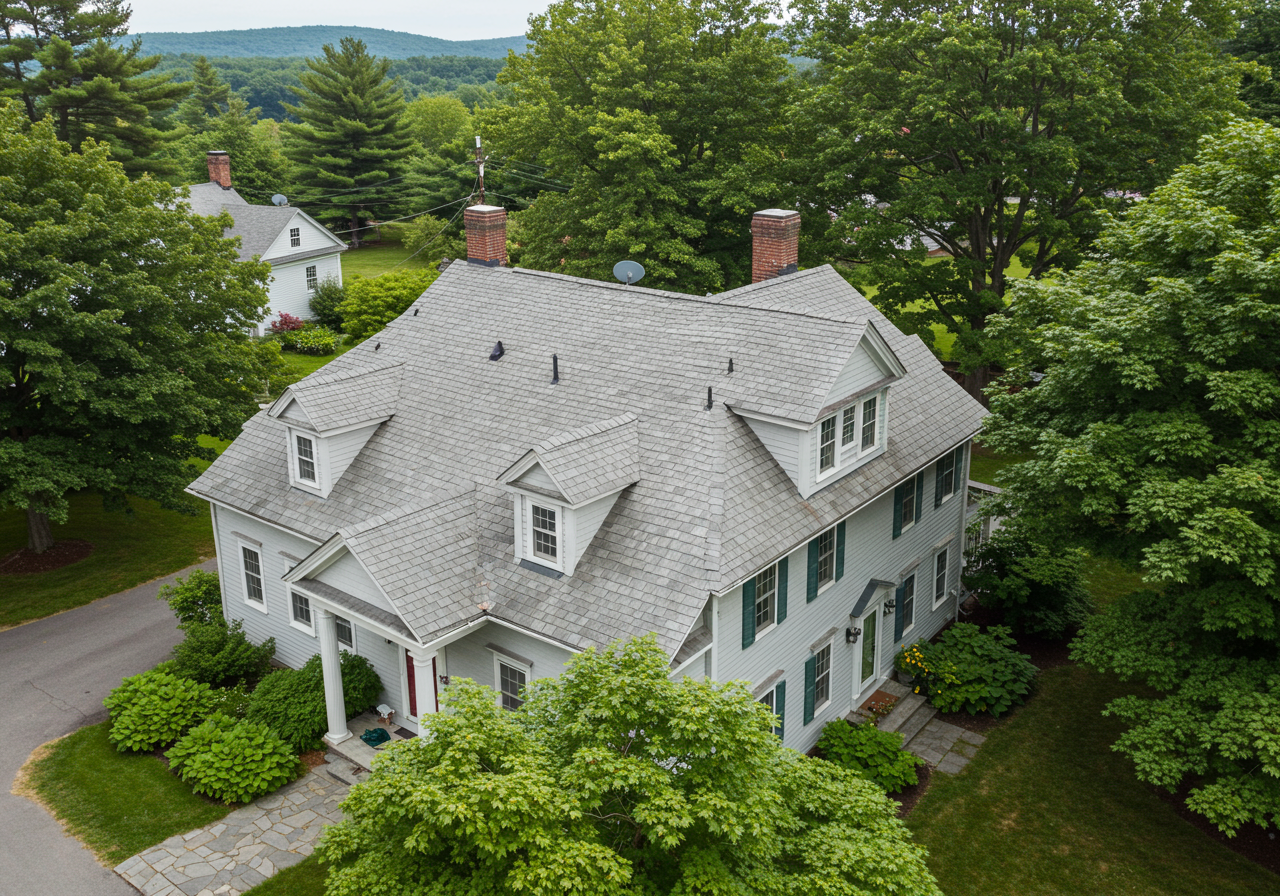
Summer Heat Trap in Bethlehem Roofs
Attic temperatures can reach 150°F, baking shingles from both sides
The Litchfield Hills Thermal Cycle: Why Bethlehem is Unique
Living in the Northwest Hills gives us a specific climate profile that most coastal CT residents don't deal with. We have higher elevations and often clearer skies, which means more direct UV radiation hitting your roof deck. In Bethlehem, our homes are often surrounded by dense hardwoods. While the shade is a blessing, it also creates micro-climates of high humidity that, when mixed with high heat, can lead to rapid shingle degradation.
I've spent years tracking how these local weather patterns affect building longevity. The "trap" occurs when we have back-to-back days of high solar gain without a break. If your roof can't "exhale" that heat at night, the structural timber starts to retain a thermal load. By day three of a heatwave, your roof is starting the morning at 95 degrees instead of 70.
Why Attic Ventilation is Your First Line of Defense
Most of the Bethlehem homes I inspect—especially the beautiful older colonials near Main Street South—suffer from "suffocated" attics. A roof needs to breathe just as much as you do. If you don't have a functional intake and exhaust system, that 150-degree air sits stagnant.
Intake vs. Exhaust Balance
It's not enough to just have a ridge vent. You need soffit vents (the intake) to pull cool air in from the bottom. Without that intake, the ridge vent is like a straw with a finger over the end. I've seen contractors install fancy power fans that actually end up pulling conditioned air out of the house because the attic wasn't properly balanced.
The Physics of Natural Convection
Hot air wants to rise. By utilizing natural convection, a properly designed roof uses the sun's own energy to move air. This keeps the underside of your roof deck within 10-15 degrees of the outside air, which is the "sweet spot" for preventing premature aging.
Shingle Color and Material Choice: Breaking the Heat Sink
When it's time to get a quote for a replacement, the color you choose is more than an aesthetic decision. It's a thermal one. Traditional dark charcoal shingles are essentially giant heat magnets.
Reflective Technology
Modern "Cool Roof" shingles use specially engineered granules that reflect a larger portion of the sun's rays. In my field notes, I've recorded a massive difference in deck temperatures between standard black shingles and "Mist" or "Shale" colored reflective options.
Metal vs. Asphalt in the Sun
Metal roofing is becoming more popular in Litchfield County for a reason. While metal gets hot to the touch, it has low thermal mass—meaning it loses that heat the second the sun goes down, whereas asphalt acts like a brick oven, holding onto the heat for hours.
Thermal Performance by Material
| Feature | Standard Asphalt | Reflective Asphalt | Standing Seam Metal |
|---|---|---|---|
| UV Reflection | |||
| Rapid Night Cooling | |||
| Heat Aging Resistance |
The Role of Insulation in Roof Longevity
We often talk about insulation in January when the North wind is howling through Bethlehem, but it's just as important when the sun is beating down. Insulation acts as a thermal barrier between your living space and the attic.
Preventing "Heat Bleed"
If your ceiling insulation is thin or missing in spots, the heat from your home (and your AC system) actually fights against the roof's cooling process. Vetting your roofing professional should always include a discussion about your attic's R-value. According to the International Code Council standards, Connecticut homes benefit significantly from higher-than-average attic insulation to mitigate these seasonal extremes.
Vapor Barriers and Humidity
In the Northwest Hills, summer humidity can get trapped in the insulation. If your roofer doesn't account for moisture migration, that "heat trap" becomes a "mold trap."
Identifying Heat Damage Before the Leaks Start
Heat damage doesn't look like a fallen branch or a missing shingle. It's subtle—until it isn't. I always recommend Bethlehem homeowners take a pair of binoculars and look at their roof from the yard at least once a summer.
Shingle Blistering and Granule Loss
If you see small, pimple-like bubbles on your shingles, that's "blistering." It happens when moisture trapped inside the shingle expands due to extreme heat. Once those blisters pop, the asphalt is exposed, and the shingle's lifespan is cut in half.
Brittle Shingles and Thermal Expansion
Roofs expand and contract. In a single day in Bethlehem, your roof might move 1/8th of an inch. If the heat has made the shingles brittle, they can't handle that movement and will start to crack around the nail heads.
Warning: Granule Loss Indicator
Bethlehem Building Codes and "Cool Roof" Standards
Connecticut has updated its building codes recently to reflect our changing climate. When you're learning how the contractor matching process works, make sure you're asking about compliance with the latest energy codes.
The Importance of Ice and Water Shield (Even in Summer)
It sounds counterintuitive, but the same "Ice and Water" shield required for our winters provides a secondary thermal break and protection against the "flash storms" we get in Litchfield County after a high-heat day. Following FEMA's mitigation strategies for sloped roofs ensures your home is built to withstand both the weight of the snow and the stress of the sun.
Low-Slope vs. Sloped Roof Heat Challenges
If you have a modern home or an addition with a flat roof in Bethlehem, your heat challenges are doubled.
The "Ponding" Problem
Flat roofs often suffer from ponding water. After a summer rain, that water sits on the roof. The sun then heats that water, creating a "boiling" effect that can delaminate the roof membrane.
Choosing White Membranes
For low-slope sections, a white TPO or EPDM membrane is non-negotiable in my book. The temperature difference between a black rubber roof and a white one can be as much as 60 degrees. For more technical details, I often point people to the FEMA guide for low-slope roof systems to understand how to protect these vulnerable areas.
Surface Temperature Comparison (°F)
Get Your Free Roof Quote Today
Connect with verified CT pros in minutes.
No credit card required • Free to use
Timing Your Maintenance: Why January is for Planning
It might feel strange to talk about summer heat protection while there's snow on the ground in Bethlehem, but this is exactly when you should be planning. By the time the July humidity hits, the best contractors are booked through October.
The Inspection Window
I like to get my inspections done before the spring rush. This gives you time to address ventilation issues or insulation gaps before the first 80-degree day.
Making an Informed Choice
Don't wait for a leak to start thinking about your roof's thermal health. A proactive approach saves you thousands in energy costs and adds years to your roof's life.
Get Your Free Roof Quote
Enter your zip code to get started
Conclusion
Protecting your Bethlehem home from the summer "heat trap" isn't just about comfort—it's about structural preservation. By balancing your ventilation, choosing reflective materials, and ensuring your insulation is up to par, you can stop the sun from prematurely aging your investment. Remember, a roof that breathes is a roof that lasts. If you're noticing shingles that look "tired" or your upstairs rooms are unbearable in July, it's time to look upward.