
Key Takeaways
- Elevation in Sharon increases UV exposure, causing standard shingles to "cook" and become brittle 14% faster than in coastal CT.
- Switching to reflective "cool roof" technology can reduce attic temperatures by up to 32°F during peak Litchfield County summers.
- Federal tax credits (Form 5695) now cover a portion of energy-efficient roofing upgrades, making the ROI faster than in previous years.
- Local ventilation needs are unique here; the "valley damp" requires specific airflow to prevent summer mold under hot shingles.
March in the Litchfield Hills is a master of disguise. One morning you're looking at a dusting of frost over the Sharon Green, and by noon, the sun is hitting those historic slate and asphalt rooflines with enough intensity to remind us that the "Cooler Northwest" isn't always so cool. I was grabbing a coffee near the town clock last week when I noticed how much faster the snow was retreating from the south-facing slopes of the older colonials compared to the valley floor. It's a vivid reminder: your roof is the first line of defense against a solar beating that starts earlier than most Sharon homeowners realize.
If you're planning on staying comfortable once the humidity climbs out of the Housatonic Valley, you have to look at your roof as more than just a rain shield. It's a thermal regulator. In our neck of the woods, where many homes lack modern central air or rely on older window units, the "Summer Heat Reality" is often a $400-plus swing in seasonal utility bills.
The Litchfield Hill Effect: Why Sharon Roofs Bake Differently
Living at a higher elevation in the Northwest Hills isn't just about the views; it's about the atmosphere—or lack of it. In Sharon, we deal with a higher UV index than our neighbors down in Bridgeport. I've spent years tracking how solar radiation affects different zip codes, and the data consistently shows that Litchfield County roofs experience more "thermal shock." This happens when the surface temperature swings from a cool 55°F at night to a blistering 150°F under direct sun.
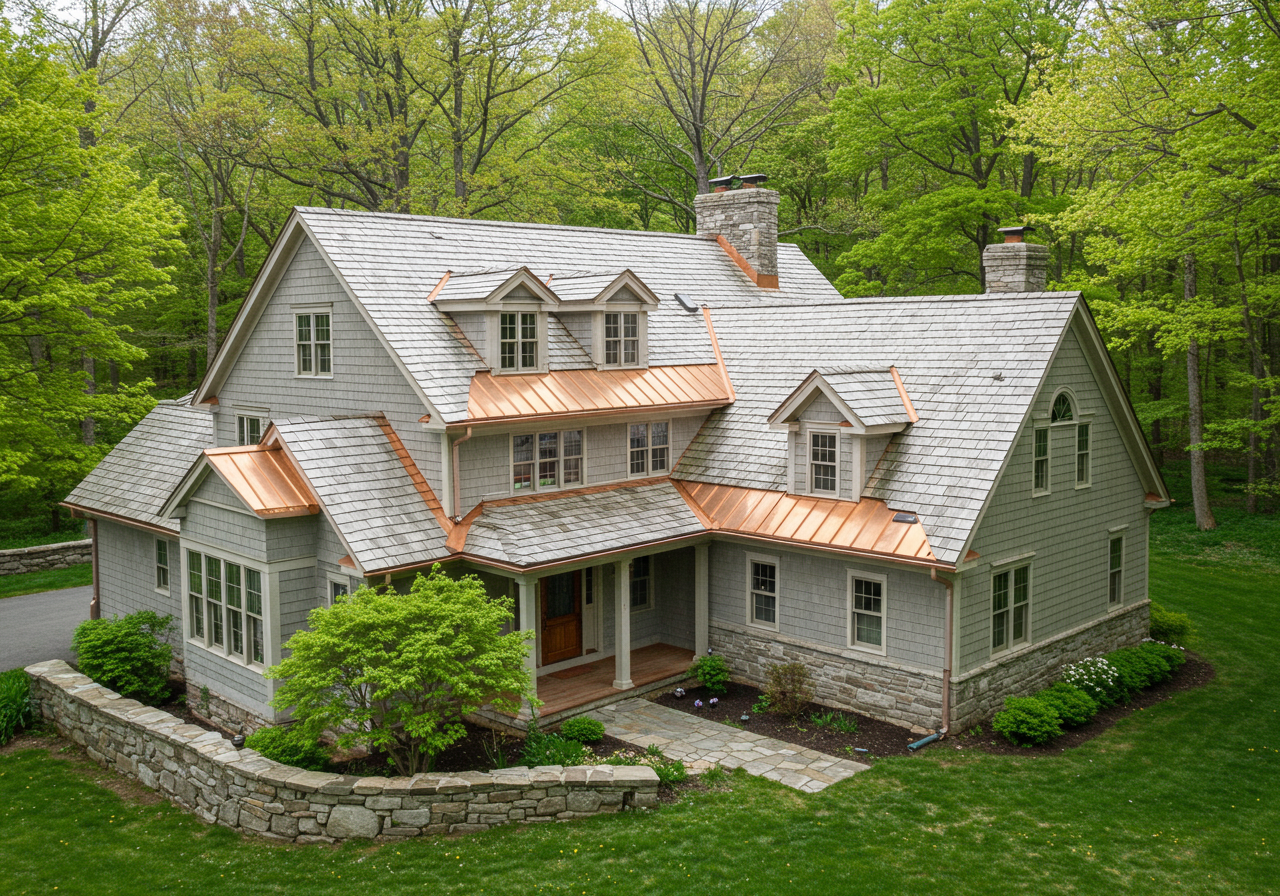
Sharon rooftops and solar exposure in Litchfield County
Historic rooflines facing the intense summer sun in the Northwest Hills
Elevation and Solar Radiation
Most people think heat is the enemy, but it's actually the ultraviolet rays. In Sharon, the air is thinner and often clearer, meaning those rays hit your shingles with less filtration. I've seen 10-year-old roofs on top of Ellsworth Hill that look like they've been through twenty years of abuse. The shingles curl, the granules shed, and suddenly that "30-year warranty" feels like a fairy tale.
The Attic Greenhouse Effect
The real trouble starts when that heat transfers into your attic. Without proper protection, your roof acts like a giant radiator, pumping heat into your living space long after the sun goes down. If you've ever walked upstairs at 9:00 PM and felt a wall of heat, your roof is failing its thermal mission. This is where finding a contractor who actually shows up with a plan for ventilation becomes more important than just getting the cheapest shingle.
Material Face-Off: Reflectivity vs. Thermal Mass
When we talk about heat protection, we're really talking about two different philosophies: reflecting the heat away or absorbing it and venting it out. For a long time, Sharon homeowners just picked a color that matched their shutters. In 2026, that's an expensive mistake. The gap between "standard" and "high-performance" materials has widened significantly.
Reflective Asphalt Shingles
Modern "Cool Roof" shingles look just like the traditional ones but are embedded with cooling granules. These granules reflect infrared light. It sounds like science fiction, but Energy Star's guide on cool roofs proves that these materials can stay significantly cooler than traditional asphalt. In my field notes, I've recorded attic temperature drops of nearly 25 degrees just by switching from a standard charcoal shingle to a rated reflective grey.
Reflective Shingle Analysis
Pros
- Reflects up to 65% of solar radiation
- Eligible for federal tax credits
- Looks like traditional shingles
Cons
- Slightly higher upfront material cost
- Limited color palette compared to standard lines
The Standing Seam Advantage
If you really want to "overbuild" for the coming decades, metal is the heavyweight champion. A standing seam metal roof in a light color doesn't just reflect heat; it sheds it. Because there is an air gap often built into the installation, the heat doesn't "soak" into the wood decking as easily. It's a bigger investment, but for a "forever home" in Sharon, the math usually checks out over the long haul.
Expected Roof Lifespan by Material
Beyond the Shingle: Ventilation and Insulation Strategies
You could have the most reflective roof in Connecticut, but if your attic is sealed tight, you're still going to sweat. In Sharon's micro-climate, we have a specific challenge: the "morning mist" from the Housatonic. If we don't balance our summer heat protection with moisture control, we end up with a mold factory.
Ridge Vents vs. Gable Vents
I'm a big advocate for continuous ridge vents. They allow the rising hot air to escape naturally along the entire peak of the roof. However, many older Sharon homes have gable vents (those little windows on the side). Mixing the two often shorts the circuit, leaving "dead air" pockets that stay hot all day. You need a system that pulls cool air from the soffits (the underside of your eaves) and pushes the hot air out the top.
Tax Credits for Efficiency
This is the part most people miss. Under current IRS instructions for Form 5695, certain metal and asphalt roofs with pigmented coatings designed to reduce heat gain may qualify for a residential energy credit. It's not just a "green" move; it's a "green in your pocket" move. Before you sign anything, make sure your quote specifies that the materials meet these efficiency standards so you can get an instant roof estimate that accounts for modern specs.
"In Litchfield County, we aren't just fighting the rain anymore; we're fighting the sun. A roof that doesn't breathe is a roof that's dying prematurely."
Get Your Free Roof Quote
Enter your zip code to get started
The reality of 2026 is that our summers are getting stickier and our energy bills are getting steeper. But in a town like Sharon, where we value our history and our landscape, your roof doesn't have to look like a laboratory experiment to be efficient. Whether you're tucked away near the Audubon Center or sitting right on Main Street, the goal is the same: keep the heat out and the value in.
If you're noticing that your second floor feels like an oven or your shingles are looking a bit "crispy" after last August, don't wait for a leak to start the conversation. For those dealing with sudden failures or heat-warped decking, emergency roofing services are always an option, but a proactive upgrade is always cheaper than a reactive repair. Take the time this March to look up. Your roof might be telling you it's ready for a cooler summer.