Looking back at the heavy snow cycles that hit Hartford County over the last decade—specifically the crushing weight of the 2011 winter—you can see a distinct shift in how insurance carriers treat Southington homeowners. Years ago, a few missing shingles after a gusty nor'easter meant a relatively straightforward replacement process. But the climate in Connecticut has gotten more erratic, and the "fine print" in homeowner policies has tightened significantly in response.
I've spent a lot of time reviewing local property data, and the trend is clear: insurance companies are increasingly categorizing roof failures as "preventable maintenance issues" rather than "sudden accidental losses." In a town like Southington, where we have a mix of beautiful mid-century capes near Recreation Park and newer builds up on the ridges, the weather hits everyone differently. But the struggle to get a claim approved is becoming a universal headache.
The reality of February 2026 is that your roof is currently under a microscope. Between the freeze-thaw cycles that characterize our late winters and the weight of any lingering snowpack, the structural integrity of your home is being tested daily. If you're staring at a brown water stain on your ceiling right now, you aren't just dealing with a leak; you're entering a high-stakes negotiation with a multi-billion dollar industry that knows exactly how to use the "wear and tear" excuse to protect its bottom line.
Key Takeaways
- Most Southington roof claims are denied not because of lack of damage, but due to 'maintenance neglect' clauses triggered by ice damming.
- Connecticut law allows you to choose your own contractor; you are never forced to use the insurance company's preferred vendor list.
- Documentation must happen within the first 48 hours of a weather event to separate 'storm damage' from 'gradual wear and tear.'
- Upgrading to high-efficiency materials during a claim can lower future premiums and improve attic climate control.
The Denied Claim Trap: Why Southington Adjusters Say No
The most frustrating conversation I have with homeowners usually starts with a phone call about a denied claim. Often, the insurance adjuster has visited the property, climbed a ladder (or more likely, used a drone these days), and concluded that the damage wasn't caused by a specific "peril" like wind or hail. Instead, they point to granular loss or old sealant. In Southington, the biggest culprit for these denials is the ice dam.
When heat escapes your attic and melts the snow on your roof, that water runs down and refreezes at the cold eaves. This creates a literal dam of ice that backs water up under your shingles. From an insurance perspective, many policies view this as a "seepage" issue rather than a "storm" issue. If your attic isn't properly insulated or ventilated—something the Department of Energy's insulation guidelines emphasize as a critical home health factor—the insurance company may argue that the damage was inevitable and therefore your responsibility.
I remember a project near Mount Southington where the homeowner was convinced a windstorm had lifted their shingles. When the adjuster arrived, he found that the shingles hadn't been "lifted" by wind but were actually "curled" due to years of excessive heat in the attic. The claim was denied on the spot. This is why understanding the technical state of your roof before the adjuster arrives is vital. You need to know if you're looking at a $12,400 replacement or a simple $450 patch job before you ever pick up the phone to call your agent.
Another hurdle is the "Replacement Cost Value" (RCV) vs. "Actual Cash Value" (ACV) debate. Many older policies in Southington have been quietly moved to ACV. This means if your 20-year-old roof is damaged, the insurance company will only pay you what those 20-year-old shingles are worth today—which isn't much. You might get a check for $3,200 for a job that actually costs $15,000 to complete. Checking your policy for an RCV endorsement is the first thing I tell anyone to do before February's storms really kick into gear.
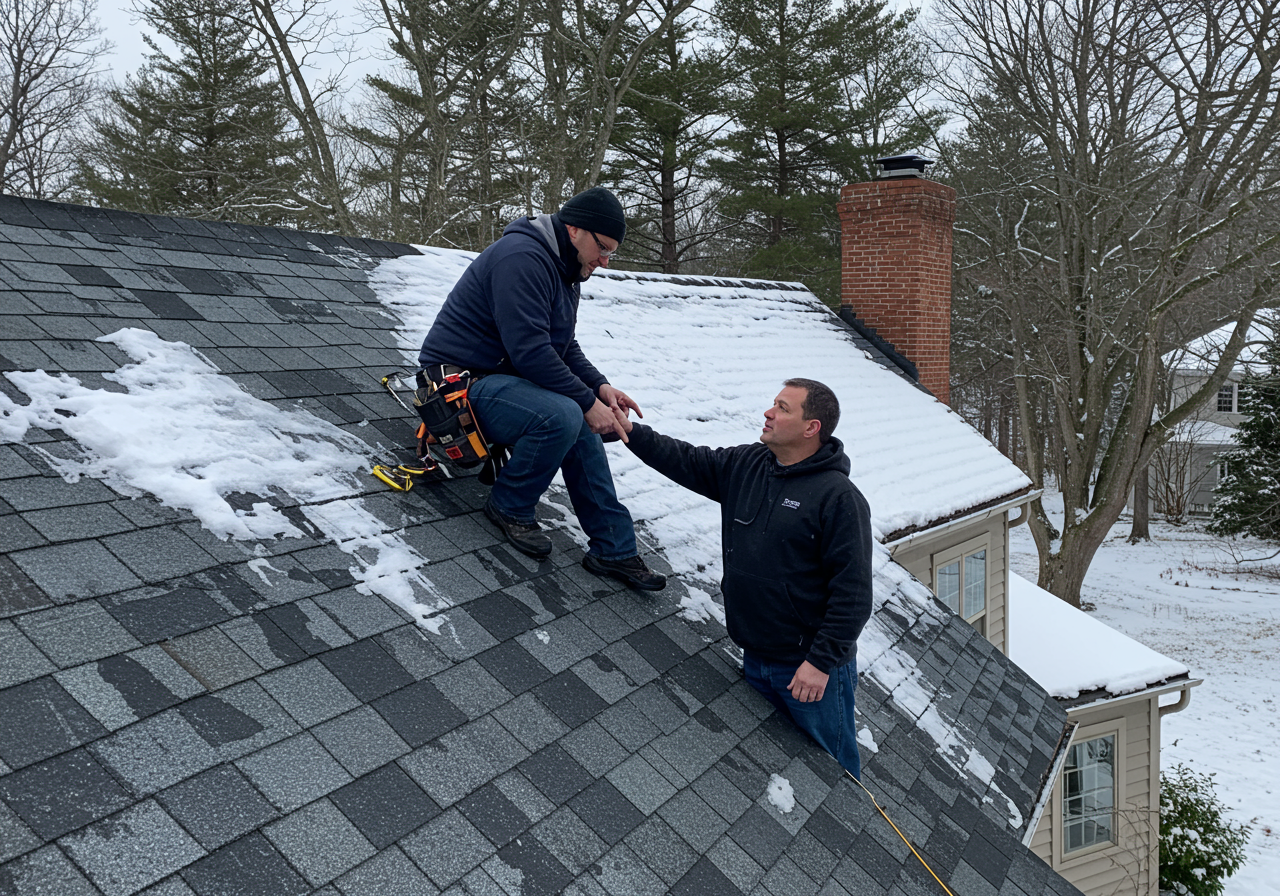
Understanding Roof Insurance Claims in Southington
Navigate the complexities of insurance claims with confidence
The Documentation Solution: Building a Bulletproof Case
If you want to win a claim in 2026, you have to stop thinking like a homeowner and start thinking like a forensic investigator. The moment you suspect damage, you need to document the "event." Insurance companies love ambiguity. If you can't point to a specific date when the wind gusted over 50 mph or when a specific branch fell, they will default to the "gradual damage" excuse.
I always suggest keeping a weather log or at least bookmarking a local weather station report during high-wind events. When you can say, "On February 12th, the gusts at the Southington water department station hit 58 mph," you've suddenly grounded your claim in data. But don't stop there. You need photos—not just of the damage, but of the entire roof. If you have "before" photos from last summer, you're in an even stronger position. It's hard for an adjuster to claim a shingle was "weather-worn for years" if you have a high-resolution photo from six months ago showing it was perfectly intact.
Document the Date
Link the damage to a specific weather event using local sensor data.
Interior Triage
Photograph water stains, peeling paint, or damp insulation in the attic immediately.
Professional Assessment
Have a local contractor provide a written 'Condition Report' before the adjuster arrives.
File the Claim
Provide your evidence package to the agent to set the narrative early.
The Adjuster Meeting
Be present (with your contractor) when the insurance rep inspects the property.
The "Professional Assessment" step is where most people stumble. They wait for the insurance company to send their own person. Here's a tip: The insurance adjuster works for the insurance company. Their job is to find reasons to limit the payout. You need someone in your corner who understands the local building codes. For example, Southington follows the CT State Building Code, which often requires a full deck re-sheathing if the existing wood is spaced too far apart. An insurance adjuster might "miss" this $2,500 line item, but finding a contractor who actually shows up and knows the code ensures it gets included in the estimate.
If the damage is severe and you're worried about further water intrusion during the wait, you shouldn't hesitate. Connecticut homeowners often don't realize they have a duty to prevent further damage. If that means calling for emergency roofing services to tarp the roof at 2:00 AM on a Tuesday, do it. Just make sure you save the receipts, as these "temporary repairs" are almost always reimbursable as part of the claim.
Navigating the 2026 Material and Labor Reality
Once your claim is approved (or at least partially approved), the next challenge is actually getting the work done. The roofing industry in 2026 isn't what it was five years ago. Material costs for high-quality asphalt shingles have fluctuated wildly, and labor in the Hartford area is at a premium. If your insurance company writes an estimate based on "national averages," they are likely lowballing the actual cost of doing business in Southington.
Local contractors have to deal with disposal fees at the Bristol trash plant and higher insurance premiums for their own crews. These are real costs that a "desk adjuster" in an office in Texas won't account for. This is why I'm a big advocate for getting a local, verified estimate that reflects the current market. If you're trying to figure out where the local market stands, you can get an instant roof estimate that uses actual Connecticut data rather than generic national numbers. This gives you a baseline to take back to your insurance company if their offer seems too low.
The 'Matching' Rule in Connecticut
When you're choosing materials for the replacement, don't just settle for what the insurance company "allows." This is your chance to upgrade. For instance, if you have a flat or low-slope section on a modern Southington home, you might want to look at FEMA's guide on low-slope roof protection to see how better materials can prevent the same claim from happening three years from now. I often see homeowners pay the difference out of pocket to move from a standard architectural shingle to a Class 4 impact-resistant shingle. In the long run, the reduction in your annual premiums often pays for that upgrade within 5-7 years.
Never sign over your entire insurance check
Financial Strategies for Your Deductible and Beyond
The "elephant in the room" with any insurance claim is the deductible. With many Southington policies now carrying a 1% or 2% wind/hail deductible, a $400,000 home could have an $8,000 deductible. That's a massive out-of-pocket expense that catches people off guard. Some contractors might offer to "waive" the deductible—be very careful here. In Connecticut, this is often considered insurance fraud. It's better to look for legitimate financing options or to choose a more cost-effective (but still code-compliant) material to keep your total project costs manageable.
I've seen families struggle because they didn't realize their deductible was so high until the check arrived and it was $5,000 short of the estimate. This is where a clear comparison of your options becomes essential.
RCV vs. ACV Payout Example (15-Year-Old Roof)
The chart above illustrates the stark reality of modern policies. If you're on an ACV (Actual Cash Value) policy, you're basically "self-insuring" half of your roof's value. If that's the case, your strategy should shift from "how do I get insurance to pay for everything" to "how do I get the most durable roof for the least amount of out-of-pocket cash." Sometimes that means opting for a "cool roof" that might qualify for energy credits. According to EPA data on cool roofs, these materials can significantly lower your cooling costs in the summer, helping you recoup that high deductible over time.
As we move through the rest of February and into the rainy "mud season" of March, keep a close eye on your attic. The best way to handle an insurance claim is to catch the damage early enough that it doesn't turn into a mold remediation project—which insurance companies are even stingier about covering. Be proactive, document everything, and don't be afraid to push back when an adjuster gives you a "no" that doesn't feel right.
If you're feeling overwhelmed by the technical jargon or just want to know if the quote you got is fair for the Southington area, there are tools to help. You can quickly verify your contractor's approach and compare it against vetted local standards without having to spend hours on the phone. Your roof is your home's first line of defense; treat the claim process with the same level of protection.
Get Your Free Roof Quote Today
Connect with verified CT pros in minutes.
No credit card required • Free to use
FAQ
Get Your Free Roof Quote
Enter your zip code to get started

About Noah Knight
Verified ExpertNoah Knight is a Connecticut Weather & Climate Specialist who helps homeowners understand how New England's unique weather patterns affect their roofing systems. He combines meteorological knowledge with practical home maintenance advice.