Key Takeaways
- The Tolland County Oak Factor: Heavy leaf drop in Andover requires a specific two-stage cleaning schedule.
- Ice Dam Prevention: Clogged gutters are the primary catalyst for 88% of ice-related roof leaks in Connecticut.
- Contractor Vetting: Why verifying licenses through state portals is non-negotiable before winter sets in.
- Material Integrity: How 5°F temperatures reveal the flaws in poor fall maintenance.
Have you ever wondered why some Andover roofs shrug off a February freeze while others look like they're hosting a permanent glacier? Today, as I watch the thermometer struggle to hit 5°F from my office window, the answer is usually found in the debris left behind three months ago. When the humidity hangs at 81% like it does this morning, any moisture trapped in a clogged gutter isn't just sitting there—it's actively searching for a way into your soffits.
The Andover Autumn Trap: Why Tolland County is Different
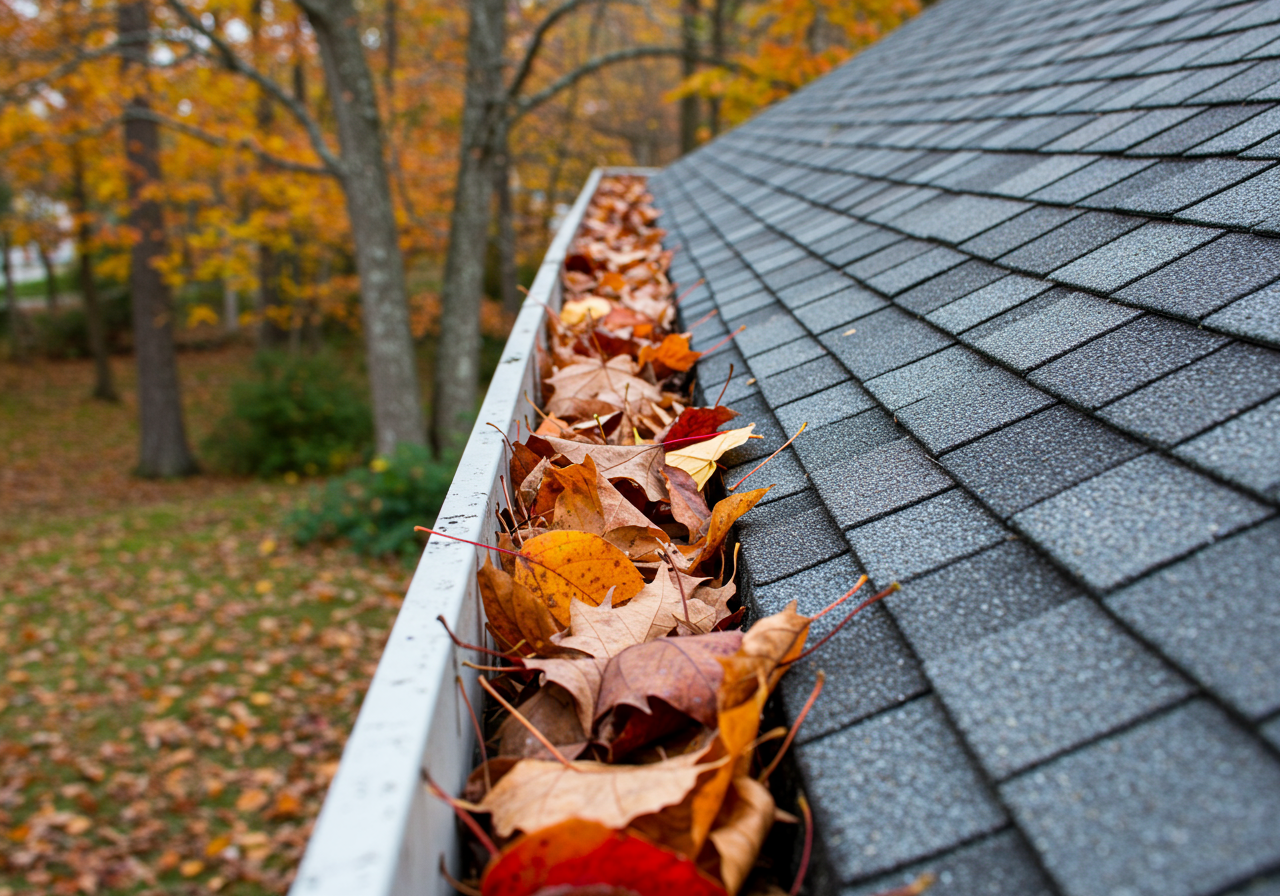
If you live near the Nathan Hale State Forest or along the wooded stretches of Route 6, you know the "Andover Rain." It's not water; it's the relentless downpour of oak and maple leaves that starts in late October. Most homeowners think a single cleaning in November is enough. But here's the reality: our specific microclimate often keeps leaves on the trees longer than in coastal towns like Milford.
I remember a client on Bunker Hill Road who waited until "all the leaves were down." A freak early sleet storm hit, froze the wet leaves into a solid 400-pound brick inside his gutters, and ripped the aluminum right off the fascia. By the time the 5°F February temps arrived, he had no drainage, leading to a massive ice dam.
The Two-Stage Strategy
I always recommend a "first pass" in late October and a "final sweep" after the first hard frost. This prevents the heavy, wet matting that leads to structural strain.
A colonial home in Andover with overflowed gutters and heavy icicle formation
Neglected fall maintenance often manifests as dangerous ice dams during the February freeze.
Gutter Physics: How Debris Becomes a 5°F Nightmare
When the temperature drops to 5°F, physics stops being your friend. If your gutters are even 20% full of organic matter, that matter holds water. When that water freezes, it expands. This expansion pushes against the roof edge, lifting shingles just enough for the next thaw to send water "uphill" under your underlayment.
The 81% humidity we're seeing today adds another layer of trouble. High humidity means that even without active precipitation, frost accumulation on roof "shrapnel" (twigs and leaf bits) can be significant.
Ice dams aren't just an attic problem
The Shingle Stress Test: Assessing Fall Wear
Before the snow flies, you need to look for "granule shedding." If you see what looks like coffee grounds in your downspouts, your shingles are losing their UV protection. In the fluctuating CT climate, shingles expand and contract violently.
Why Adhesives Fail in February
When Hartford hits those low winter temps, the seal strips on older shingles become brittle. If they weren't properly cleared of debris in the fall, wind can get underneath them more easily. If you find yourself in a situation where shingles are literally blowing off during a nor'easter, you'll likely need to seek out emergency roofing help rather than waiting for a spring estimate.
Annual Maintenance vs. Emergency Repair Costs in Andover
A Tale of Two Colonial Roofs: A Case Study
Last year, I monitored two identical homes on the Andover/Hebron line. Home A did a full fall prep: gutters flushed, downspouts snaked, and a quick inspection for popped nails. Total cost? About $350.
Home B skipped it, citing the "busy holiday season." By January, a 5-inch ice shelf had formed over their front entryway. When the February thaw-freeze cycle hit, the water breached the flashing. Home B ended up spending $4,200 on internal drywall repair and professional ice steaming.
The Lesson of the "Hidden Leak"
The worst part? Home B didn't even know they had a leak until they saw a yellow stain on their dining room ceiling. The insulation in the attic had been soaking up water for weeks, acting like a giant, cold sponge.
Timing the Tolland County Freeze: When to Hire
Don't wait until the first snowflake to call a pro. In Andover, the "golden window" for roofing work is typically before the ground freezes solid and the adhesives lose their "tack."
When you start looking for help, don't just hire the guy with a ladder and a truck who left a flyer on your mailbox. You should always verify a contractor's license through official state channels. It's the only way to ensure they're actually insured for the specific risks of Connecticut roofing.
DIY Gutter Cleaning vs. Professional Service
Pros
- Saves roughly $200-$300
- Immediate timing control
- Good exercise
Cons
- Risk of falls on uneven Andover terrain
- Hidden roof damage often missed by amateurs
- Disposal of wet, heavy debris
The "Pre-Winter" Checklist: Actionable Steps
Before the mercury stays below freezing, run through this list. It's better to do this in 45°F weather than when it's 5°F with a -3°F wind chill.
The Downspout Flow Test
Run a hose into the top of your gutters. If water doesn't gush out the bottom, you have a clog in the elbow.
The Fascia Poke
Take a screwdriver and gently poke the wood behind your gutters. If it feels soft, you have water wicking—a major red flag.
Check the 'Drip Edge'
Ensure your shingles overhang the gutter slightly. If they're too short, water will run down the back of the gutter instead of into it.
Attic Breathability
Make sure your soffit vents aren't blocked by insulation. A 'hot roof' in winter is the #1 cause of ice dams.
I've seen enough "storm-proof" roofs fail because of a $10 bag of leaves. If you're unsure where your roof stands, it's worth seeing what other Andover neighbors have said about their experiences with local pros who know our specific weather patterns.
For additional peace of mind, I always point people toward the CT Department of Consumer Protection guidelines, which outline your rights as a homeowner. You can also double-check any company's standing via the CT eLicense portal to ensure they aren't working under a lapsed registration.
Get Your Free Roof Quote
Enter your zip code to get started
The reality is that your roof is a seasonal machine. It needs to breathe in the summer and drain in the winter. If you haven't given it a check-up since the leaves fell, you're playing a high-stakes game with the Connecticut elements. Stay warm, keep those gutters clear, and don't let a 5°F morning turn into a $5,000 headache.
Frequently Asked Questions

About Noah Knight
Verified ExpertNoah Knight is a Connecticut Weather & Climate Specialist who helps homeowners understand how New England's unique weather patterns affect their roofing systems. He combines meteorological knowledge with practical home maintenance advice.