Key Takeaways
- Synthetic roofing costs $36,400-$49,200 for a 2,500 sq ft Easton home—significantly less than natural slate's $95,000+ price tag.
- Class 4 Impact Rating on most synthetics can reduce insurance premiums by an average of 16% while protecting against falling limbs.
- Weight difference is dramatic: synthetic slate weighs ~245 lbs/sq vs natural slate's 1,200 lbs/sq, avoiding costly structural upgrades.
- Proper installation requires specialized crews—spacing and fastening mistakes can cause $40,000 roofs to fail within months.
Are you tired of looking at cedar shakes that start rot-thinning every decade, or maybe you're eyeing a slate roof but can't stomach the $85,000 price tag? I see it all the time in Fairfield County—stately homes in Easton where the roof starts looking like a science experiment after just 14 years because of our damp February freeze-thaw cycles. You want the "Gold Coast" aesthetic without the astronomical maintenance, right? That's where synthetic materials—composites made of rubber and plastics—enter the chat. But here is the cold reality: they aren't a magic bullet. Before you buy into the "lifetime roof" marketing jargon, let's look at what the math actually says for a property near the Easton Reservoir.
1. The Real Cost Difference: Natural vs. Composite
When a contractor tells you a synthetic roof is "cheap," they are lying. It's "cheaper" than natural slate, but it's still a premium investment. For a standard 2,500-square-foot roof in Easton, natural slate might run you $95,000 when you factor in the heavy-duty structural work. A high-end synthetic alternative, like DaVinci or Brava, will likely land between $36,400 and $49,200.
I recently reviewed a quote for a homeowner on Sport Hill Road where the difference was staggering. The natural slate bid included $6,800 just for "rafter sistering" to handle the weight. The synthetic bid bypassed that entirely. If you're weighing your options, our latest roofing insights can help you determine if the ROI on these premium materials actually pans out for your specific neighborhood's resale values.
2. Impact Resistance and the 2026 Insurance Landscape
In Easton, we don't just deal with snow; we deal with those nasty limbs falling from our old-growth oaks. Most synthetic roofing carries a Class 4 Impact Rating. This isn't just a badge of honor; it's a negotiation tool with your insurance company.
According to FEMA's sloped roof hurricane guidelines, the way these shingles are fastened is what actually saves your house during a nor'easter. I tell my clients: don't just ask for the material; ask for the fastening schedule. If they aren't using stainless steel nails for a roof that's supposed to last 50 years, they are cutting corners.
3. Weight Considerations for Historic Easton Rafters
Many of our homes in Easton date back to a time when "building code" was more of a suggestion. Real slate weighs between 800 and 1,500 pounds per square (a 10x10 area). That is the equivalent of parking a mid-sized SUV on your rafters.
Weight Comparison
I once worked with a couple who bought a beautiful 1920s colonial. They wanted natural slate until the structural engineer handed them an $11,200 bill just to prep the attic. We pivoted to a composite polymer that looked identical from the curb but saved them the cost of a new car in timber and labor.
4. Dealing with "The Faux Look" Skepticism
"Won't it look like plastic?" This is the number one question I get at town meetings. Ten years ago, the answer was yes. Today? Even the eagle-eyed appraisers in Fairfield County have trouble telling the difference from the driveway.
Visual & Durability Matchup
| Feature | Natural Slate | Synthetic Composite |
|---|---|---|
| Lifespan | ||
| Color Fading | ||
| DIY Repair | ||
| Initial Cost |
Note: Lifespan: Natural Slate (75-100 years) vs Synthetic (40-50 years). Color Fading: Both perform well. DIY Repair: Natural slate is brittle and difficult; synthetic is more manageable. Initial Cost: Natural slate is very high; synthetic is moderate-high.
The trick is in the "varied width" bundles. If you buy a synthetic kit where every shingle is the same 12-inch width, it looks like a Lego set. Demand a 3-tile or 4-tile stagger. It adds about 5% to the labor cost, but it's the difference between a "wow" and a "why did they do that?"
5. Energy Efficiency and the Gold Coast Summer
Easton gets surprisingly humid, and our attics can turn into ovens. Synthetic materials often have better thermal properties than traditional asphalt, and some are even recyclable.
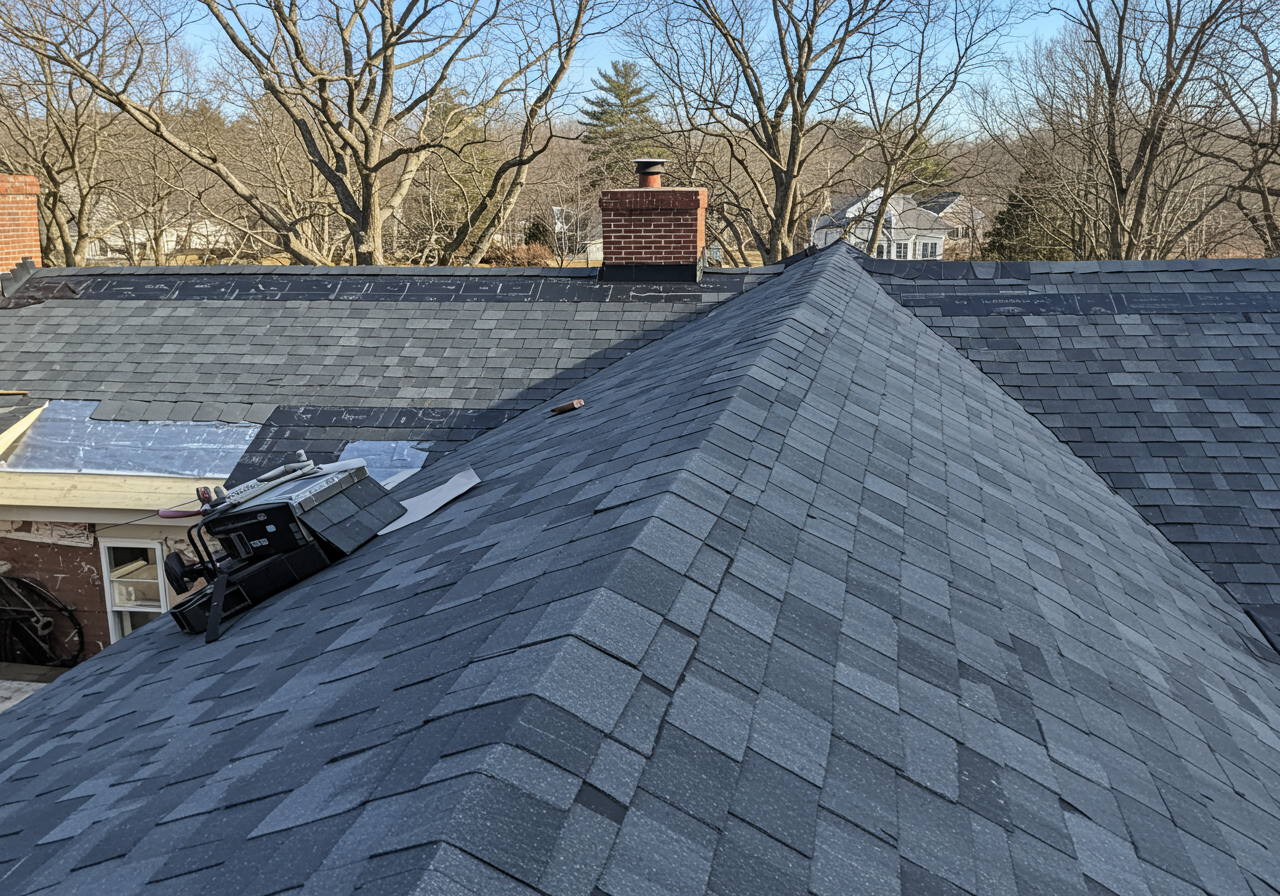
Modern Synthetic Installation in Easton
A deep charcoal composite slate roof providing a classic look with modern UV protection.
Research from the EPA's research on cool roofing shows that high-albedo (reflective) materials can keep your attic significantly cooler. While most synthetics aren't "white roofs," the polymers used often reflect more infrared radiation than black asphalt. If you're dealing with a leak and need professional roof repairs before the next big rain, make sure your contractor checks the "cool" rating of your replacement options.
6. Installation Nuances: Why Your Crew Matters
Here is where I get skeptical. I've seen contractors who are "certified" by the manufacturer but have only ever laid three synthetic roofs. These tiles expand and contract significantly more than stone.
"A synthetic roof is only as good as the person holding the nail gun. If they don't leave the 1/8-inch gap the manufacturer requires, your $40,000 roof will look like a potato chip by July."
Ask them to show you the math on the expansion joints. If they look at you like you're speaking Greek, find a different crew. You can see what other CT homeowners experienced when they vetted their installers through professional matching services—it saves you from being the "guinea pig" project.
7. The Maintenance Myth vs. Reality
People say synthetic is "maintenance-free." That's a lie. While you won't be replacing broken stone every spring, the wooded lots in Easton mean moss and lichen.
Did You Know?
Synthetic shingles are often made from recycled tires and post-industrial plastics, making them one of the more sustainable 'luxury' options in the CT market.
The "maintenance" here is keeping the gutters clear and checking the snow guards. Because synthetic slate is smoother than natural stone, snow tends to slide off in massive "avalanches." I tell every Easton client: if you have a walkway under your eaves, you must budget $1,200 for high-quality snow guards. It's not optional.
8. Negotiating the Quote: Line Items to Watch
Don't just look at the bottom line. Ask for a line-item breakdown. The "accessories"—the ridge caps, the starter strips, and the valley flashing—can account for 30% of the total cost.
Want a line-item breakdown without the sales pitch?
Get an instant, verified estimate for your Easton roof today.
No credit card required • Free to use
According to the Department of Energy's insulation and roofing standards, your ventilation system must be upgraded when you switch to a more airtight material. If your quote doesn't include new ridge vents or a check of your soffits, the contractor is setting you up for mold issues down the road.
Get Your Free Roof Quote
Enter your zip code to get started
The synthetic roofing challenge isn't about the material itself—it's about the math and the expertise behind the install. If you're spending $30,000 to $50,000, you deserve a roof that doesn't just look like slate, but performs like a 21st-century shield. Keep your receipts, check the fastener specs, and never settle for a "flat" labor rate that doesn't account for Easton's unique architectural quirks.
Frequently Asked Questions

About Dana Jackson
Verified ExpertDana Jackson is a Homeowner Advocate & Cost Analyst who helps Connecticut families navigate the financial aspects of roofing projects. She specializes in finding the best value and avoiding common pricing pitfalls.