Key Takeaways
- Demand a line-item breakdown of material versus labor to avoid the common 15% markup "buffer."
- Verify if your Stafford Springs contractor is using regional distribution hubs or retail big-box stores.
- Watch for "delivery and fuel surcharges" that often hide pure profit for the supplier.
- Always ask for the manufacturer's batch number to ensure your shingles aren't from a discontinued "closeout" run.
Stafford Springs Roofing Materials
Understanding where your contractor sources materials can save you thousands on your next roof project.
For the better part of twenty years, the way Stafford Springs homeowners bought roofs followed a predictable rhythm. You'd call one of the established outfits in Tolland County, they'd give you a handwritten number on the back of a business card, and you'd trust that the materials arriving on the flatbed were the best deal available. But the "good old days" of handshake pricing ended around 2021 when global supply chains fractured. Since then, we've seen a permanent shift in how local suppliers—the middlemen between the factory and your driveway—operate. I've seen invoices from the last three years where the same architectural shingles fluctuated by as much as $42 per square simply based on which side of the Willimantic River the supplier was located. Understanding this historical shift is the first step in making sure you aren't the one subsidizing a contractor's inefficiency.
The Hidden Cost of "Retail Convenience" Over Local Distribution
Most homeowners in Stafford Springs assume that if a contractor picks up materials at a big-box retailer down the road, they're getting the best price because of "bulk buying." That is a massive misconception. Retailers often carry "consumer-grade" lines that might look identical to professional distribution products but lack the same sealant strip weight or granule density. When a contractor buys retail, you're often paying a 10% to 20% premium over what they would pay at a dedicated roofing wholesaler.
I recently audited a quote for a colonial home near Stafford Hollow. The contractor wanted $9,400 for materials alone. By pushing them to use a regional distributor instead of the local retail shelf, we found the exact same shingle for $8,120. That's nearly $1,300 staying in the homeowner's pocket just by asking, "Which warehouse is fulfilling this order?" If they can't name a professional supplier, you're likely paying retail prices for a professional job.
Understanding the "Distance Tax" in Tolland County Logistics
Stafford Springs is beautiful, but it's not exactly a logistics hub. Because we are tucked away in the northeastern corner of the state, many suppliers charge a "remote delivery fee." I've seen these fees range from $75 to $350 per load. The mistake most homeowners make is letting this fee get "baked into" the total project cost.
Ask to see the delivery line item. If the supplier is coming from a hub in Hartford or Springfield, a delivery fee is reasonable, but it shouldn't be a profit center for the roofer. I always tell people to check if the contractor is bundling deliveries. If they are doing three roofs in Tolland County that week, you shouldn't be paying the full freight for a solo trip. You can also look into federal aid for home repairs if these logistical costs push a necessary repair out of your current budget.
The "Contractor Grade" Shingle Bait and Switch
There is a phrase I despise: "Contractor Grade." In the roofing world, this is often code for "the cheapest material the supplier could find that still meets minimum code." In Stafford Springs, where our winters involve heavy ice damming and the occasional March windstorm, "minimum code" is a recipe for a leak in seven years.
Suppliers often have piles of "seconds" or discontinued color lots that they sell to contractors at a steep discount. The contractor then quotes you the standard market rate. To avoid this, demand the manufacturer's spec sheet before the first nail is driven. You want to see high-wind ratings—ideally 130 mph or higher—and a clear Class A fire rating. If you're looking at a low-slope addition or a modern flat roof, make sure you follow FEMA's low-slope protection guidelines to ensure the materials can actually handle the Connecticut snow load.
Standard vs. Premium Material ROI
| Feature | Standard Grade | High-Wind Rated |
|---|---|---|
| Stafford Snow Load Resistance | ||
| Wind Rating | ||
| Sealant Strip Life | ||
| Stafford Resale Value |
How to Audit the Material Quote Line-by-Line
The most effective way to protect your wallet is to stop accepting "lump sum" bids. If a contractor tells you the roof costs $18,000 and refuses to break that down, walk away. You need to see the "math on the page." A proper quote should list the number of "squares" (100 square foot sections), the cost per square, the number of rolls of underlayment, and the specific brand of ice and water shield.
I once helped a homeowner who was quoted for 40 squares of shingles on a roof that clearly only measured 34. The supplier had "rounded up" for waste, but 18% waste is predatory; 5% to 8% is standard. By correcting the math, we saved them over $1,200 before the project even started. If you're unsure about how to read these quotes, vetting the contractor's process through a transparent matching service can save you from these "clerical errors."
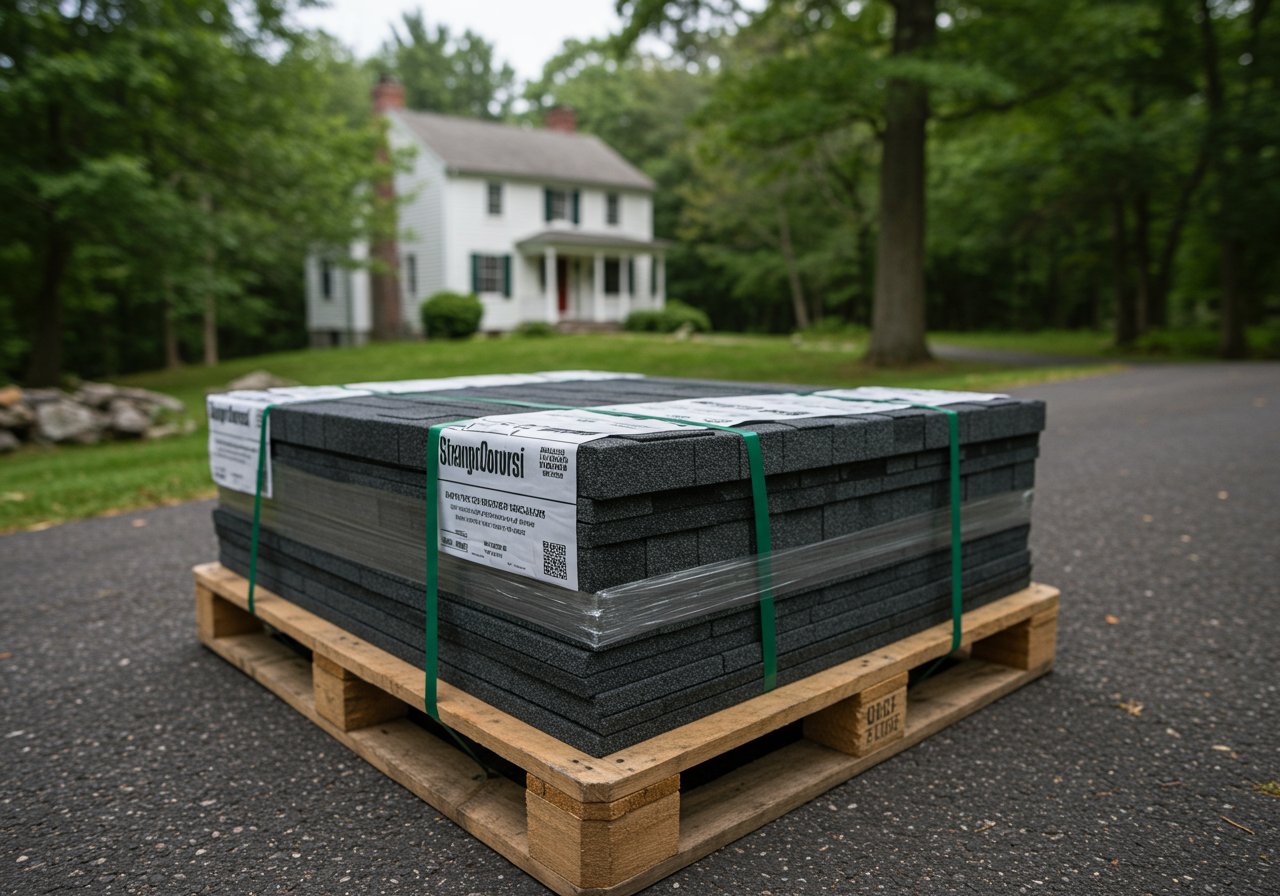
"I've seen contractors ask for the cheapest shingle we have, then turn around and tell the homeowner they're getting the top-of-the-line architectural series. Always check the wrapper on the pallet."
The Ventilation Gap: Why Suppliers Undersell Accessories
Suppliers make their volume on shingles, but the longevity of your roof depends on the stuff they often overlook: ridge vents and soffit baffles. In Stafford Springs, an unventilated attic is a death sentence for your shingles. The heat buildup in July will bake them from the inside out, and the moisture in March will rot your decking.
A common mistake is buying high-end shingles but using the cheapest possible plastic ridge vent. These often crush under heavy snow or get brittle and crack. I recommend looking for internal baffle vents that are rated for our specific climate. The Department of Energy's guide on attic insulation is a great resource for understanding why your roof materials and your attic airflow must work together. If your supplier isn't talking about "intake versus exhaust," they aren't selling you a roof system; they're just selling you a pile of asphalt.
Timing the 2026 Material Market in Connecticut
If you can help it, don't buy your materials in the middle of a "storm rush." When a big nor'easter hits and half of Tolland County needs emergency roof repair, supplier prices spike due to demand. In March, we are right on the edge of the spring rush. This is actually a great time to lock in pricing before the April demand surge.
Typical Material Price Fluctuations (Per Square)
I always suggest homeowners ask their contractor if the supplier offers a "pre-season discount." Many wholesalers want to move inventory in early March to make room for new summer stock. It might only be a 5% difference, but on a $10,000 material bill, that's $500—enough to cover the cost of upgrading your gutters or adding better flashing around your chimney. The goal is to be the homeowner who knows the numbers, not the one who just signs the check. When you're ready to see how these numbers actually apply to your home, get an instant roofing estimate to compare what the local market is actually charging right now.
Get Your Free Roof Quote
Enter your zip code to get started
FAQ

About Dana Jackson
Verified ExpertDana Jackson is a Homeowner Advocate & Cost Analyst who helps Connecticut families navigate the financial aspects of roofing projects. She specializes in finding the best value and avoiding common pricing pitfalls.