"Most homeowners think of snow as a fluffy white blanket, but by March, that blanket has turned into a lead weight," says Marty Vance, a structural analyst I've consulted with for nearly 12 years on Fairfield County renovations. Marty often reminds me that a standard 2,400-square-foot roof in Greenwich might be supporting the equivalent of four or five school buses during a heavy wet winter. When you live in an area where the architecture ranges from sprawling mid-century moderns to classic 1920s Tudors, that weight doesn't just sit there—it actively tries to find the weakest point in your home's skeletal frame. As we transition through the tail end of the season, understanding how your roof is holding up isn't just about preventing a collapse; it's about preserving the long-term integrity of your biggest investment.
Key Takeaways
- Wet March snow and rain-on-snow can double load fast; older Greenwich roofs may predate today's 30 psf snow-load thinking.
- Sticking interior doors and fresh ceiling corner cracks often show load-bearing movement before you ever see a leak.
- Low-slope and asphalt-heavy assemblies hold snow longer; metal and drainage planning change the risk picture.
- Above ~18 inches of snow or serious ice damming, stop DIY aggression and plan professional steam-based removal.
The Hidden Physics of a Fairfield County Winter
We often talk about "inches" of snow, but in the roofing world, we talk about "density." A foot of light, powdery snow is one thing, but the heavy, moisture-laden "slop" we often see in early March is a different beast entirely. In Greenwich, our local building codes generally require roofs to handle a snow load of at least 30 pounds per square foot, but many of the historic homes near Greenwich Avenue were built long before these modern standards were etched into law. When that snow sits, it compacts. If we get a bit of rain on top of it, the weight can double in hours.
I remember visiting a gorgeous Greek Revival near Binney Park a few years back. The homeowners were thrilled with their new slate-look shingles, but they hadn't accounted for the sheer mass of the snow piling up in the "valleys" of their complex roofline. The stress wasn't just on the shingles; it was on the rafters underneath that started to slightly bow. If you're noticing an unusual amount of build-up in specific areas, it might be time to bring in a repair specialist who can assess drainage and supports before shingles—and framing—pay the price.
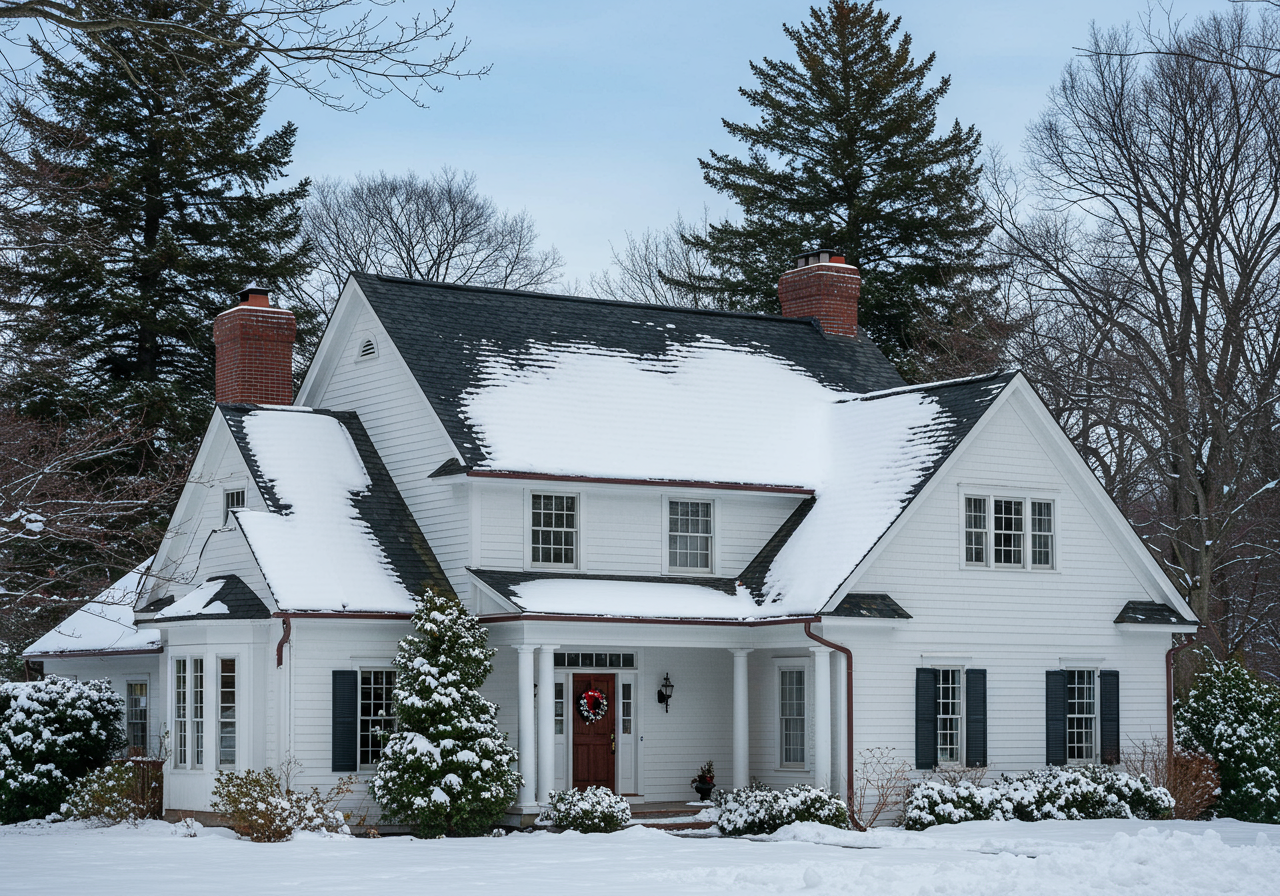
Snow concentrated in roof valleys near Binney Park–style rooflines
Complex pitches and valleys can stack weight where rafters work hardest
Recognizing the Internal S.O.S. From Your Rafters
Most people wait for a leak to happen before they worry about their roof. But structural stress usually whispers before it screams. I always tell my neighbors to look at their interior doors. If a door to your primary suite or a guest bedroom suddenly starts sticking in the frame during a heavy snow week, that's not just "house settling." It's often the weight on the roof pushing down on the load-bearing walls, slightly deforming the door headers.
You should also keep an eye out for fresh "spiderweb" cracks in your drywall, particularly where the walls meet the ceiling. I saw this happen in a mid-country colonial last March; the owners thought it was just the dry winter air. In reality, the ridge beam was under so much pressure from an ice-heavy snowpack that it was shifting ever so slightly.
Scan ceilings and upper-floor trim
Walk your top floor and check for new ceiling cracks or sagging drywall.
Exercise every interior door
Open and close each door to catch sudden sticking or misalignment.
Listen during storms
Note unusual creaking or popping while snow is accumulating.
Inspect the attic
Look for bowed rafters or damp spots near the ridge beam.
Sight the roofline from the street
Check whether the exterior roof plane shows new dips or irregularities.
The Design Factor: Why Your Roof Pitch Changes the Math
From a design perspective, the "Gold Coast" has some of the most beautiful rooflines in the country. However, those steep gables and intricate dormers create "snow catchers." A roof with a 12/12 pitch (very steep) will shed snow much faster than a flatter, contemporary roof. If you own one of those stunning modern homes with a low-slope roof, you are essentially hosting a massive weight-lifting competition on top of your house every winter.
The material matters too. Metal roofing is becoming incredibly popular in Greenwich—not just because it looks sleek and sophisticated—but because snow slides off it with almost zero effort. If you have asphalt shingles, the granules create friction that holds onto the snow. While that's fine for a dusting, it becomes a liability during a 14-inch dump. If you're tired of the winter anxiety, running the numbers on a more snow-shedding assembly —like standing-seam metal—can clarify whether an upgrade fits your budget and aesthetic.
Weight of 12 Inches of Snow per Square Foot
Approximate pounds per sq ft—density changes everything during mixed storms.
Structural Solutions and Modern Reinforcements
If your home is older, you don't necessarily have to tear the whole thing down to handle the snow. There are "alternatives" to just crossing your fingers. During my own renovation, we added "collar ties"—which are basically horizontal boards that connect opposing rafters—to prevent them from spreading under pressure. It's a relatively simple structural fix that adds immense peace of mind.
Another option I love for Greenwich homes is the installation of permanent snow guards. You've probably seen these decorative brass or steel "cleats" on high-end slate roofs. They don't just look historic and elegant; they prevent "snow avalanches" that can rip gutters right off your house or crush the expensive boxwoods you spent a fortune landscaping last spring. Before you hire anyone, make sure to verify their registration through the Connecticut eLicense portal so structural work stays in qualified hands.
"In Greenwich, we don't just build for the sun; we build for the three weeks a year when the sky tries to sit on our living rooms. A beautiful roof is a strong roof."
Safe Removal vs. Professional Intervention
I see it every year: a well-meaning homeowner out on their driveway with a 20-foot roof rake, pulling down massive chunks of ice and snow. Please, for the sake of your shingles (and your back), be careful. I've seen people scrape the protective granules right off their $40,000 roof in a single afternoon because they were panicked about the weight.
If you have more than 18 inches of snow on your roof, or if you see significant ice damming (those giant icicles that look like frozen daggers), it's time to call in the pros. Steam removal is the "Gold Standard" here. It melts the ice without the blunt-force trauma of a hammer or a shovel. According to the Connecticut Department of Consumer Protection home improvement guidance, always ensure your contractor provides a written contract for emergency snow removal to avoid price gouging during a storm.
Worried About Load on Your Greenwich Roof?
Compare free quotes from vetted Connecticut pros before the next thaw stresses framing or shingles.
No credit card required • Free to use
Did You Know?
Greenwich building codes often require 'ice and water shield' membranes to be installed at least 24 inches inside the interior wall line to prevent leaks caused by snow-induced ice dams.
Preparing for the Next Big One: A 2026 Checklist
We can't control the Fairfield County weather, but we can control how our homes respond to it. As we look toward the next few winters, think of your roof as a system, not just a covering. This means keeping gutters clean so snowmelt has a place to go, ensuring your attic is properly insulated (which prevents the heat from melting the snow and creating ice dams in the first place), and having a regular inspection schedule.
If your roof is pushing the 22-year mark, it's likely that the plywood decking underneath has seen better days. When the wood gets damp and dry over two decades, it loses its "structural memory." If you're seeing signs of failure, planning a full replacement with modern decking and membranes is often cheaper than repairing the interior water damage and structural cracking that follows a major overload. The Better Business Bureau tips on hiring for home improvement recommend getting at least three quotes before committing to a structural project—ZikQuote makes that comparison part straightforward.
Get Your Free Roof Quote
Enter your zip code to get started
Conclusion
Managing snow load in Greenwich is a bit like a high-stakes balancing act. You want to maintain that gorgeous curb appeal while ensuring your rafters aren't screaming under the weight of a wet March. Start by checking your interior doors and ceilings for those subtle signs of stress. If you're worried about the structural integrity of your older home, don't wait for the next "nor'easter" to find out where the weak spots are. Whether it's adding a few collar ties or upgrading to a snow-shedding metal roof, a little proactive planning goes a long way. Stay safe, stay dry, and keep looking up!
FAQ

About Sheri Wilde
Verified ExpertSheri Wilde is a Home Improvement Editor with a background in interior design and sustainable living. She helps Connecticut homeowners make informed decisions about their biggest investments.