You're looking at a damp spot on your ceiling while the February wind rattles the shutters of your Simsbury colonial. It isn't just a drip; it's a bill waiting to happen. You know that if you don't address it now, a minor leak repair service will quickly spiral into a structural nightmare. But the thought of a crew swarming your property on Hopmeadow Street, the noise, and the "unexpected" costs makes you want to just pull the covers up and wait for spring.
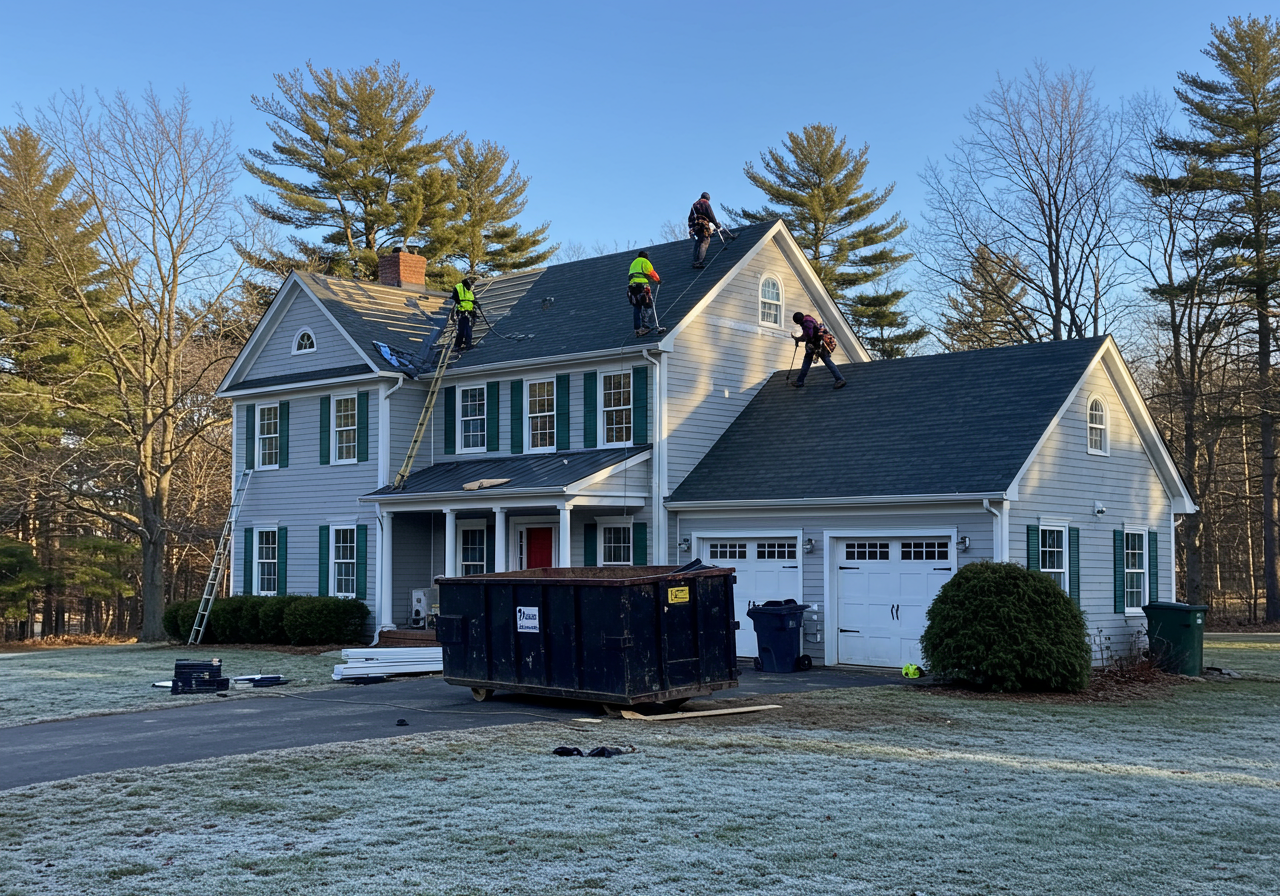
Here is the cold, hard truth: a roof replacement is a controlled construction site, not a home makeover show. In Simsbury, where many homes sit on generous lots but have complex, steep-pitched rooflines, the logistics are as important as the shingles themselves. I've seen too many homeowners get blindsided by the "mess" because they didn't ask the right questions during the bidding phase.
Key Takeaways
- The Permit Factor: Simsbury's building department is thorough; expect permit fees to sit between $157 and $312 for an average project.
- Debris Weight: A standard 2,500 sq. ft. home generates roughly 6,200 lbs of old shingles—ensure your quote includes specific 'disposal and haul-away' line items.
- Ventilation is Non-Negotiable: If your contractor doesn't mention the Department of Energy insulation standards, they aren't looking at your roof as a system.
- The Cash Leverage: Cash-heavy Simsbury homeowners can often negotiate a 4-6% 'cash-in-hand' discount by avoiding financing overhead.
Phase 1: The Paperwork and Preparation Reality
Before a single shingle is ripped off, the "invisible" work starts. In Hartford County, you aren't just paying for labor; you're paying for compliance. I recently helped a homeowner near Stratton Brook State Park who was quoted a flat fee that "included everything," only to find out the contractor never pulled the permit. They ended up with a stop-work order and a $500 fine.
Make sure your contractor shows you the math on the permit. Most towns in this area charge based on the value of the work—usually around $15 for the first $1,000 and $12-15 for every thousand after that. If they can't give you a straight answer on the permit cost, they're likely padding their margins elsewhere.
The Staging Area: Your Lawn is at Risk
A roof replacement involves a massive dumpster and pallets of heavy materials. In February, the ground in Simsbury is usually frozen, which is actually a blessing—it prevents the heavy tires of a 15-yard dumpster from sinking into your manicured lawn. However, if we get a mid-month thaw, you need to demand that the crew uses "plywood buffering" under the dumpster wheels.
Material Selection for the Farmington Valley
We get hit with everything from ice dams to humid 90-degree summers. While investing in a full roof replacement is a big hit to the wallet, choosing the right material for our specific micro-climate is what saves you money over the next 20 years.
Simsbury Roof Replacement Materials
Choosing the right roofing material for Connecticut's varied climate is crucial for long-term value.
Asphalt Shingles vs. Standing Seam Metal for Simsbury Homes
Pros
- Asphalt: Lower upfront cost ($11,400–$16,800 range)
- Metal: 50+ year lifespan
- Metal: Superior snow shedding for CT winters
- Asphalt: Easier to repair if a branch falls
Cons
- Asphalt: Prone to algae staining in shaded Simsbury lots
- Metal: Higher initial investment (often 2x asphalt)
- Metal: Can be noisy during heavy sleet without proper insulation
Phase 2: The Tear-Off and the "Unexpected" Decking Costs
The loudest part of the process is the tear-off. It sounds like a giant is trying to peel your house like an orange. This is also where the "Change Order" trap happens. A contractor looks at your roof from the ground and assumes the wood underneath is fine. Then they pull up the shingles and find rot.
The Plywood Script
Don't let a contractor tell you "we'll see what the wood looks like" without a pre-agreed price. Your contract should explicitly state: "Replacement of damaged 1/2-inch CDX plywood will be billed at $92 per sheet, including labor." If you don't have that number in writing, I've seen some crews try to charge $150 a sheet when you're in a vulnerable position with a hole in your roof.
Protecting the Perimeters
According to FEMA's hurricane mitigation guidelines, the edges of your roof are the most vulnerable to high-wind uplift. Ensure your crew is using a "starter strip" shingle and not just flipping a regular shingle upside down. It's a small detail that determines if your roof stays put during the next Nor'easter.
Property Protection
Tarps are draped from the gutters to the ground to catch nails.
The Tear-Off
Old layers are removed down to the wooden deck.
Inspection
The crew checks for rot and replaces 'soft' plywood sheets.
Waterproofing
Ice and water shield is applied to eaves and valleys (critical for CT).
Installation
New shingles are nailed down using a 6-nail pattern for wind resistance.
Phase 3: Ventilation and Thermal Performance
Your roof isn't just a hat; it's a lung. If it can't breathe, your attic turns into an oven in July and an ice-making machine in February. Many older Simsbury homes—especially those built in the late 70s—have woefully inadequate soffit venting.
If your contractor isn't talking about "intake and exhaust," they aren't doing their job. A "cool roof" isn't just for California; it's a valid strategy here too. The EPA provides data on how reflective roofing can lower the temperature of your attic by 20+ degrees, which keeps your AC from redlining in the summer.
The Insulation Connection
While the roof is open, it's the perfect time to look at your R-value. If you can see your floor joists in the attic, you're losing money. Adding blown-in cellulose while the crew has easy access can be much cheaper than doing it as a separate project later.
Phase 4: The Final Walkthrough and the "Magnet Sweep"
The job isn't done when the last shingle is nailed. The most common complaint I hear is about "stray nails" in the driveway. A professional crew should perform at least three passes with a high-powered rolling magnet.
Demand the Final Invoice Detail
Before you hand over the final check—which should never be more than 40-50% of the total—ask for the "lien waivers." This is a document from the material supplier (like Harvey BP or ABC Supply) stating the contractor paid for the shingles. If the contractor doesn't pay the supplier, that supplier can actually put a lien on your house, even if you paid the contractor in full.
Where Your Money Goes (Typical $16,000 Simsbury Roof)
If you're still trying to figure out if you can squeeze another year out of your current shingles, using a roofing cost calculator can help you decide if a patch or a full replacement makes more financial sense right now.
I've seen Simsbury homeowners save thousands just by being the person who "asks for the math." Don't be afraid to be the "difficult" client. A good contractor respects a homeowner who knows the value of a dollar.
Get Your Free Roof Quote
Enter your zip code to get started
Stop guessing and start planning
Get an instant, honest estimate for your Simsbury home today and see exactly what the math looks like.
No credit card required • Free to use
Frequently Asked Questions

About Dana Jackson
Verified ExpertDana Jackson is a Homeowner Advocate & Cost Analyst who helps Connecticut families navigate the financial aspects of roofing projects. She specializes in finding the best value and avoiding common pricing pitfalls.