
Key Takeaways
- Architectural shingles offer 130 mph wind resistance, vital for Woodbury's ridge-top homes compared to the 60 mph limit of 3-tabs.
- The heavier laminate construction of architectural shingles handles Litchfield County's 31°F freeze-thaw cycles better, reducing ice dam leaks.
- Expect a 20-25% higher upfront cost for architectural, but a lifespan that often doubles that of traditional 3-tab options.
- March is the 'shoulder season' sweet spot to get an instant quote from a local pro before the April rush begins.
It's one of those Woodbury mornings where the sky looks like wet concrete and the thermometer is stuck at a stubborn 31°F. Walking out to my driveway earlier, I could hear that telltale "tick-tick" of melting ice dripping off the eaves—a classic Litchfield County freeze-thaw cycle in action. When it's cloudy like this and the humidity sits at 66%, your roof isn't just a hat for your house; it's a frontline soldier against moisture that's trying its hardest to turn into an ice dam by nightfall.
I've seen plenty of folks along Main Street or up toward Flanders Road wondering if their shingles are actually up to the task. Specifically, is the old-school 3-tab shingle still a viable contender for a budget-conscious homeowner, or has the architectural shingle become the only logical choice for our specific microclimate? Let's look at how these two stack up before the spring rains really start hammering the Pomperaug Valley.
The Geometry of Protection: Flat vs. Dimensional
If you look at a traditional 3-tab shingle, it's a single layer of asphalt-coated fiberglass. It's flat, uniform, and—to be honest—a bit thin. In the roofing world, we call these "strip shingles." They were the standard for decades, but they have a fatal flaw in a town like Woodbury where the wind likes to whip through the hills at a steady 7 mph on a "calm" day and much higher during a March nor'easter.
Architectural shingles (also called dimensional or laminated shingles) are a different animal. They consist of two or more layers of shingle material bonded together. This creates a staggered, three-dimensional appearance that mimics wood shakes. But it isn't just about the aesthetics. That extra layer adds significant "heft."
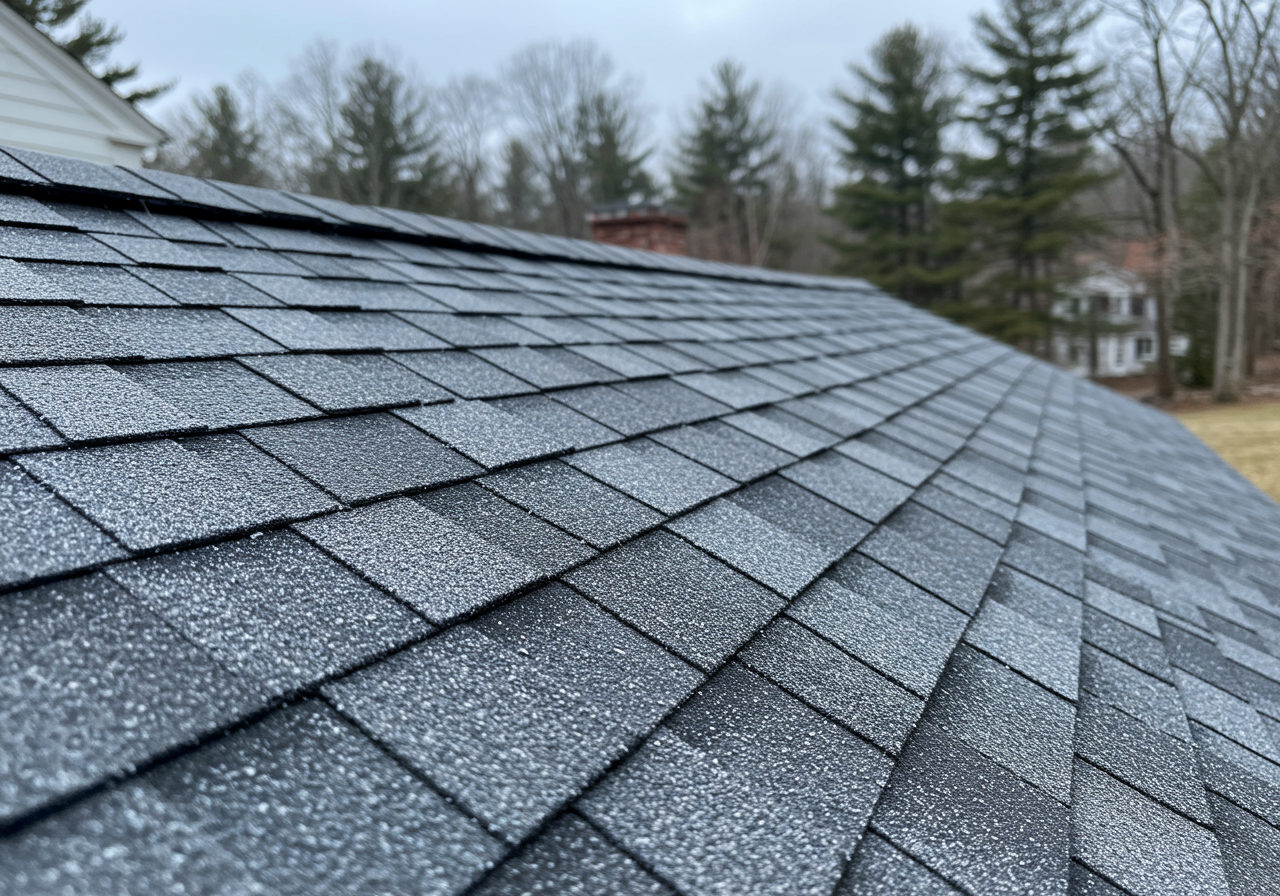
A comparison between a flat, weathered 3-tab shingle and a thick, charcoal-colored architectural shingle on a Woodbury home
A residential rooftop in Woodbury, CT with a backdrop of bare March trees
Wind Resistance and the Litchfield Hills
I remember a client over on Quassapaug Road whose roof looked like it had been through a paper shredder after a particularly nasty wind event. They had 3-tab shingles that were only 12 years old. The problem? 3-tabs are generally rated for 60 mph winds. In the higher elevations of Woodbury, we hit those speeds more often than you'd think. Architectural shingles are typically rated for 130 mph.
The "Woodbury Factor": Ice Dams and Freeze-Thaw Stress
With today's temperature hovering at 31°F, we are in the danger zone for ice dams. This is when snow melts on the upper parts of your roof, runs down to the colder eaves, and freezes again. This creates a literal dam that backs up water under your shingles.
Because 3-tab shingles are thinner and lay flatter, they have less structural integrity to resist the "prying" action of ice. I've seen ice lift the edges of 3-tab shingles like a crowbar. Architectural shingles, being thicker and heavier, offer a more robust barrier.
Why Weight Matters in March
When humidity hits 66% and the sun stays behind the clouds, moisture lingers. Architectural shingles weigh roughly 50% to 100% more per square (100 sq. ft.) than 3-tabs. This extra mass helps the shingle stay seated against the roof deck, even when the underlying plywood is expanding and contracting due to the Litchfield County temperature swings.
Noah's Weather Tip
Cost vs. Value: The 2026 Woodbury Reality
Let's talk numbers, because that's usually where the 3-tab vs. architectural debate starts and ends for most homeowners. Yes, architectural shingles are more expensive. For a standard 2,200-square-foot roof in Woodbury, you might see a price difference of about $2,840 between the two options.
But here is the catch: I rarely see a 3-tab roof in Connecticut last past 15 or 18 years before it starts looking "toasted"—curling at the edges and losing granules. Architectural shingles easily sail past the 25-year mark, often hitting 30 or 40 if the ventilation is right. If you're planning on staying in your home for more than a decade, the architectural shingle is actually the cheaper option on a "cost-per-year" basis.
Estimated Lifespan in CT Climate
Resale Value on Main Street
If you're thinking about selling your home in the next five years, the architectural shingle is a no-brainer. Real estate agents in Woodbury tell me that savvy buyers look at a 3-tab roof and immediately factor in a "roof replacement credit" in their heads. An architectural roof, however, is a selling point that screams "well-maintained." Before you decide, make sure to verify a contractor's registration to ensure you're getting a professional installation that maintains your warranty.
Making the Call: Planning for Spring
We are currently in that window where the ground is soft and the air is crisp. It's the perfect time to examine ZikQuote's matching process to see how we pair you with local Litchfield County contractors who actually understand our specific terrain. You don't want a "flatlander" roofer who doesn't account for the wind loads on our hills.
Architectural Shingles: The Verdict
Pros
- Superior wind resistance (130 mph+)
- Higher resale value for Woodbury homes
- Better resistance to ice dam prying
- Hidden imperfections in the roof deck
Cons
- Higher initial material cost
- Heavier weight requires sound decking
- Overkill for simple sheds or outbuildings
If you've noticed granules in your gutters after this winter's snowmelt, or if you saw shingles fluttering during the last 7 mph breeze, don't wait for the April deluges. If you find yourself facing an urgent leak after a late-season storm, the repair costs will almost always outweigh the savings of waiting.
Connecticut homeowners are protected by specific consumer protection laws, so ensure any quote you get is in writing and includes a clear breakdown of the shingle type. Personally? I haven't recommended a 3-tab roof for a primary residence in years. The weather in Woodbury is just too unpredictable, and the peace of mind you get from that extra layer of asphalt is worth every penny when the next nor'easter rolls through.
Ready to get started? Get an instant quote from a local pro and see how architectural shingles can protect your Woodbury home for decades to come.
Get Your Free Roof Quote
Enter your zip code to get started