
Back in the mid-1800s, Stonington Borough was a thriving hub of whaling and sealing, where the wealth of the sea was often funneled directly into the gables of majestic Greek Revival and Federal-style homes. Walking down Water Street today, you can still see the architectural legacy of that era—and the punishing toll the Atlantic salt air takes on it. I've spent a lot of time digging through New London County property records and old town surveyor notes, and one thing is clear: the roofs that protected our ancestors weren't just about style; they were built for survival. But in 2026, the question for many Stonington homeowners isn't just about heritage—it's about whether traditional materials can still stand up to our shifting New England climate.
Key Takeaways
- Material Matching: Historic commissions in Stonington often require specific aesthetic matches (cedar or slate), but modern synthetics are gaining acceptance for their 50-year durability.
- Structural Integrity: Older homes in Southeast CT often require structural reinforcement before installing heavy natural slate, adding $4,500–$7,200 to the initial project cost.
- Energy Efficiency: Modern underlayments can reduce attic heat transfer by up to 22% without altering the historic exterior profile of the home.
- Vetting Matters: Historic roofing requires specialized flashing techniques that 68% of general contractors aren't trained to execute on 19th-century structures.
The Great Material Debate: Natural vs. Synthetic in the Borough
When you're dealing with a home built before the Civil War, you aren't just buying shingles; you're managing a legacy. I remember standing on a job site near the Captain Nathaniel Palmer House last year where the owner was torn between authentic Atlantic White Cedar and a high-end polymer composite. The natural cedar smells incredible and offers that iconic silver patina, but the salt spray from the Sound is a relentless agitator.
The reality is that natural wood in our coastal environment requires a level of maintenance most people underestimate. If you aren't treating that wood every few years, the humidity trapped by our January nor'easters will invite rot faster than you can say "Stonington Harbor." On the flip side, synthetic slate and shake have come a long way. They mimic the shadows and textures of the real thing so well that even some of the stricter local boards are starting to nod their approval.
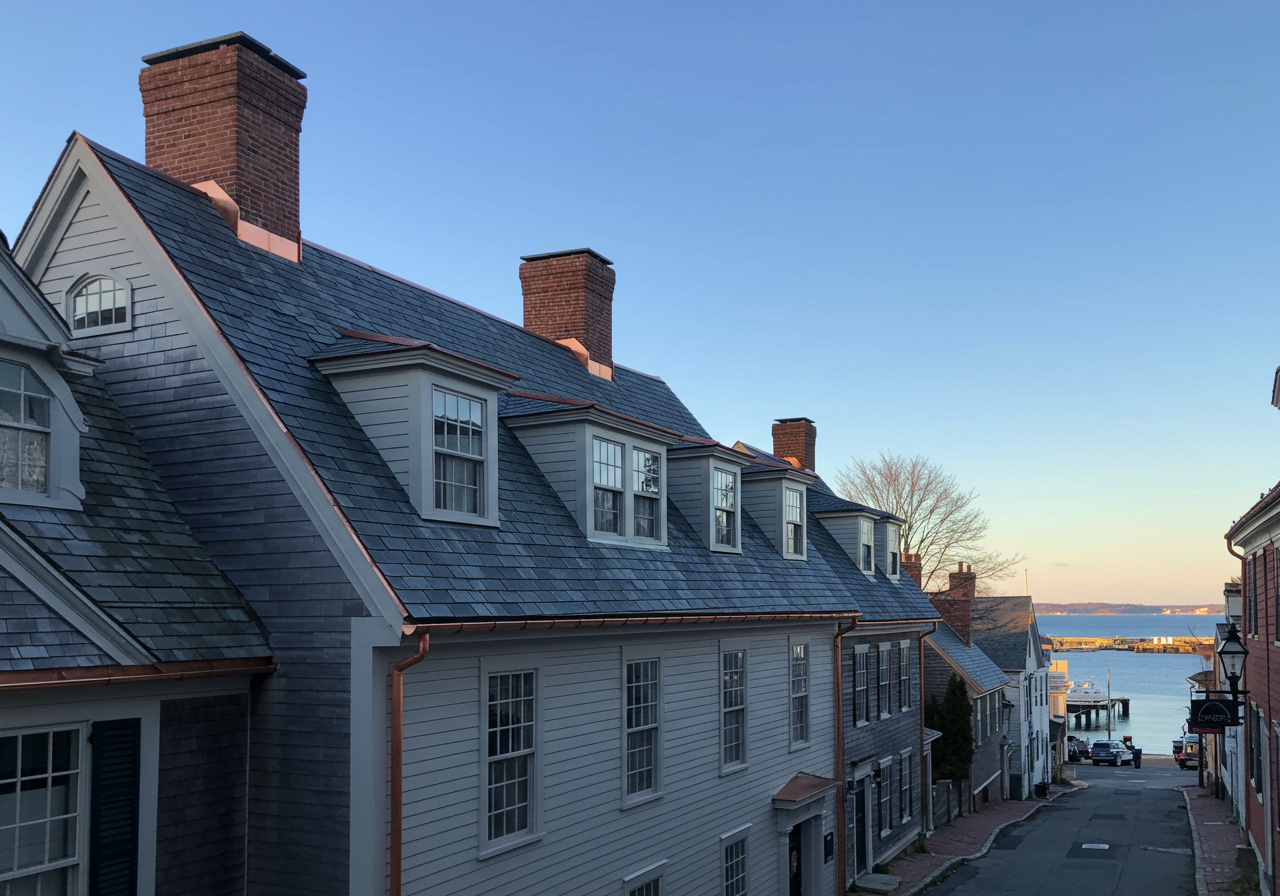
Historic Stonington home with traditional roofing materials
The challenge of preserving architectural heritage while ensuring modern durability in Connecticut's coastal climate.
Natural Slate vs. Synthetic Composite
Pros
- Slate lasts 100+ years
- Highest resale value for historic homes
- Fireproof and wind-resistant
Cons
- Requires massive structural support
- Synthetic is 40% cheaper on average
- Difficult to find specialized slate repair pros
Weatherproofing a 200-Year-Old Structure for 2026
Our weather patterns in New London County are changing. According to the NWS Historical Storm Events Database, we are seeing a higher frequency of "heavy lift" wind events that target the leading edges of historic eaves. Most old Stonington homes were built with "skip sheathing"—basically slats of wood with gaps in between—to let wood shingles breathe. If you want to move to modern shingles or slate, you usually have to deck the entire roof with plywood first.
But it's not just the wind. The "January Thaw" is a classic Connecticut phenomenon that wreaks havoc on uninsulated historic attics. When the heat from your 18th-century fireplace rises into a poorly ventilated attic, it melts the snow on the roof, leading to ice dams that can rip the copper gutters right off a Victorian facade. I always tell people: don't just look at the shingles. Look at the flashing and the ventilation. If your contractor doesn't mention "breathability," they don't understand historic CT homes. You need to verify their contractor's license and specifically ask about their experience with non-vented roof assemblies common in the Borough.
The Cost of Preservation: Breaking Down the 2026 Numbers
Let's talk turkey. Historic roofing is never the "budget" option, but it is often the highest-ROI option for long-term property value. In Stonington, choosing a "cheap" asphalt shingle for a historic home can actually devalue the property by as much as 12% because it clashes so violently with the neighborhood's character.
However, there are ways to offset the sting. For instance, certain high-efficiency roofing materials might qualify for federal credits. You should check the IRS Instructions for Form 5695 to see if your chosen "cool roof" metal or shingle qualifies for a residential energy credit. Even on a historic home, you can hide modern efficiency under a traditional look.
Stonington Roofing Lifespan (Years)
I once saw a homeowner in Mystic try to save $8,000 by skipping the copper flashing in favor of aluminum on a historic chimney. Two winters later, the galvanic corrosion from the salt air had eaten through the seals, leading to a leak that ruined a hand-plastered ceiling from 1840. The "savings" vanished instantly. In this town, the salt always wins if you cut corners.
Navigating the Local Approval Process and Contractor Vetting
Before you even think about hammering a nail, you have to know if you're in a designated historic district. Stonington is protective of its skyline, and for good reason. If you're in the Borough, you'll likely need a Certificate of Appropriateness. This isn't just bureaucracy; it's a safeguard for your home's value.
The trick is finding a contractor who actually shows up and understands the nuance of historic masonry and woodwork. You can't just slap a drip edge on a 1790s saltbox and call it a day. You need someone who knows how to tie new materials into old-growth rafters that might be slightly out of plumb after two centuries of settling.
Noah's Expert Tip
Get Your Free Roof Quote
Enter your zip code to get started
In the end, roofing a historic home in Stonington is a balancing act between the 18th century and the 21st. Whether you opt for the immortal resilience of slate or the smarter price point of modern synthetics, the goal is to keep that coastal moisture out of your horsehair-plaster walls. Don't just take my word for it— see what other CT homeowners experienced when they tried to balance aesthetics with our brutal nor'easter seasons.
The best time to plan a historic roof replacement is right now, during the quiet of January, before the spring rush fills up every specialist's calendar. Take the time to get the materials right, and your home will be ready for another century of Stonington sun and salt.