Key Takeaways
- Early Detection: Catching shingle "lifting" in March prevents $4,200+ structural repairs in June.
- Attic First: Real roof health starts inside the house, checking for moisture stains near chimney bays.
- Pro Verification: Always verify a contractor's standing via the CT eLicense portal before signing spring contracts.
- Local Matching: Use automated tools to get an instant roof estimate from vetted Litchfield County pros.
Verify Your Contractor
Did you know that 64% of post-winter roof leaks in the Litchfield Hills actually stem from "silent" structural fatigue caused by moisture expansion rather than direct impact? Most Roxbury homeowners look at their shingles in January and see a solid shield; I see a ticking clock. As the frost eventually retreats from the wooded ridges near Mine Hill, it leaves behind microscopic gaps that spring rain loves to exploit. It isn't just the weight of the snow that does us in—it's the relentless cycle of freezing and thawing that acts like a slow-motion jackhammer on your flashing.
The Litchfield Winter Hangover: Why Roxbury is Different
Roxbury isn't like the shoreline. Up here in the Northwest Hills, our elevation means we hold onto ice longer, and our heavy tree canopy creates a microclimate of dampness that lingers well into April. I've noticed that homes near the Shepaug River tend to see higher rates of lichen growth, which acts like a sponge, holding water against your shingles during the spring thaw.
When I'm out surveying damage after a particularly nasty season, the most common issue isn't a hole in the roof—it's the subtle degradation of the granule layer. Those tiny pebbles on your shingles are your roof's sunscreen. Once the winter ice scours them off, your roof is effectively "balding," leaving the asphalt underneath to bake and crack under the first warm spells of May.
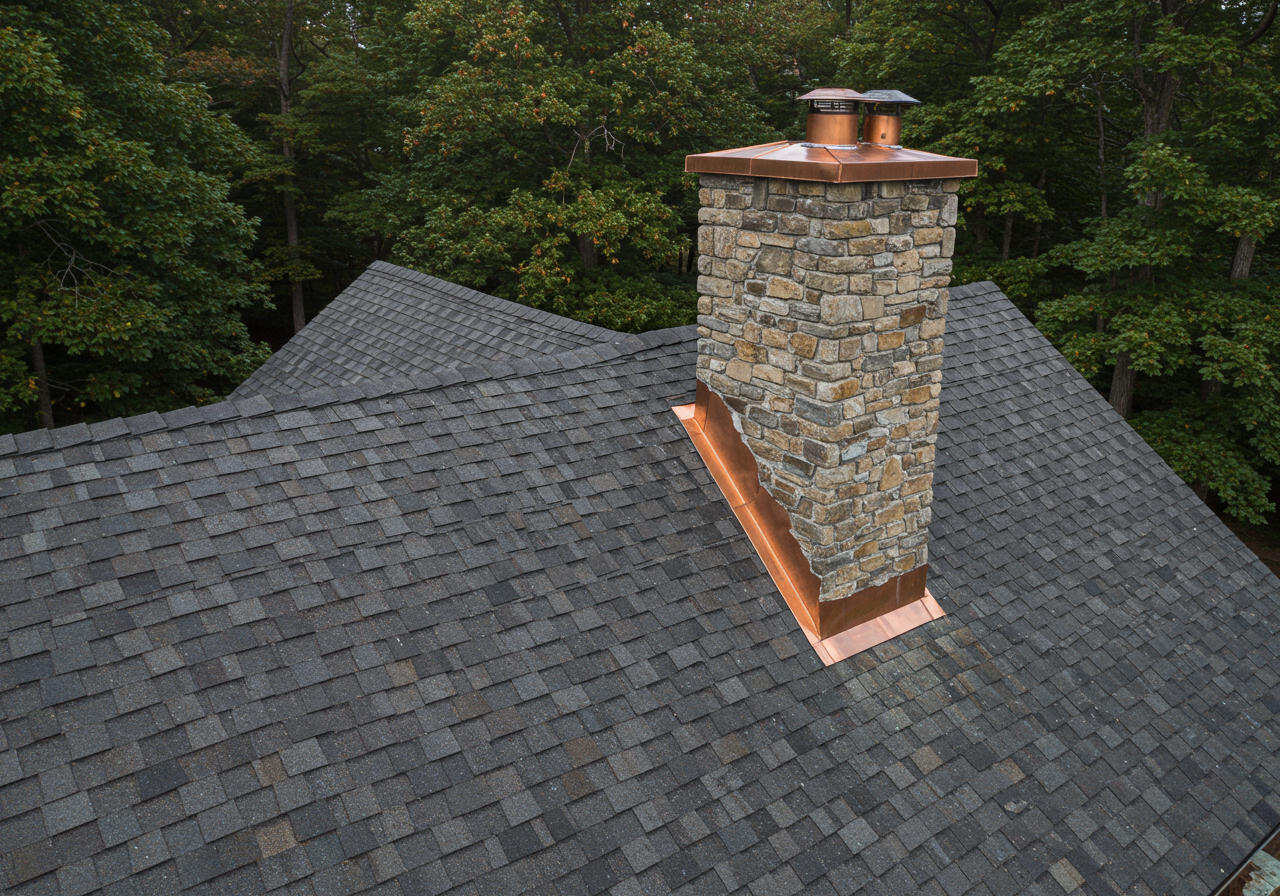
Spring roof inspection in Roxbury's Northwest Hills
The unique elevation and tree canopy create microclimates that require specialized inspection techniques.
Attic Intelligence: The Indoor Inspection
Before you even grab a ladder, you need to head into the attic. I always tell people to look for "ghosting"—those faint, dark streaks on the underside of the roof deck. It's a sign that your ventilation failed during the winter. If the warm air from your kitchen couldn't escape, it condensed against the cold wood, creating a breeding ground for mold.
Checking the Rafters
Look for water stains around the chimney and vent pipes. These are the "joints" of your roof, and in Roxbury's older colonial homes, these joints are often the first to give way. If you see dampness, the flashing on the outside is likely compromised.
Insulation and Airflow
According to the Department of Energy, proper attic insulation is just as much about moisture control as it is about heat. If your insulation is packed too tightly into the eaves, you've blocked the soffit vents. This causes the roof deck to overheat, which can literally cook your shingles from the inside out.
Shingle Fatigue and Granule Loss
When you finally walk the perimeter of your house, look at your downspouts. If you see what looks like dark sand piling up at the exit, your shingles are nearing the end of their life. I've seen 30-year roofs in Roxbury fail at the 18-year mark because the wind tunneling through the hills creates constant vibration that shakes those granules loose.
"In the Northwest Hills, a roof doesn't just sit there; it fights the wind and the trees every single day."
The Chimney and Flashing Crisis
Roxbury is famous for its beautiful stone chimneys, but those stones move differently than your wooden roof frame. The "counter-flashing" (the metal tucked into the mortar) often pulls loose after a heavy freeze. If that gap is even 1/8th of an inch wide, a spring nor'easter will drive gallons of water directly into your living room walls.
Mortar Decay
Check for crumbling mortar. If the chimney is shedding bits of stone, it's also likely letting water seep behind the lead or copper flashing. This is a specialized fix that requires someone who understands both masonry and roofing.
Tree Overhang and Organic Debris
We love our oaks and maples in Litchfield County, but they are the natural enemy of the asphalt shingle. In the spring, I often find "organic dams"—piles of wet leaves and twigs trapped in the roof valleys. This debris holds acid and moisture, which eats through the shingle coating in a matter of weeks.
Clear all overhanging branches
Remove branches within 6 feet of the roofline to prevent debris accumulation and reduce shade that promotes moss growth.
Remove leaf dams from roof valleys
Use a soft brush to clear all roof valleys of wet leaves and twigs that can trap moisture and accelerate shingle decay.
Check gutters for 'shingle mud'
Look for a mix of granules and decomposed organic matter in your gutters, which indicates active shingle deterioration.
Flush the downspouts
Ensure no winter blockages remain that could cause water to back up under the roof's edge and rot the fascia boards.
Gutter Integrity and Pitch
Ice dams often bend gutter hangers. Even if your gutters look "fine" from the ground, the pitch might be thrown off. I've seen situations where water pools in the middle of a gutter run, eventually backing up under the roof's edge (the eave) and rotting out the fascia boards. This is why how our matching process works focuses so heavily on finding contractors who look at the entire drainage system, not just the shingles.
Choosing the Right Fix for Roxbury
If your inspection reveals major issues, don't panic, but don't wait. The humidity in a Connecticut July makes roofing work significantly more difficult and expensive. April and May are the "sweet spot" for repairs.
Found a problem during your inspection?
Get a transparent, local estimate in seconds.
No credit card required • Free to use
Cost Analysis: Repair vs. Replacement
Sometimes, a $500 repair is just a Band-Aid on a $12,000 problem. If you're replacing more than 15% of your shingles, or if the plywood underneath feels "spongy" when you walk on it, it's time to talk about a full replacement. In Roxbury, a new architectural shingle roof can actually increase your home's resale value by significantly more than the cost of the project, especially with buyers looking to escape the city.
Roofing Materials for Litchfield County
| Feature | Asphalt Shingle | Standing Seam Metal |
|---|---|---|
| Lifespan | ||
| Ice Shedding | ||
| Initial Cost | ||
| CT Storm Resistance |
Before you sign any contract, make sure you're working with a contractor who understands Litchfield County's unique challenges. You can get an instant roof estimate from vetted local pros who know how to handle the Northwest Hills' specific conditions.
The 'Patchwork' Trap
Final Verdict: Don't Ignore the Drip
The biggest mistake I see Roxbury homeowners make is waiting for a visible leak. By the time water is dripping through your ceiling, the insulation is ruined, the drywall is molded, and the price tag has tripled. A Saturday morning with a pair of binoculars and a trip to the attic is the best investment you can make this January.
Get Your Free Roof Quote
Enter your zip code to get started
FAQ: Spring Roofing in Roxbury

About Noah Knight
Verified ExpertNoah Knight is a Connecticut Weather & Climate Specialist who helps homeowners understand how New England's unique weather patterns affect their roofing systems. He combines meteorological knowledge with practical home maintenance advice.