Key Takeaways
- The Weight Factor: One inch of ice weighs as much as nearly a foot of fresh, fluffy snow.
- Warning Signs: Interior cracks in drywall and 'phantom' door sticking are often the first signs of roof stress.
- Design Matters: A 12/12 pitch roof sheds weight significantly faster than the lower-sloped roofs common in 1970s Woodbury builds.
- Professional Care: Avoid DIY raking on multi-story homes to prevent both personal injury and shingle damage.
Have you ever looked up at those gorgeous, sweeping colonial rooflines along Main Street after a heavy Woodbury snowfall and wondered just how much weight those rafters are actually holding? It's a question that usually only hits us when we hear a strange thump in the night or notice a door suddenly sticking in the hallway. In our part of Litchfield County, we don't just get "snow"—we get that heavy, wet "heart attack" snow that can turn a charming winter scene into a structural nightmare for an aging roof.
Most of us in Woodbury pride ourselves on our historic homes and well-maintained properties, but the "bones" of your roof have a specific limit. Whether you're living in a mid-century ranch near Hollow Park or a classic 1790s farmhouse, understanding how snow load interacts with your home's design is the difference between a cozy winter and a mid-season emergency.
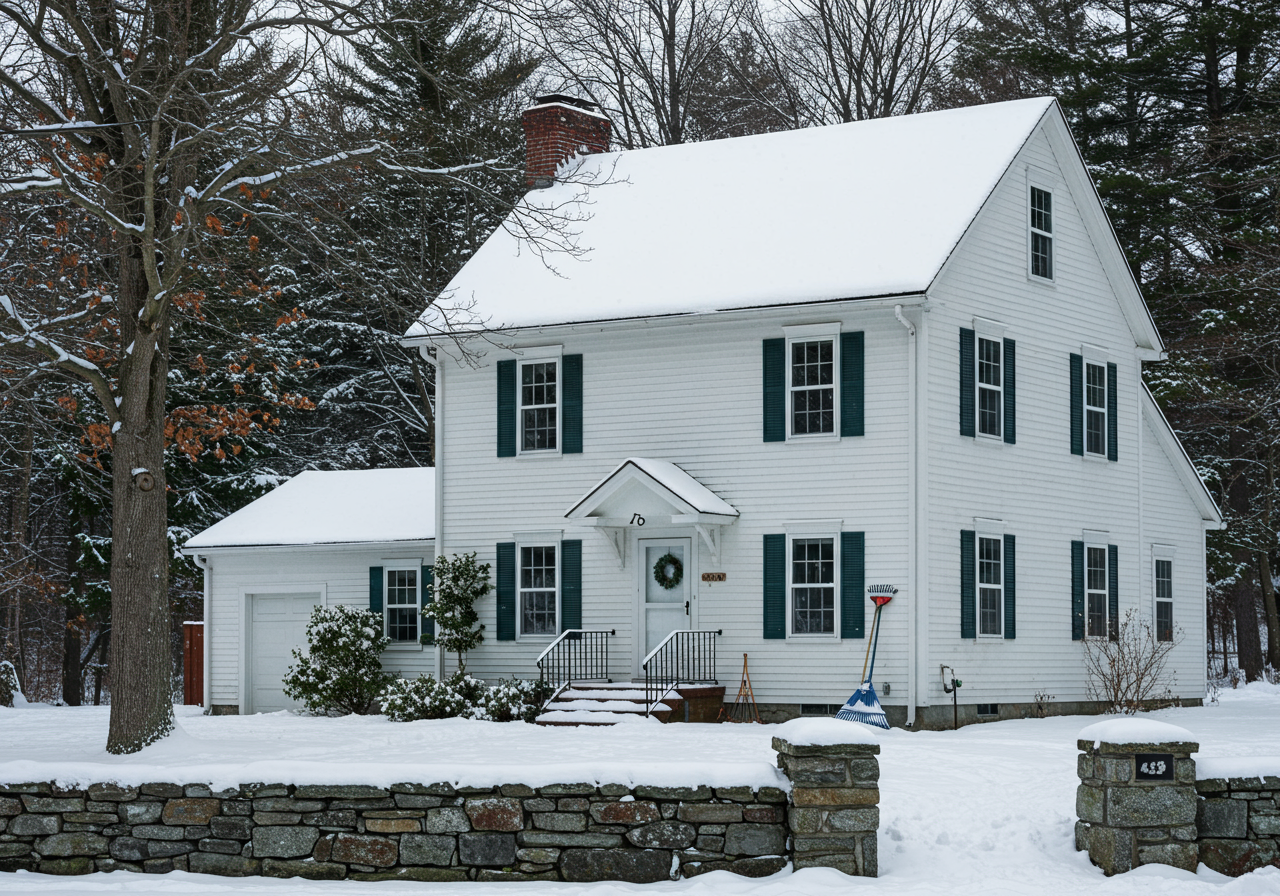
Snow Load Assessment in Woodbury
Understanding structural stress before it becomes a costly emergency.
The Physics of the Flake: Why Woodbury Roofs Work Harder
It's easy to think of snow as light and airy, but the reality is much heavier. In Woodbury, we often deal with "lake effect" moisture that drifts over from the west, creating a snowpack that is dense and water-logged. According to the International Code Council (ICC), modern homes in our area are generally designed to handle a ground snow load of about 30 to 40 pounds per square foot.
Understanding Weight vs. Volume
Fresh powder is deceptive. You might have two feet of it on your roof and only be stressing the rafters at about 6 pounds per square foot. But when that snow sits, absorbs rain, or partially melts and refreezes into ice, that same two-foot pile can jump to 30 pounds per square foot or more. I remember visiting a friend near Flanders Nature Center after a particularly nasty January storm. Her roof looked fine from the street, but the "pack" was so dense it was basically a three-ton block of ice sitting over her kitchen.
The "Wet Snow" Factor in Litchfield County
Our local geography in the Northwest Hills means we often sit right on the freezing line. This leads to "heavy" snow. If you've ever tried to shovel the end of your driveway after the Woodbury town plow goes by, you know exactly the kind of weight I'm talking about. Your roof is feeling that same pressure, but it doesn't have the option to just "push through it."
Did You Know?
A single cubic foot of settled, wet snow can weigh up to 21 pounds. For a standard 2,000-square-foot roof in Woodbury, just six inches of this stuff adds over 20,000 pounds of pressure to your home's frame.
Spotting the Stress Signals (A Tale of Two Colonials)
I once consulted on a beautiful colonial on the north end of town where the owners were convinced they had a foundation problem. Their bedroom door wouldn't latch, and a hairline crack had appeared over the window frame. But the foundation was rock solid. The culprit? Three weeks of accumulated snow on a roof that hadn't been cleared, causing the ridge beam to deflect just enough to pinch the interior door frames.
The Creak and the Crack: Interior Warning Signs
Keep your ears open. While some settling noises are normal in older Woodbury homes, loud popping or creaking sounds during a snowstorm are your roof's way of screaming for help. Look at your ceilings. Are there new ripples in the drywall? That's not just "old house charm"; it's a sign that the trusses are flexing under a load they weren't meant to carry long-term.
Doors That Won't Close: The Structural Squeeze
If a door that usually swings freely starts sticking at the top, or if you see new gaps in the crown molding, it's time to act. This is often the most reliable way to connect with CT roofing contractors before the damage becomes permanent. When the weight is removed, the house often "springs" back, but repetitive stress can lead to permanent structural sagging.
Estimated Weight of 1 Foot of Snow (lbs/sq ft)
Design Choices That Defy the Drifts
From a design perspective, your roof's "silhouette" dictates how it handles January. In Woodbury, we see a huge variety of pitches. The steeper the pitch, the less you have to worry about snow accumulation, but the more you have to worry about "snow slides" damaging your gutters or anything (or anyone) standing below.
Pitch Matters: The Steep Slope Advantage
A classic saltbox or high-pitched colonial is naturally better at shedding snow. However, many of the mid-century homes in the outskirts of Woodbury have shallower pitches. On these roofs, snow doesn't slide; it sits. This is where getting an instant roof estimate for a potential reinforcement or material upgrade becomes a smart move before the next big Litchfield winter hits.
Material Matchups: Metal vs. Asphalt Shingles
I'm seeing more homeowners in the Northwest Hills move toward standing seam metal roofs. They are fantastic for snow shedding—sometimes too good! If you go this route, you'll need snow guards to prevent a "roof avalanche" from crushing your prize-winning rhododendrons. Asphalt shingles, while traditional and beautiful, have a grainier texture that holds onto snow, which can be a double-edged sword: it prevents avalanches but increases the duration of the stress on your rafters.
"The goal isn't just to have a roof that doesn't collapse; it's to have a system that manages the transition from solid snow to liquid water without stressing the interior envelope of the home."
Safe Removal and Maintenance Strategies
When the drifts get high, the temptation to grab a ladder and a shovel is strong. Please, don't. I've seen too many DIY "fixes" result in gouged shingles or, worse, a trip to the emergency room. FEMA guidelines on roof safety emphasize that homeowners should focus on ground-based removal whenever possible.
To Rake or Not to Rake?
A snow rake can be a lifesaver for ranch-style homes, but you have to be careful. You should never scrape all the way down to the shingle. Leave an inch or two of snow to act as a buffer. If you scrape the granules off your shingles, you're basically fast-tracking your way to a roof replacement.
Why Professional Clearing Beats DIY
Professionals use specialized equipment and follow OSHA fall protection standards to stay safe while working on icy inclines. They also know how to clear snow without creating "ice dams"—those nasty ridges of ice that form at the eaves and back up water under your shingles. If you're seeing icicles that are thicker than your arm, you likely already have an ice dam forming.
Visual Inspection
Visually inspect the roof line from the street for any new dips or sagging.
Interior Check
Check interior doors and windows for sudden sticking or new alignment issues.
Vent Clearance
Clear snow from around dryer and furnace vents to prevent carbon monoxide buildup.
Ground-Based Raking
Use a long-handled snow rake ONLY from the ground to clear the first 3-4 feet of the eaves.
Professional Help
Contact a professional if you hear popping sounds or see interior ceiling cracks.
Get Your Free Roof Quote Today
Connect with verified CT pros in minutes.
No credit card required • Free to use
Long-Term Reinforcement for Peace of Mind
If you're planning a renovation or a re-roofing project in 2026, think about the "hidden" side of your roof. Your curb appeal is important—I'll be the first to tell you that a charcoal gray architectural shingle looks stunning against a Woodbury snowfall—but the structural integrity underneath is what keeps you sleeping soundly.
Strengthening the Bones
If you have an older home, you might want to talk to a contractor about adding "sister" rafters or collar ties. This reinforces the existing structure without requiring a full tear-down. It's an investment in the longevity of your home's "skeleton."
Improving Ventilation to Prevent Ice Dams
The best way to handle snow load is to ensure it stays as snow and doesn't turn into ice. Proper attic insulation and ridge venting keep your roof deck cold. When your roof deck stays the same temperature as the outside air, the snow melts evenly rather than refreezing at the cold eaves. It's a design choice that pays dividends in lower energy bills and fewer leaks.
Get Your Free Roof Quote
Enter your zip code to get started
January in Woodbury is breathtaking, but it demands respect. By keeping an eye on your interior doors, listening for the house's "complaints," and knowing when to call in the pros, you can enjoy the view from the curb without worrying about the weight over your head.
Woodbury Snow Load FAQs

About Sheri Wilde
Verified ExpertSheri Wilde is a Home Improvement Editor with a background in interior design and sustainable living. She helps Connecticut homeowners make informed decisions about their biggest investments.