
Key Takeaways
- The 38°F thaw is the peak season for ice dams—not blizzards.
- 82% of ice dams are caused by attic bypasses, not insulation thickness.
- Ignoring icicles can lead to $4,850+ in mold and drywall repairs.
- Salt pucks and roof rakes often cause more damage than they prevent.
Plainfield homeowners are currently living through the most dangerous 48 hours for their rooflines, and most don't even know it. While the sun is out and the thermometer is sitting at a crisp 38°F, the "Quiet Corner" is entering the peak of ice dam season. It's a common misconception that the biggest roofing threats happen during a blizzard. In reality, the slow, rhythmic melt-and-freeze cycle we're seeing right now is what actually destroys shingles and rots out soffits. If you see icicles thicker than a soda can hanging off your gutters near the Moosup River or along the I-395 corridor, your home is likely already taking on water.
1. The Physics of the 38°F Melt-Freeze Cycle in Plainfield
I've been tracking Windham County weather patterns for a long time, and today's conditions—38°F with a light 3 mph wind—are the "perfect storm" for ice dams. Here is what's happening: the sun or your attic's escaping heat melts the snow on the higher parts of your roof. That water flows down to the eaves (the edges), which are overhanging the exterior of the house and remain much colder.
Because the wind is almost non-existent today, there's no "wind chill" to keep the entire roof surface uniform in temperature. The water hits those cold eaves and freezes instantly. Over 48 to 72 hours, this creates a literal dam of ice. Behind that dam, a pool of liquid water sits. Since shingles are designed to shed water moving downward, they have no defense against standing water that begins to "capillary" or wick upward under the material. In my field notes from the 2015 "Winter from Hell," I saw Plainfield homes where water had traveled three feet upward from the gutter line before finding a way into the drywall.
2. Why Plainfield's Architecture Invites Attic Heat Leaks
A lot of the housing stock in Plainfield, from the older farmhouses to the 1990s colonials, shares a common flaw: "attic bypasses." These are hidden gaps where warm air from your living room escapes into the attic. It's not just about having enough pink fiberglass insulation; it's about air sealing. When the humidity hits 75% like it is right now, that warm, moist air from your shower or kitchen rises and hits the cold underside of your roof deck.
If you have recessed "can" lights in your second-floor ceiling, those act like little chimneys, pumping 75°F air directly against the plywood of your roof. This creates "hot spots." You can actually see this from the street—if you see patches of bare shingles surrounded by snow, that's exactly where your money is leaking out. Before you commit to a major project, finding a contractor who actually shows up to perform a proper attic inspection is the only way to stop the cycle. Many "storm chasers" will just tell you that you need new shingles, but if the heat leak remains, the ice dam will return next March regardless of how new the roof is.
The Plainfield Humidity Factor
3. Identifying the $4,850 Danger Zone Before the Leak Starts
If you're wondering if you're already in trouble, look at your gutters. In a healthy Plainfield home, gutters should be clear. If they are overflowing with solid ice, the "danger zone" has been reached. Most homeowners wait until they see a brown spot on the bedroom ceiling to call for help, but by then, you're looking at a repair bill that averages around $4,850 when you factor in mold remediation and drywall repair.
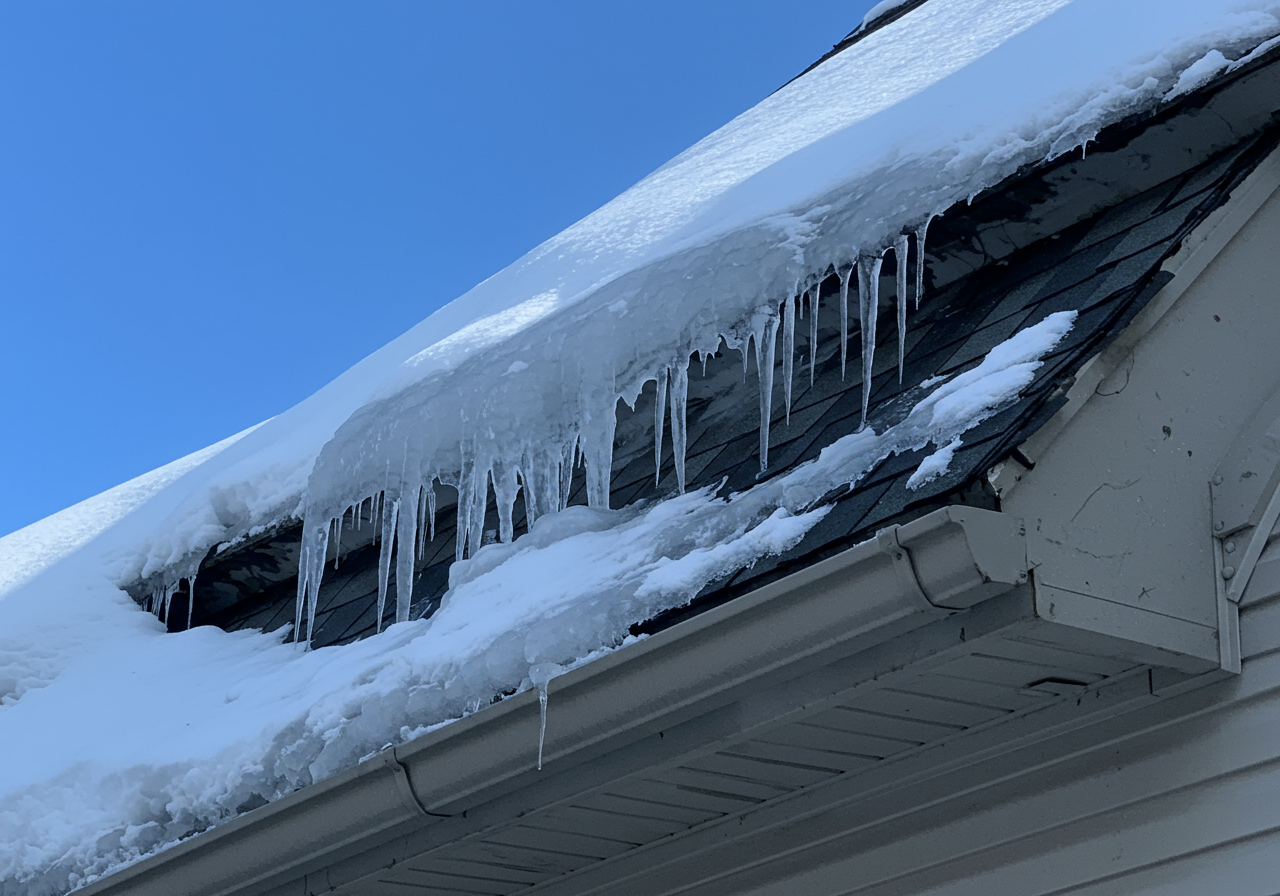
Ice dam damage on a Plainfield roof
Water backing up behind ice dams can travel feet upward under shingles before finding entry points
I remember a project off Lathrop Road where the homeowner ignored the icicles for three weeks. By the time we got there, the ice had backed up so far it had saturated the wall insulation. The R-value of that insulation dropped to nearly zero, making the house even colder and forcing the furnace to work harder—which, you guessed it, created more heat in the attic and more ice. It's a vicious feedback loop. If you're seeing these signs, you should get an instant roof estimate to see what a permanent structural fix might cost versus the temporary "band-aid" of steam removal.
Cost of Prevention vs. Ice Dam Repair
4. The Trap of "Quick Fixes": Salt Pucks and Rakes
When Plainfield residents get desperate, they start throwing things at their roofs—literally. I've seen people using hockey sticks, pressure washers, and even salt pucks. Let's be clear: throwing salt pucks on your roof is like putting a band-aid on a broken leg. The salt can corrode your aluminum gutters and kill the perennials in the garden beds below once the snow melts.
Roof raking is slightly better, but it's dangerous work. Pulling 40 pounds of wet snow down onto your head while standing on a patch of black ice in your driveway is a recipe for a trip to Backus Hospital. Furthermore, if you aren't careful, the rake will pull the granules right off your shingles, shortening the life of your roof by years. According to the Better Business Bureau's home improvement HQ, "DIY" roof repairs are among the leading causes of secondary property damage insurance claims.
Ice Dam Solutions
Pros
- Professional Steaming (Safe for shingles)
- Attic Air Sealing (Permanent fix)
- Proper Ridge Venting
Cons
- Hammering Ice (Cracks shingles)
- Chemical Salt Pucks (Corrodes gutters)
- Pressure Washing (Injects water under shingles)
5. Vetting a Plainfield Contractor in a Post-Storm Rush
When the leaks start dripping, the "contractor fever" begins. You'll see trucks with out-of-state plates suddenly appearing in Plainfield neighborhoods. Don't let the urgency of a leak push you into a bad contract. In Connecticut, specific laws exist to protect you from being taken advantage of during weather emergencies.
Always ensure the company is listed on the CT eLicense portal as a registered Home Improvement Contractor (HIC). If they can't produce an HIC number that matches their business card, send them packing. Also, remember that Connecticut's consumer protection laws require a written contract for any work over $200. If someone offers to "bash the ice off" for $500 cash with no paperwork, you have zero recourse when they put a hole in your roof deck. If the situation is dire and water is currently pouring into your living room, seeking emergency roofing services from a local, vetted crew is the only way to protect your equity.
Get Your Free Roof Quote
Enter your zip code to get started
The current clear skies and 38°F weather are a gift—not because the danger is over, but because it gives you a clear window to inspect your eaves safely. Walk your property line this evening. If you see ice bridging the gap between your gutter and your fascia board, the dam is active. Take photos now; your insurance adjuster will want to see the "before" state of the ice before the next rain washes the evidence away. March is about being proactive before the spring thaw turns a minor ice dam into a major structural headache.