Key Takeaways
- Shoulder seasons (April-May and September-October) offer the best balance of material performance and labor availability in CT.
- Winter installations are possible but require manual hand-sealing with plastic cement to meet warranty specs.
- Booking in Q1 for a late spring slot can often yield a 8-12% 'early bird' discount from premium local crews.
- High-demand summer months often result in longer lead times (6-8 weeks) and premium labor rates in the New Canaan market.
Most homeowners in Fairfield County assume a roof replacement is strictly a "wait for the leak" emergency or a mid-summer project. The reality is that asphalt shingles—specifically the high-end architectural lines like GAF Timberline UHDZ often seen on New Canaan colonials—have a technical "sweet spot" for installation. If the ambient temperature isn't high enough to activate the manufacturer's thermal sealant strip (the Dura Grip adhesive), your shingles essentially sit unsealed until the first sustained warm spell. In a town where wind gusts off the Sound can hit 50+ mph, an unsealed roof is a liability, not an asset.
The Golden Windows: Why Spring and Fall Win for Performance
In my years managing Fairfield County projects, I've found that the "shoulder seasons" provide the most stable environment for roofing systems. For a standard asphalt shingle roof, you want temperatures between 45°F and 80°F. This range ensures the shingles remain flexible enough for the installers to handle without cracking, but not so soft that footwear leaves scuff marks on the granules.
The Spring Push (April - June)
Once the ground thaws and the New Canaan Building Department sees its first major influx of permit applications, the race is on. Spring is ideal because it allows the roof to "set" before the heavy thunderstorms of July. However, because everyone has the same idea, you'll find that the roofing cost calculator might reflect a slight uptick in labor demand during this window compared to the dead of winter.
The Fall Advantage (September - November)
This is arguably the best time for New Canaan residents. The humidity drops, and the air is crisp. More importantly, getting a new roof installed in October ensures your home is sealed tight before the first heavy snow load. If you are concerned about winter durability, FEMA's hurricane mitigation guide highlights how proper attachment—which is easier in moderate weather—prevents blow-offs during nor'easters.
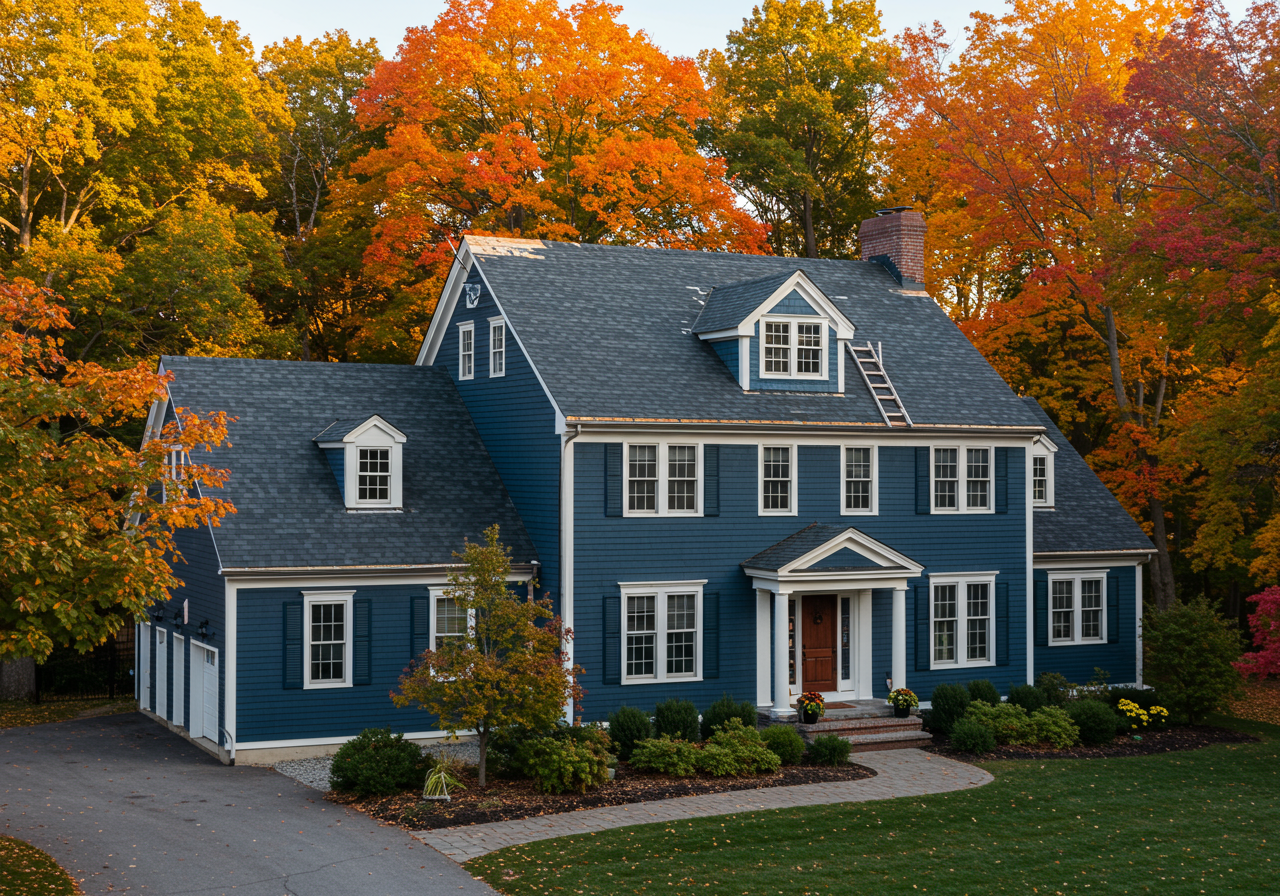
Optimal Roofing Seasons in New Canaan
Spring and fall provide the ideal temperature range for proper shingle installation and sealing
The Summer Heat: High Demand and Technical Hurdles
Summer in New Canaan is the busiest season for roofing, but it isn't always the "best" from a technical standpoint. When roof surface temperatures exceed 120°F, asphalt shingles become incredibly soft. A crew that isn't careful can easily damage the shingles just by walking on them.
Summer Installation Tips
Beyond the heat, you're competing with every other homeowner on the Gold Coast. I've seen backlogs extend into late September for the most reputable crews. If you're looking for roof replacement services during this peak, expect to pay a premium for a slot on the schedule.
Summer Roofing in New Canaan
Pros
- Fastest drying times for underlayments
- Longer daylight hours for quicker completion
- Adhesive strips seal almost instantly
Cons
- Risk of shingle scuffing/damage
- Highest labor costs of the year
- Crews are often fatigued by heat and overbooking
Winter Roofing: Is it Possible in Connecticut?
The short answer is yes, but the long answer involves a lot of technical "ifs." Modern roofing doesn't strictly stop in February, but the process changes. Here's the data point I always give: shingle manufacturers generally specify that the self-sealing adhesive won't work below 40°F.
(For the technical nerds out there, that means the shingle is "gravity-held" until spring unless the contractor performs manual hand-sealing.)
If your roof fails in January, don't panic. A professional crew will use a "dab" of asphalt plastic cement on every single shingle to ensure it stays down. It's labor-intensive, which often offsets any "off-season" savings you might hope for. If you're dealing with a mid-winter leak, focusing on roof repair services might be a better bridge until the weather breaks in April.
Did You Know?
In 2026, some advanced synthetic underlayments are rated for 'all-weather' installation, but the shingles themselves still rely on thermal bonding that requires sunshine and moderate temps.
The Financial Side: When is it Cheapest?
If you are purely driven by the bottom line, the "New Canaan discount" usually happens in late January and February. This is when contractors are looking to keep their best guys busy and may shave 5-10% off the total estimate just to keep the wheels turning.
However, you have to weigh that against the risk of snow delays. A project that takes two days in May could take two weeks in February if we get hit by back-to-back storms.
Average Labor Demand vs. Cost by Quarter (New Canaan)
When planning for energy efficiency, remember that the timing of your install can also align with tax cycles. According to the IRS: Instructions for Form 5695, certain energy-efficient improvements may qualify for credits. If you're installing a "cool roof" to lower summer bills—as detailed in the Energy Star: Cool Roofs Consumer Guide —completing the project before December 31st is vital for that year's tax filing.
Frequently Asked Questions
Your 2026 Planning Checklist
Planning a roof replacement in a town like New Canaan requires more than just picking a color. You have to navigate neighborhood aesthetics, local ordinances, and the Connecticut climate.
Month 1: Baseline Research
Use a digital estimator to get a baseline price and check for any active local rebates.
Month 2: Material Selection
Research material types (Asphalt vs. Synthetic Slate) and verify they meet local HOA or historic district guidelines.
Month 3: Contractor Selection
Secure 3 quotes from verified local contractors and check their Fairfield County references.
Month 4: Schedule Booking
Schedule the project for a 'shoulder season' window to ensure optimal material performance.
Project Week: Preparation
Clear your driveway for the dumpster and inform your neighbors about the noise (New Canaan noise ordinances typically start at 7:00 AM).
The reality is that there isn't a "bad" time to protect your home, but there is a "smart" time. If you can avoid the mid-summer rush and the mid-winter freeze, you'll end up with a better-performing roof and a much smoother experience.
Ready to see how the timing of your project impacts the bottom line?
Get an instant, data-backed estimate for your New Canaan home today.
No credit card required • Free to use
Get Your Free Roof Quote
Enter your zip code to get started
The goal isn't just a new roof; it's a roof that lasts its full 30-year lifecycle. By timing your installation to favor the shingles' chemistry and the crew's availability, you're setting yourself up for success.

About Daniel Roberts
Verified ExpertDaniel Roberts is a Senior Roofing Consultant with over 15 years of experience in the New England residential construction industry. He specializes in storm damage assessment and energy-efficient roofing systems.