You're standing in your driveway in Yalesville, watching the mid-February sun hit the patches of ice clinging to your roofline. It's that classic Connecticut "false spring" where the air smells like mud and the eaves are dripping constantly. You look up and realize those dark asphalt shingles aren't just old—they're a heat magnet in the summer and a thermal sieve in the winter. You've heard the buzz about "green roofing" at the local hardware store or while grabbing a coffee near the Gazebo, but you're wondering if a sustainable roof actually stands a chance against a New Haven County ice storm or a humid July afternoon.
The reality is that roofing in Wallingford has shifted. We aren't just talking about planting grass on your garage anymore. In 2026, "green" means high-tech reflectivity, recyclable metals, and thermal barriers that actually talk to your HVAC system. I've spent years tracking how our local microclimates—from the winds whipping off the Hanging Hills to the humidity trapped in the Quinnipiac River valley—interact with different materials. If you're looking to stop wasting money on "standard" fixes that fail in a decade, you need to understand how the current trends in sustainability actually translate to dollars saved on your UI bill.
Key Takeaways
- Modern green roofs in CT focus on high SRI (Solar Reflectance Index) to slash summer cooling costs by up to 24%.
- Recyclable metal and synthetic slate offer 50-year lifespans, vastly outperforming traditional asphalt in Wallingford's freeze-thaw cycles.
- Federal tax credits under the latest energy acts can offset a significant portion of 'cool roof' installations in 2026.
- Local Wallingford contractors are increasingly specialized in integrated solar-ready mounting systems that don't compromise roof integrity.
The Sustainable Material Showdown: What Actually Works in Connecticut?
When we talk about green roofing trends in New Haven County, we have to look past the marketing fluff. A material isn't "green" just because a brochure says so; it's green if it stays out of a landfill for 50 years and keeps your attic from hitting 140°F in August. I remember visiting a home near Gouveia Vineyards last summer where the homeowner had installed a "cool" metal roof. While the neighbors' AC units were screaming, their home remained remarkably quiet and cool. That's the difference between following a trend and making a climate-smart investment.
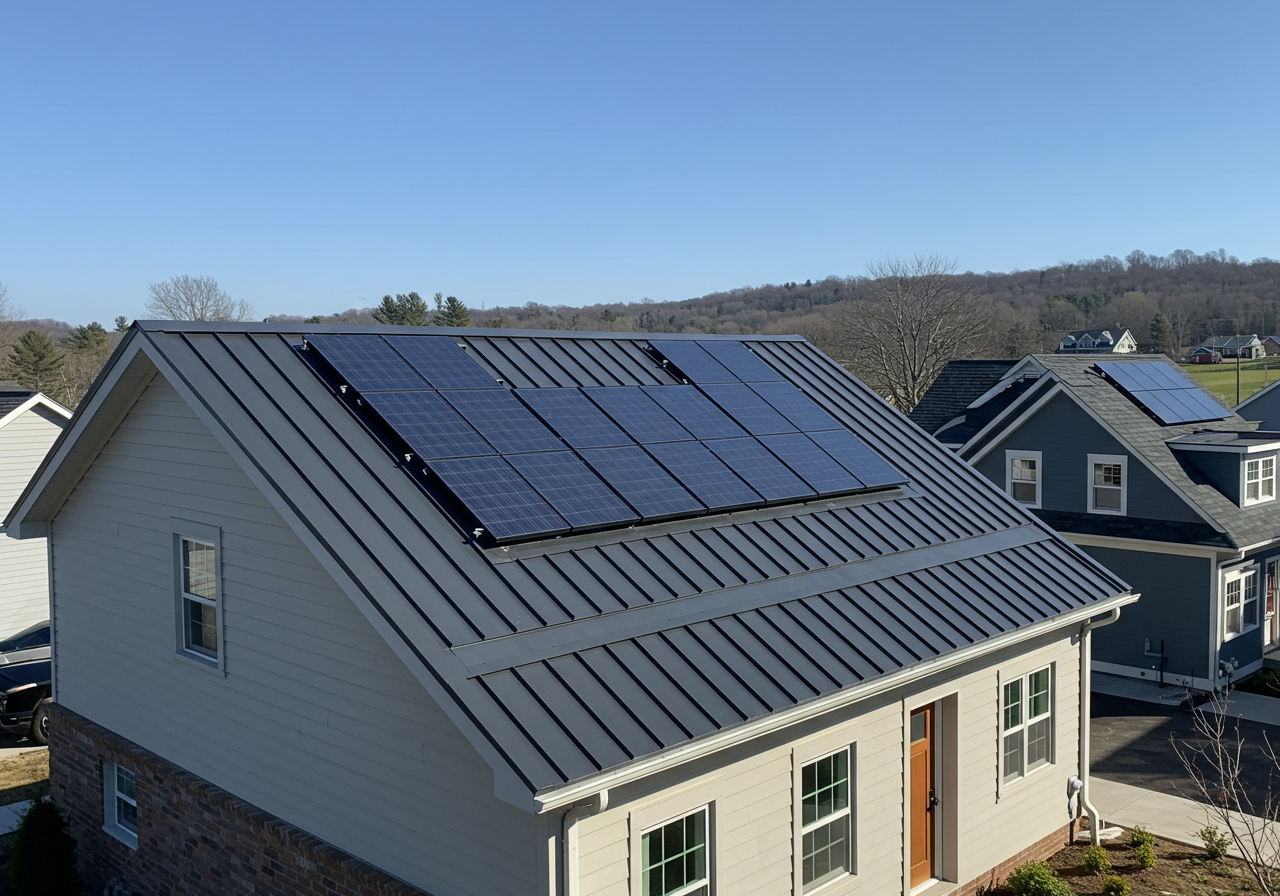
Sustainable Roofing Solutions in Wallingford
Modern green roofing materials designed to withstand Connecticut's unique climate challenges while maximizing energy efficiency.
Reflective "Cool" Roof Systems
The EPA has been pushing the concept of "cool roofs" for years to combat the urban heat island effect, and Wallingford is no exception. According to EPA research on cool roofing, these materials reflect more sunlight and absorb less heat than a standard roof. In our neck of the woods, this usually manifests as highly reflective shingles or TPO (Thermoplastic Polyolefin) membranes for flat-roofed additions. The trick is finding a balance; you want reflectivity in the summer, but you don't want to lose the "solar gain" that helps heat your home during a brutal January.
The Rise of Composite and Synthetic Slate
I've seen a massive uptick in Wallingford homeowners opting for synthetic slate. These are often made from 80% or more recycled post-industrial plastics and rubbers. They look identical to the heavy slate found on historic buildings downtown but weigh a fraction as much. This is a game-changer because you don't need to reinforce your rafters, which can save you upwards of $6,200 in structural labor. Plus, they are virtually indestructible when the inevitable New England hailstorm rolls through.
Sustainable Material Comparison
Pros
- Reflective coatings can lower roof surface temps by 50°F
- Metal roofing is 100% recyclable at the end of its 50+ year life
- Synthetic materials offer Class 4 impact resistance against hail
Cons
- Higher upfront cost than traditional 3-tab asphalt
- Some 'green' coatings require re-application every 10-12 years
- Specialized labor is required for proper installation
Metal Roofing: The 50-Year Solution
If you want to do it once and never think about it again, standing seam metal is the gold standard for 2026. I've logged enough storms to know that metal is the only material that truly laughs at a 70-mph gust. It's also the perfect substrate for solar panels. If you're planning on going solar in the next few years, finding a contractor who understands solar-ready roofing is the smartest move you can make today. You don't want to be the person drilling holes in a brand-new roof three years from now.
Energy Efficiency and the "Whole-House" Approach
A green roof is only as good as the air beneath it. I often tell folks that the roof is the "hat" of the house, but the insulation is the "scarf." If your hat is great but your neck is bare, you're still going to be cold. In Wallingford's climate, where we see everything from sub-zero nights to 95-degree humidity, your roofing choice must work in tandem with your attic's R-value.
The R-Value Myth
Many homeowners think adding more pink fiberglass solves everything. But the Department of Energy's insulation guide points out that air sealing is just as vital as the material itself. When we install a green roof system, we're looking at "conditioned" attic spaces or high-performance radiant barriers. I've seen 1970s split-levels in the Northford Road area transformed simply by switching to a vented metal system that allows the house to "breathe" during the humid summer months.
Average Annual Energy Savings by Material (%)
Federal and State Incentives in 2026
Don't let the sticker price scare you. The 2026 fiscal landscape is much friendlier to sustainable upgrades than it was even five years ago. Between the federal Energy Star credits and local Connecticut incentives, you can often recoup a significant portion of the price gap between "cheap" asphalt and "green" alternatives. I always suggest that people get a detailed estimate from a verified pro to see how these credits actually apply to their specific square footage.
"A roof isn't just a lid anymore; it's an active participant in your home's energy budget. In Connecticut, we're seeing the return on investment for green materials drop from 15 years down to 8 years due to rising utility costs."
Why Wallingford's Topography Matters
We have a unique wind tunnel effect between the ridges here. If you're living on a hill, your roof faces more UV degradation and wind shear than someone tucked away in a valley. Green roofing materials, particularly those with higher solar reflectance and wind ratings, are designed to handle this specific stress. I've noticed that homes near the Wallingford-Meriden line tend to see faster shingle erosion due to higher wind exposure; for those residents, a "green" investment is more about durability than just energy savings.
Resilience: Why Sustainability Equals Protection
In the roofing world, "green" is often synonymous with "resilient." A roof that doesn't need to be replaced every 15 years is the ultimate sustainable choice. In Connecticut, our biggest threats aren't just heat—it's the weight of wet snow and the sudden, violent summer downpours.
Low-Slope Solutions for Modern Wallingford Homes
If you have a flat or low-slope section on your home, you're in the highest-risk category for leaks. The FEMA guidelines for low-slope roofs emphasize the importance of drainage and membrane integrity. In 2026, we're seeing "white roofs" or high-albedo membranes becoming the standard for these sections. They reflect the sun, which prevents the material from expanding and contracting so violently—the leading cause of "alligatoring" and leaks.
Winter Performance: Ice Dams and Green Design
One of the best "green" features you can install isn't a shingle at all—it's a properly designed ventilation system. I've seen more roofs ruined by ice dams in Wallingford than by actual falling trees. A green roof system uses advanced underlayments and ridge vents to keep the roof deck at a consistent temperature. This prevents the snow from melting and refreezing at the gutters. If you've already seen signs of water intrusion this February, you might be looking at an emergency repair situation rather than a planned upgrade.
The 'Green' Maintenance Advantage
The Lifecycle of Your Roof
Think about the math. A standard asphalt roof might cost $11,400 and last 18 years. A sustainable metal or composite roof might cost $19,800 but last 55 years. When you factor in the cost of three asphalt replacements—not to mention the rising cost of labor and disposal fees—the green option is actually the budget option. Plus, you're keeping roughly 2 tons of asphalt shingles out of our local landfills.
Assess your current attic insulation and air sealing
Ensure your 'hat' has a 'scarf' by checking R-value and addressing any air leaks before installing a green roof system.
Research federal tax credits and local CT utility rebates
Look into Energy Star credits and Connecticut-specific incentives for reflective roofing installations in 2026.
Consult with a specialist
Determine if your roof pitch is suitable for metal or synthetic options based on your home's structural capacity.
Get an automated match with a local Wallingford contractor
Find a contractor who specializes in green installs and understands the unique challenges of New Haven County's climate.
Making the jump to a sustainable roof feels like a big step, especially when you're just trying to keep the rain out. But as our Connecticut seasons become more unpredictable—longer heatwaves and heavier, wetter snow—the old way of roofing just isn't cutting it anymore. I always tell my neighbors: don't just build for today's weather. Build for the weather we're going to have ten years from now.
Whether you're looking to slash your electric bill or you're tired of finding shingle granules in your downspouts every time it pours, there is a green solution that fits the character of your Wallingford home. It's about taking control of your home's climate, one shingle (or panel) at a time.
Get Your Free Roof Quote
Enter your zip code to get started
FAQ

About Noah Knight
Verified ExpertNoah Knight is a Connecticut Weather & Climate Specialist who helps homeowners understand how New England's unique weather patterns affect their roofing systems. He combines meteorological knowledge with practical home maintenance advice.