I was standing on a driveway near Wickham Park last February, looking up at a roof that appeared, from the curb, to be in perfect health. The homeowner was skeptical. He'd lived in Manchester for 16 years and figured if he couldn't see a shingle lying in his yard, the wind hadn't done its job. But the weather station at Hartford-Brainard had just clocked a series of gusts that didn't just blow—they "investigated." Wind doesn't always rip things off; sometimes, it just unseals them. When I finally got on a ladder, I found that nearly 25% of his architectural shingles had lost their adhesive bond. They were "tabs in the wind," waiting for the first spring downpour to turn his attic into a swimming pool.
Key Takeaways
- Invisible Uplift: Wind damage often manifests as 'unsealed' shingles that look normal but no longer protect against water.
- Manchester Microclimates: Homes near the Vernon line or open ridges experience higher uplift pressures than those in sheltered valleys.
- Code Compliance: Connecticut building codes often dictate when a repair is legal versus when a full replacement is required.
- Immediate Action: Catching a wind-lifted shingle in February can save you $4,300 in interior drywall repairs come April.
The Subtle Art of Wind "Investigation"
Most people think of wind damage as a dramatic event—a fallen oak on a Colonial in the North End or shingles scattered like playing cards across a lawn. In reality, wind is more like a pry bar. It looks for a weak edge, a slightly high-nailed shingle, or an aging sealant strip. Once it finds an entry point, it creates a vacuum. This is what we call "uplift."
I've spent a lot of time looking at NOAA radar data and comparing it to what I see on-site. In Manchester, we get these specific North-Northwest gusts that hammer homes built on the western-facing slopes. If your roof is more than 12 years old, the thermal seal that holds shingles together starts to get brittle. When a gust hits, it breaks that seal. The shingle might lay back down when the wind dies, but the damage is done. The "glue" is gone.
The Tell-Tale Shingle Crease
If you're brave enough to get on a ladder (which I don't recommend without a harness), look for a faint horizontal line across the top of the shingle. That's a crease. It happens when the shingle is flipped up by a gust and folded back. It's the smoking gun of wind damage. Even if the shingle looks "flat," that crease means the fiberglass mat inside is snapped.
Granule Loss and the Gutter Evidence
Check your downspouts. If you see a pile of ceramic granules that looks like dark coffee grounds, your shingles are losing their armor. Wind vibrates the shingles, rubbing them against each other and shedding the protective coating. Without those granules, the sun's UV rays will bake the asphalt underneath in a matter of months.
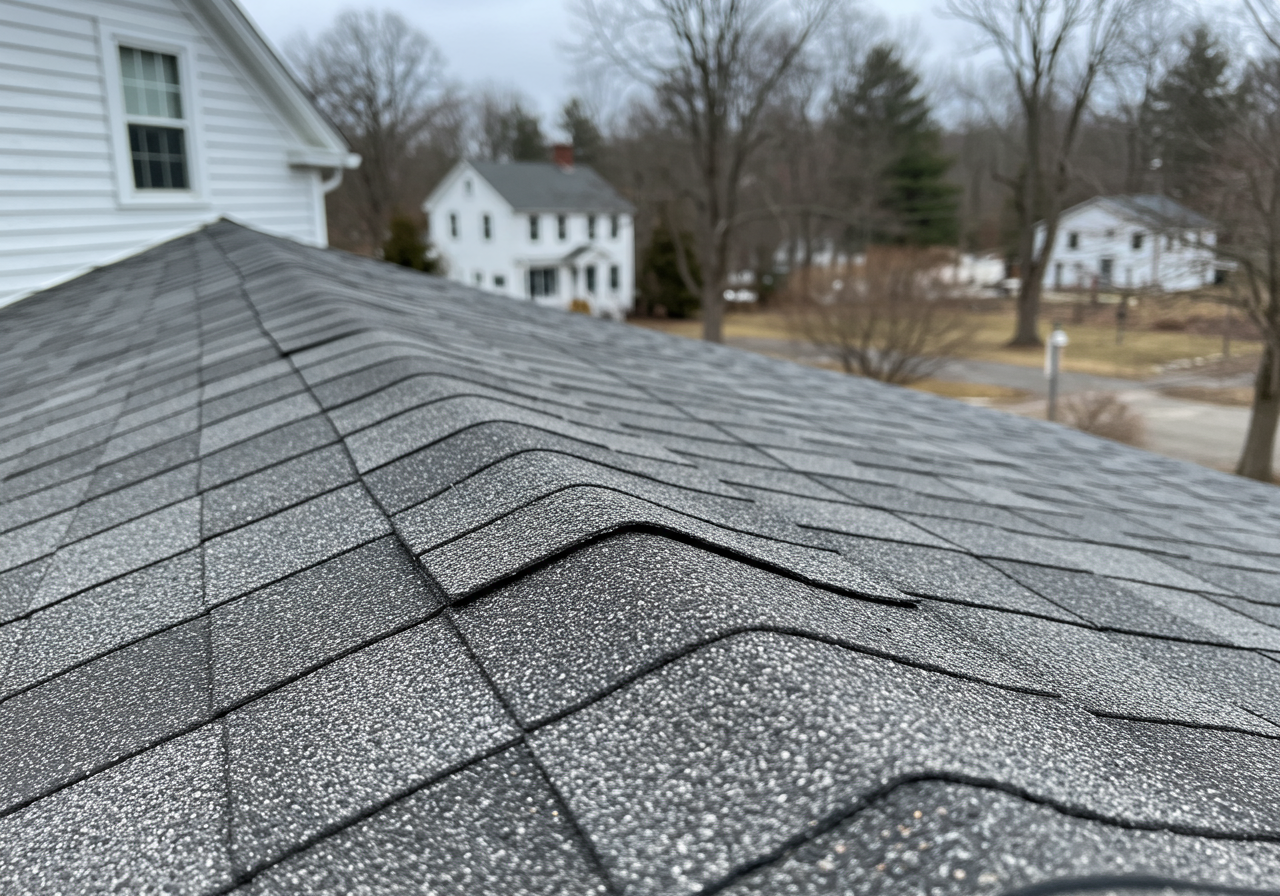
Wind Damage Assessment
A close-up view showing the subtle signs of wind damage that Manchester homeowners often miss until it's too late.
Why Manchester's Geography Dictates Your Risk
Manchester isn't just one flat town; its topography creates weird wind tunnels. I've noticed that homes near the Case Mountain area or those sitting on the ridges overlooking the Connecticut River valley take a significantly harder beating. The wind accelerates as it moves up those inclines, a phenomenon known as "topographic intensification."
Noah's Weather Insight
While checking out our blog library for similar storm prep guides, you'll find that timing is everything. A roof that survived a January gale might fail during a February thaw because the moisture gets under those loosened shingles and freezes, expanding the gap. It's a slow-motion disaster that most homeowners miss until they see a yellow stain on their ceiling.
Repair or Replace: The Tipping Point
The biggest question I get from Manchester neighbors is whether they can just "patch it." The answer usually depends on the age of the roof and the extent of the unsealed shingles. If you have a 5-year-old roof with three missing shingles, a repair is a no-brainer. But if you're looking at a 18-year-old roof with widespread seal failure, you're throwing money into the wind.
The Reality of Spot Repairs
Pros
- Cost-effective for localized damage
- Extends life of a mid-age roof
- Quick turnaround (often 1 day)
Cons
- Color matching is nearly impossible on older roofs
- Doesn't address underlying seal failure
- May void some manufacturer warranties
Here is the thing: asphalt shingles are designed to work as a monolithic system. When that system is compromised by wind, the "fix" has to be precise. According to the International Code Council (ICC), roof repairs must maintain the structural integrity of the entire assembly. You can't just goop some tar under a shingle and call it a day—not if you want it to pass a home inspection later.
Repair vs. Replacement Decision Matrix
| Feature | Spot Repair | Full Replacement |
|---|---|---|
| Cost-Effective | ||
| Long-Term Solution | ||
| Insurance Coverage Likely | ||
| Uniform Appearance |
Average Cost Comparison (2,000 sq ft home)
Navigating the Building Code Maze
In Manchester, the building department follows the Connecticut State Building Code, which is quite strict about "layering" and repairs. If more than 25% of a roof "square" (a 10x10 area) is damaged, many local inspectors will push for a full replacement of that slope to ensure it meets wind resistance standards.
I remember a project off Middle Turnpike where the homeowner tried to just replace the ridge caps after a storm. The problem? The shingles underneath had been "chattered" (vibrated) so hard by the wind that the nail holes had widened. The code is clear: if the fastening system is compromised, the shingle is toast.
Warning for DIYers
If you find yourself needing a full replacement due to extensive wind damage, it's worth looking into energy-efficient options. Energy Star's guide to cool roofs explains how reflective materials can lower your AC bills in those humid Manchester summers. Plus, you might even qualify for federal tax credits. You can check the IRS instructions for Form 5695 to see if your new "cool roof" qualifies for a residential energy credit.
Taking Action Before the Spring Rains
If you've spotted uplifted shingles or found bits of asphalt in your yard, don't wait for the April showers. February is actually a great time for an assessment. The air is dry, and the damage is easy to spot against the winter sky.
When I look at a roof, I'm looking for the "invisible" damage—the loose fasteners and the broken seals that the average eye misses. If you've spotted uplifted shingles, professional repair services can often extend the life of your home for a few more seasons if the damage is caught early enough.
Don't just take my word for it, though—see what other CT homeowners experienced when they dealt with storm damage. Most people regret waiting, but nobody ever regrets being prepared. Manchester's weather isn't getting any calmer; the "gales of February" are a real thing, and your roof is the only thing standing between you and the elements.
Get Your Free Roof Quote
Enter your zip code to get started
FAQ

About Noah Knight
Verified ExpertNoah Knight is a Connecticut Weather & Climate Specialist who helps homeowners understand how New England's unique weather patterns affect their roofing systems. He combines meteorological knowledge with practical home maintenance advice.