
Key Takeaways
- Asphalt shingles are adaptable and cost-effective, but require proper installation and maintenance in Killingworth's humid, wooded climate.
- Architectural shingles offer significantly better wind resistance and lifespan (25-30 years) compared to 3-tab shingles (12-15 years).
- Moisture from shade and humidity is the biggest enemy of asphalt roofs in Middlesex County, requiring algae-resistant shingles and proper ventilation.
- Proper installation with ice and water shields, synthetic underlayment, and ridge vents is critical for longevity in Connecticut winters.
Most Killingworth homeowners don't realize that their roof isn't just a shield; it's the largest design element of their home's exterior. In a town like ours, where the oak trees are tall and the January air holds that distinct Long Island Sound dampness, choosing the right material is a balancing act between aesthetics and survival. Asphalt shingles have been the "default" for decades, and for good reason—they are adaptable, cost-effective, and easier to install during a Connecticut winter than more brittle materials. But are they actually the smartest move for your specific lot?
I spent an afternoon last week near Chatfield Hollow, looking at a beautiful 1990s Colonial that was undergoing its third roof replacement. The owners were frustrated. "Why does this keep happening?" they asked. The truth is, Killingworth presents a unique set of challenges that can chew through a cheap shingle in fifteen years if you aren't careful. We need to talk about why asphalt works here, where it fails, and how to make sure your next choice lasts until the 2050s.
Local Pro Tip
The Moisture Trap of a Wooded Killingworth Lot
The biggest enemy of an asphalt roof in Middlesex County isn't the snow; it's the shade. If your home is nestled back in the woods off Route 81, your roof likely stays damp long after a storm passes. This persistent moisture leads to moss and lichen growth, which can lift the edges of asphalt shingles and allow water to seep into the decking. I've seen roofs in the more open parts of town last 25 years, while their neighbors under the hemlocks are requesting an instant roof estimate after just 14 years because of rot.
According to the International Code Council (ICC), proper ventilation and underlayment are the only ways to combat this "micro-climate" damage. When we look at asphalt, we have to consider that it's an organic or fiberglass mat coated in bitumen. It's tough, but it's porous. If those shingles don't get at least four hours of direct sun a day, they become a petri dish. But don't panic—modern shingles are engineered much better than the ones your parents bought.
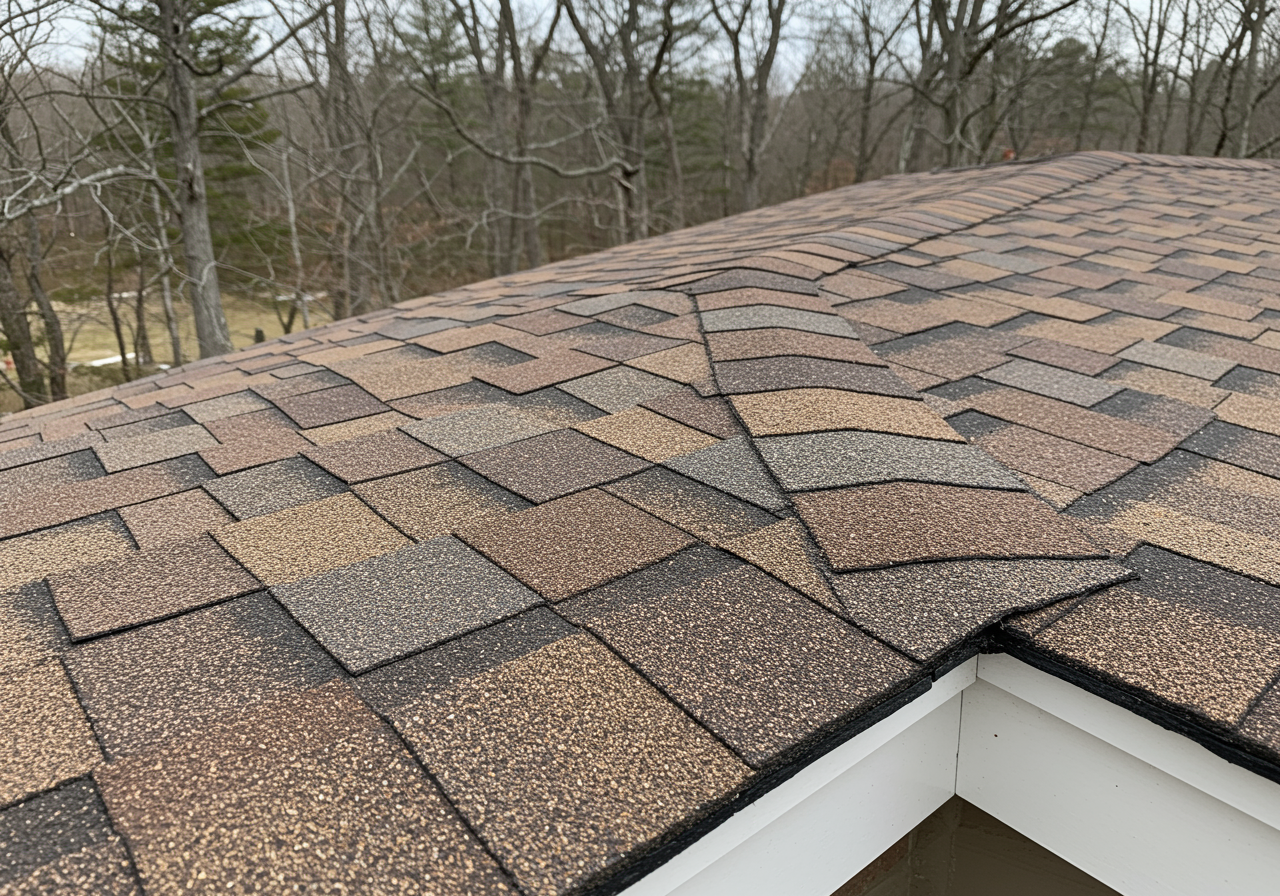
A Killingworth home with asphalt shingles in a wooded setting
The challenge of maintaining roofs in shaded, humid environments
Weighing the Real-World Costs and Longevity
Let's get into the numbers, because "affordable" is a relative term. For a standard 2,200-square-foot home in Killingworth, you're looking at a significant price gap between basic 3-tab shingles and high-end architectural options. I always tell my neighbors to skip the 3-tab entirely. They are too thin for our wind zones, and the "savings" vanish the moment a nor'easter peels them back like an orange.
Estimated Lifespan in Killingworth Weather
The "pro" here is clearly the entry price. You can get a high-quality architectural roof for about 40% of the cost of metal. The "con" is that you are essentially renting your roof for 25 years rather than buying it for life. I remember a couple on Roast Meat Hill Road who were torn between metal and asphalt. We sat down and looked at the curb appeal; the asphalt actually matched their traditional siding much better, and our matching process helped them find a contractor who specialized in the heavy-duty underlayment needed for our winters.
Asphalt Shingle Verdict
Pros
- Widest variety of colors to match CT Colonial styles
- Lowest upfront installation cost ($4.50 - $7.25 per sq. ft.)
- Easily repaired by almost any local contractor
- Fast installation (usually 1-2 days)
Cons
- Susceptible to wind uplift in open shoreline areas
- Granule loss over time reduces protection
- Higher environmental impact than recyclable metal
- Shortest lifespan of major roofing materials
Design Choices That Elevate Your Curb Appeal
This is where I get excited. Most people see a sea of grey when they look at shingle samples, but I see opportunity. Your roof line is a conversation with the rest of your block. In Killingworth, we have a lot of earthy tones—deep greens, ochres, and natural wood. A stark "Jet Black" roof can look like a heavy lid on a delicate house. Instead, I often suggest "Weathered Wood" or "Pewter" tones. These shingles have multiple colors in each tab, which hide the inevitable CT pollen and dust much better than a solid color.
There's also the "Cool Roof" factor. Even in January, we should be thinking about the July humidity. The EPA notes that cool roofs can significantly lower surface temperatures. While asphalt is traditionally a heat-soak, many manufacturers now offer "cool" granules that reflect solar energy without sacrificing that classic Connecticut aesthetic. I've seen these reduce attic temperatures by as much as 18°F during those brutal August stretches.
"The right shingle isn't just about the warranty on the box; it's about how the texture plays with the shadows of the trees surrounding the house. In Killingworth, the roof is 50% of your visual impact."
The Road Map to a Successful Replacement
If you've decided asphalt is the right fit for your budget and style, the installation process is where the "pros" can quickly turn into "cons" if you cut corners. I've walked through enough job sites to know that the shingles are only as good as the person nailing them down. In Connecticut, we have strict requirements for ice and water shields—specifically extending at least 24 inches inside the warm wall line to prevent ice dams.
Complete tear-off
Complete tear-off of old layers to inspect the plywood deck for rot.
Ice and water shields
Installation of high-temp ice and water shields in all valleys and eaves.
Synthetic underlayment
Laying down synthetic underlayment (much tougher than old-school felt).
Nailing pattern
Nailing shingles using a 6-nail pattern for enhanced wind resistance.
Ridge vents
Installing ridge vents to ensure the attic 'breathes' during humid CT summers.
Before you sign anything, check the Better Business Bureau's guidelines for home improvement contracts. You want to see the specific brand of shingle and the weight of the underlayment listed clearly. I once helped a friend review a quote that was $2,300 lower than the others, only to realize the contractor was planning to reuse the old flashing. That's a recipe for a leak in 2027. Learn how ZikQuote works to avoid these "hidden" savings that cost more in the long run.
3-Tab vs. Architectural Shingles
| Feature | 3-Tab | Architectural |
|---|---|---|
| High Wind Rating (130+ MPH) | ||
| Dual-Layered Texture | ||
| Long Lifespan (25+ years) | ||
| Fire Rating (Class A) |
Building a home that lasts in Killingworth means respecting the elements. Asphalt shingles are a fantastic, versatile choice, provided you don't treat them as a "set it and forget it" solution. Keep those gutters clean, trim the overhanging branches, and choose a color that makes you smile every time you pull into the driveway.
Ready to see how architectural shingles fit your budget?
Get an instant roof estimate now and connect with Killingworth's top-rated contractors.
No credit card required • Free to use
Get Your Free Roof Quote
Enter your zip code to get started