
Key Takeaways
- Most leaks in West Hartford stem from failing chimney flashing or aging pipe boots rather than the shingles themselves.
- Ice dams remain a primary winter culprit, often signaling a need for better attic insulation rather than just roof repair.
- A localized repair can often extend a roof's life by 5-7 years if the surrounding material is still structurally sound.
- Connecticut building codes have specific requirements for ice and water shields that many older West Hartford homes currently lack.
It was about three years ago, during one of those quiet West Hartford evenings when the only sound should have been the hum of the refrigerator, that I heard it. Plink. Pause. Plink. I was standing in my hallway, looking up at the ceiling of my 1920s Colonial, and there it was—a tiny, tea-colored ring right above the crown molding. My heart sank. If you've ever scrambled for a Tupperware container at 11:00 PM to catch a rhythmic drip, you know exactly the kind of "homeowner's vertigo" I'm talking about. It's that sudden realization that your sanctuary has a hole in its armor.
Living in Hartford County, we ask a lot of our roofs. We expect them to shrug off heavy February snow, withstand those biting winds whipping off the reservoir, and still look charming enough for a Sunday stroll past Elizabeth Park. But even the sturdiest asphalt or slate has a breaking point. When a leak starts, it's rarely a "wait and see" situation. It's a "figure it out before the drywall collapses" situation. We need to talk about why these leaks happen and, more importantly, how we can stop them without losing our minds (or our savings).
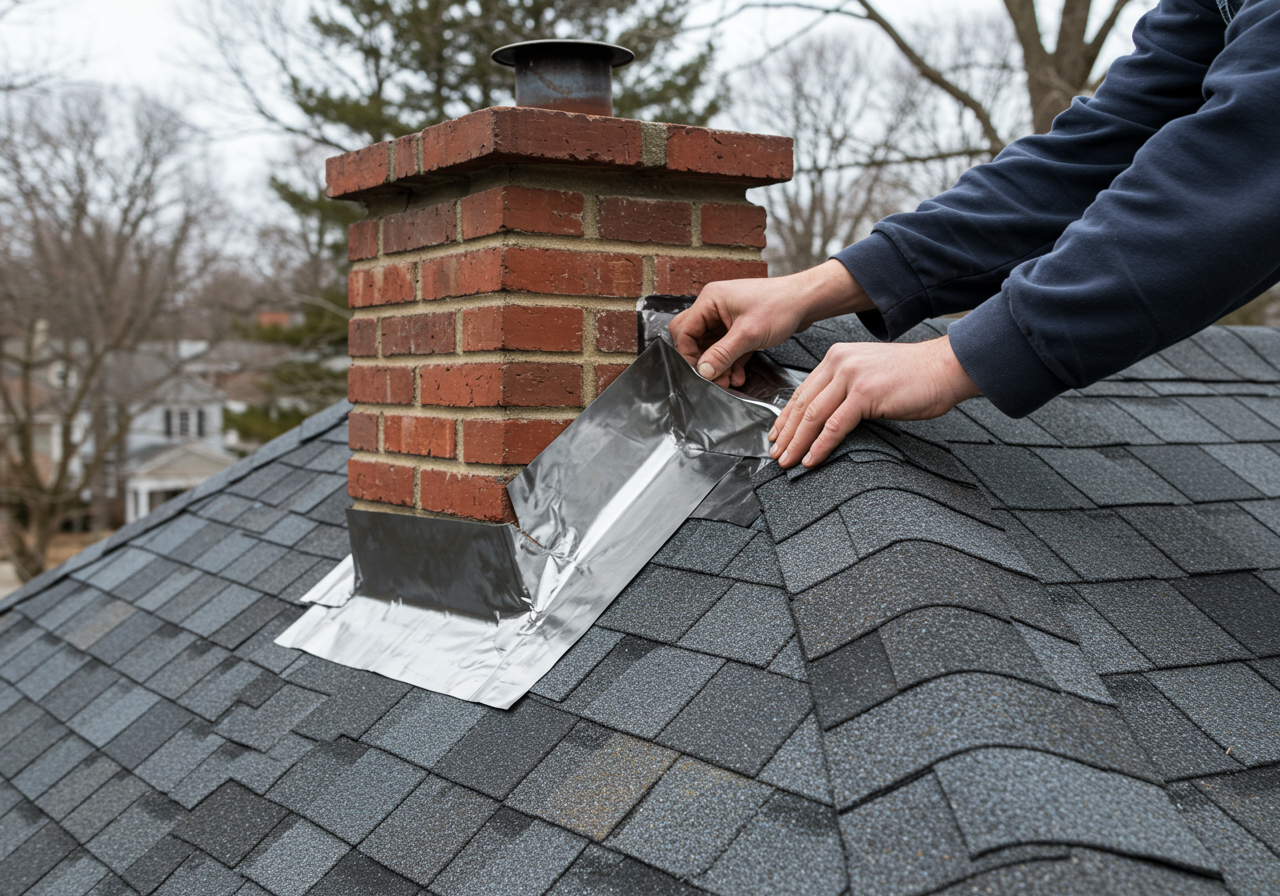
West Hartford Roof Leak Assessment
Professional inspection reveals common leak sources including chimney flashing, pipe boots, and ice dam damage in Hartford County homes.
Identifying the Top Three Leak Offenders in Hartford County
When I look at the houses in our neighborhood—from the stately Tudors on Prospect Avenue to the cozy capes near Blue Back Square—I see a recurring theme. We have a lot of "character," which is code for "complicated rooflines." The more valleys, dormers, and chimneys your home has, the more opportunities there are for water to find a way inside. It's rarely the flat expanse of the roof that fails first; it's the transition points where two materials meet.
The Flashing Fiasco
In my experience, about 42% of the "leaking roof" calls I investigate aren't actually about the shingles at all. They're about the flashing. Flashing is that thin strip of metal (usually aluminum or copper) that directs water away from critical areas like chimneys, skylights, and where the roof meets a vertical wall. Over time, the sealant around this metal dries out, or the metal itself pulls away due to the expansion and contraction we see during our erratic Connecticut thaws.
I remember helping a friend over on Fern Street who was convinced she needed a whole new roof because of a persistent leak in her dining room. We climbed up and found that the mortar in her chimney had slightly deteriorated, allowing water to slip behind the counter-flashing. A professional roof repair service was able to reseal the area for a few hundred dollars, saving her from an unnecessary $14,000 replacement.
Shingle Secrets and Wind Damage
While flashing is a common culprit, we can't ignore the shingles themselves. In West Hartford, our mature trees are beautiful, but they drop more than just leaves. Heavy branches rubbing against your roof can prematurely wear down the protective granules of an asphalt shingle. Once those granules are gone, the sun's UV rays bake the underlying asphalt, making it brittle.
But here's the thing: sometimes the damage is invisible from the ground. A shingle might look perfectly fine but have a "bruise" from a hailstone or a lifted tab from a high-wind event. According to the International Code Council (ICC) standards, shingles must be fastened according to specific wind-resistance ratings, but older installations often fall short of modern Connecticut requirements.
The Ice Dam Dilemma
Since we're navigating February, we have to talk about ice dams. You know the look—those picturesque but treacherous icicles hanging from the gutters. When heat escapes from your attic, it melts the snow on the upper parts of your roof. That water then runs down to the colder eaves and freezes, creating a dam. Subsequent meltwater backs up under the shingles and into your soffits.
If your home was built before the 1990s, there's a good chance it doesn't have a modern ice and water shield—a sticky membrane that acts as a secondary waterproof barrier. Without it, your roof is basically wearing a raincoat with no buttons.
Patching vs. Full Replacement: A West Hartford Comparison
One of the most frequent questions I get over coffee at J.René is: "Sheri, can I just patch this, or am I in trouble?" It's a fair question. No one wants to spend five figures if a five-hundred-dollar fix will do. But there's a fine line between a smart repair and throwing good money after bad. We have to look at the "age-to-damage" ratio.
The Repair Reality Check
If your roof is 12 years old and a stray branch poked a hole in it, a repair is a no-brainer. But if your roof is hitting the 22-year mark and you're seeing leaks in three different spots, that's your roof telling you it's ready for retirement. We also have to consider the aesthetic. West Hartford is a town that prides itself on curb appeal. If you patch a charcoal gray roof with shingles that are just slightly off in hue, it's going to look like a bad haircut.
I always suggest that if you're unsure, read what other CT homeowners have experienced when faced with the same choice. Often, seeing how a neighbor handled a similar mid-life roof crisis can give you the perspective you need.
Repair vs. Replacement Decision Matrix
| Feature | Repair Recommended | Replacement Recommended |
|---|---|---|
| Under 15 Years Old | ||
| Single, Isolated Leak | ||
| Granules Intact, Flexible | ||
| Easily Matched Materials |
Weighing the Pros and Cons
Let's break down the actual impact of these choices. A repair is fast and easy on the wallet, but it's a localized solution. A replacement is a major disruption, but it resets the clock on your home's protection and often improves your energy efficiency.
The Roof Repair Route
Pros
- Significantly lower immediate cost
- Minimal disruption to daily life
- Can be completed in a few hours
Cons
- Color matching can be difficult
- Doesn't address underlying structural age
- No new manufacturer warranty
If you do go the replacement route, remember that modern materials are significantly more energy-efficient. This isn't just a "feel-good" thing; it's a "real-money" thing. You can often find information on residential energy credits through the IRS that can help offset the cost if you choose qualifying materials.
Visual Continuity and Value
Here is my design-editor side coming out: Your roof is about 40% of your home's visible exterior. In neighborhoods like Morley or Duffy, where the homes have such distinct architectural integrity, a "patchwork quilt" roof can actually ding your property value. If you're planning to sell in the next 3-5 years, a full replacement with a transferable warranty is often a better investment than a series of Band-Aid repairs.
Estimated Lifespan of Roofing Materials in CT
Professional Fixes and Prevention Strategies
Once you've identified the leak, the clock is ticking. Water doesn't just sit there; it travels. It follows rafters, soaks insulation, and invites mold to set up shop in your attic. I've seen $500 leaks turn into $5,000 mold remediation projects because the homeowner waited for "better weather" to call someone.
The Step-by-Step Response
If you find a leak today, don't panic, but do move. Your first step is to contain the water inside. Then, you need an assessment that goes beyond just looking at the shingles. A good contractor will go into your attic—yes, they need to see the underside of the deck—to trace the water's path.
Safety First
Navigating the Contractor Search
Finding the right person to handle a leak in Hartford County can feel like a full-time job. You want someone who understands our local building codes but also someone who won't disappear the moment the check clears. I always recommend checking the Better Business Bureau's Roofing HQ to verify a contractor's track record.
We've all heard the horror stories of "storm chasers" who roll into town after a big nor'easter, do subpar work, and are gone by the time the first thaw hits. Stick with local pros who have a physical office nearby—whether it's in West Hartford, Newington, or Farmington.
Long-Term Prevention
The best way to fix a leak is to prevent it from ever starting. This means an annual "roof physical." Every autumn, before the first frost, I have someone clear my gutters and check the flashing around my chimney. It's a small price to pay for peace of mind.
If you're curious about more ways to protect your home's exterior, our blog library is packed with deep dives into everything from gutter guards to the best shingle colors for New England light.
Get Your Free Roof Quote Today
Connect with verified CT pros in minutes.
No credit card required • Free to use
Conclusion
At the end of the day, your roof is more than just a line item in your home maintenance budget. It's the lid on your family's shoebox. Whether you're dealing with a minor drip in a 1950s ranch or a complex issue on a historic Victorian, the goal is the same: stay dry and protect your investment.
Don't let a small stain become a major headache. Take a moment to look up—not just when it's raining, but on a clear day too. Look for those lifted shingles or the moss growing in the valleys. And if you do find something that worries you, remember that you don't have to navigate the repair process alone. There are fantastic local pros who can get your home back into top shape.
If you're ready to stop guessing and start fixing, ZikQuote can help you skip the endless phone tag. We'll match you with a verified local contractor who actually knows their way around a West Hartford roofline, so you can get back to enjoying your home without the bucket in the hallway.
Get Your Free Roof Quote
Enter your zip code to get started