Did you know that 37% of roof leaks in New London County can be traced back to hail impact zones that were ignored for over 18 months? It's a staggering figure that haunts many homeowners along the Route 32 corridor. While we often think of "hail" as a catastrophe reserved for the Great Plains, Montville's position near the Thames River creates unique microclimates that churn out surprisingly aggressive ice stones during our erratic shoulder seasons. Most people look at their lawn after a storm, see a few pea-sized pellets, and think they dodged a bullet. The reality? Those pellets are traveling at terminal velocity, and your shingles are the only thing standing in their way.
Key Takeaways
- Invisible Damage: Hail often 'bruises' shingles without breaking them, leading to granule loss and leaks months later.
- Insurance Windows: Most policies have a strict deadline for storm claims; missing the 2026 window could cost you $12,400 out of pocket.
- Structural Integrity: February inspections identify cracks that will expand during the upcoming spring thaw and rain cycle.
- Resale Value: A certified 'hail-free' inspection report is a massive leverage point for Montville home sales.
The Invisible Bruise: Why February is the Time for Vigilance
I remember walking a roof near Mohegan Sun back in 2022. From the driveway, the architectural shingles looked pristine. The homeowner was convinced the "little ice storm" we'd had a few months prior was a non-event. But once I got my boots on the slope, the story changed. Every few inches, there were "bruises"—soft spots where the hail had pulverized the fiberglass matting underneath the granules. It's like a bruise on an apple; it looks fine for a day, but the rot is happening underneath.
The "Slow Burn" of Shingle Decay
When hail hits, it doesn't always leave a gaping hole. Instead, it knocks off the protective mineral granules. These granules are your roof's sunscreen. Without them, the raw asphalt is exposed to UV rays. In the winter, these spots become brittle. When the Montville sun hits them during a February thaw, the asphalt expands and contracts, creating micro-fissures. If you don't catch these now, you're not just looking at a repair; you're looking at a full system replacement by the time next winter rolls around.
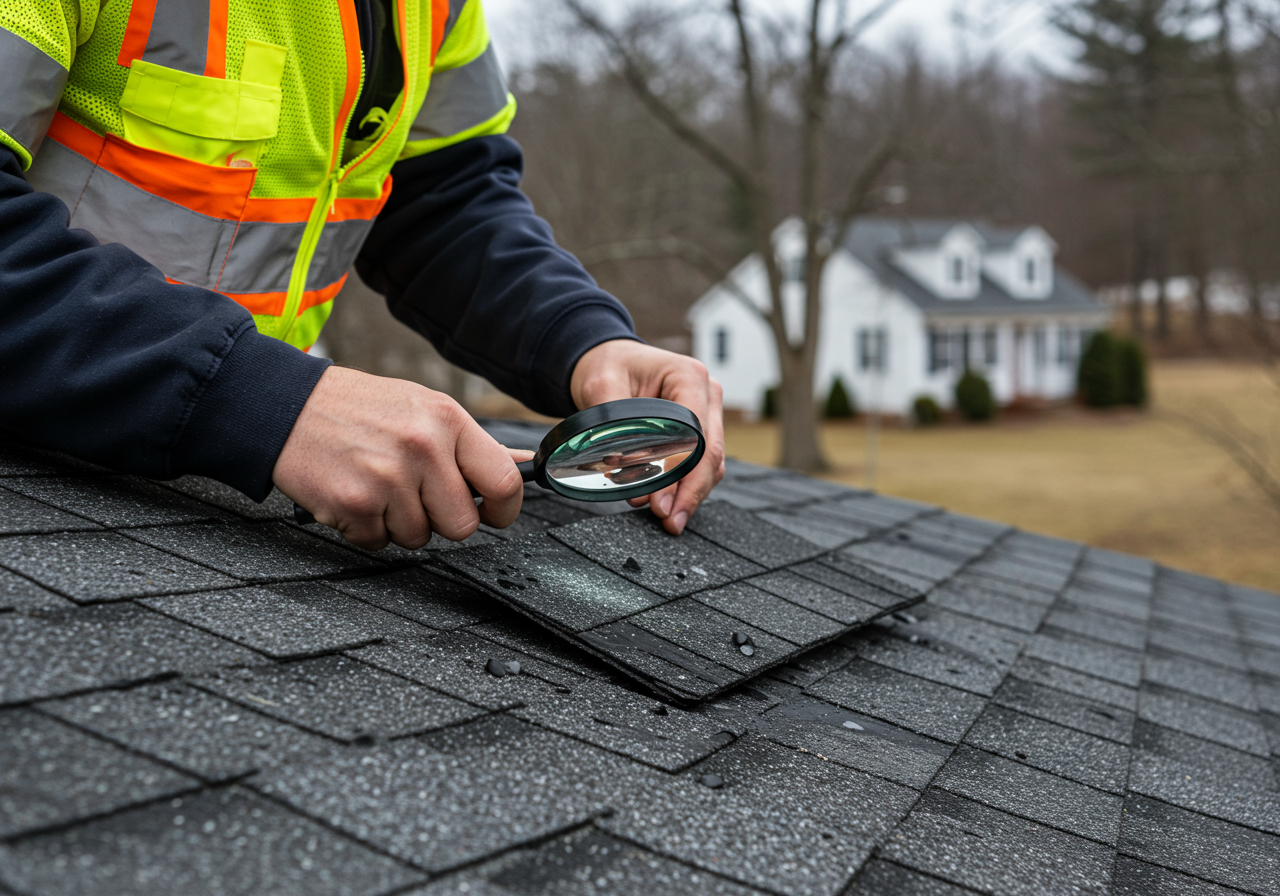
Hail Damage Inspection in Montville
A professional inspector checking for hail damage on a Montville roof, identifying the subtle bruises that lead to leaks months later.
Why Seasonal Timing Matters
Waiting until you see a brown spot on your ceiling is the most expensive way to manage a home. In my experience, a February inspection is the sweet spot. The leaves are off the trees, the heavy snow loads have often compressed existing damage to make it more visible, and you beat the "Spring Rush" of contractors. According to FEMA's hurricane and storm mitigation guide, identifying these weak points early is the single most effective way to prevent catastrophic failure during high-wind events.
Deciphering the Radar: When to Call for a Professional Look
I've spent years tracking storm cells over Uncasville, and I can tell you that "hail size" is a deceptive metric. A half-inch stone backed by a 50-mph gust does more damage than a one-inch stone falling straight down in a dead calm. If you've heard that distinct "marbles hitting a tin can" sound on your siding or gutters in the last year, you've likely sustained damage.
More than Just Dents
Check your downspouts. If you see what looks like heavy coffee grounds washing out after a rain, those are your shingles' granules. That's the "blood" of your roof. Once those are gone, the clock is ticking. I always tell my neighbors in Oakdale to look at their mailbox or their AC unit. If those metal surfaces have tiny dings, your roof—which is much softer—is definitely hurting. If you find significant metal damage, you might be looking at urgent repairs before the next heavy rain hits.
Expert Tip
The Real Cost of Waiting: Shingle Lifespans and Insurance Windows
Let's talk turkey. A typical roof in Montville is rated for 25 to 30 years, but hail damage can cut that down to 12. If you bought your home recently and the roof is "mid-life," a hail hit is the difference between another decade of safety and a $14,600 surprise next year.
The Two-Year Insurance Clock
Most Connecticut insurance providers have a statute of limitations for filing storm-related claims. If a storm hit in 2024 and you wait until 2027 to report the leak, they will likely deny the claim, citing "lack of maintenance." By getting an inspection in February 2026, you are documenting the state of your home within that critical window. I've seen families lose out on five-figure settlements because they waited "just one more season."
Roof Lifespan Comparison (Post-Hail Event)
If you're curious about the numbers, calculating potential replacement costs early can help you decide if an insurance claim is the right move or if a simple repair will suffice.
Professional Inspection vs. The Binocular Method
I see a lot of guys standing in their driveways with binoculars trying to "inspect" their roof. Respectfully, you're wasting your time. You cannot see a fractured mat from the ground. A professional inspector—especially one who understands New London County weather patterns—is looking for "hits," "stars," and "collateral damage."
What Drones See That You Can't
Modern roofing has gone high-tech. When I consult with teams in the field, we're using high-resolution drones that can spot a granule loss pattern from 40 feet up. But even then, nothing beats a "hand-on-shingle" test. An inspector will feel the shingle for softness.
Ground Perimeter Check
Looking for 'collateral' damage on gutters, siding, and mailboxes.
Shingle Softness Test
Physically feeling for 'bruised' areas that aren't visible to the eye.
Flashing and Sealant Review
Checking if impacts have broken the seals around chimneys or vents.
Attic Inspection
Looking for 'daylight' or moisture staining that indicates a breach.
Documentation
Creating a photo-heavy report for your insurance adjuster.
"In Montville, the freeze-thaw cycle is a roof's worst enemy. A hail-weakened shingle will literally shatter when water enters a crack and freezes into ice."
Long-Term Resilience: Upgrading for the Next Storm
If your inspection reveals that it's time for a change, don't just put back what you had. We're seeing more "super-cell" activity in Connecticut than we did twenty years ago. The building codes are catching up, but you can stay ahead of them.
Impact-Resistant Shingles (Class 4)
I'm a big proponent of Class 4 impact-resistant shingles. They are engineered with a rubber-like polymer (SBS) that allows the shingle to "bounce back" when hit by ice. Research from Energy Star's cool roofs guide suggests that these modern materials not only withstand storms better but also offer better thermal regulation for your home. Also, according to EPA data on reflective roofing, upgrading to these materials can significantly reduce your summer cooling loads.
Class 4 Impact-Resistant Shingles
Pros
- Potential insurance premium discounts
- Higher wind resistance (up to 130mph)
- Longer overall lifespan
Cons
- 15-20% higher upfront material cost
- Slightly heavier than standard shingles
Don't let a hidden bruise become a flood
Get an instant roof estimate and connect with a verified Montville pro today.
No credit card required • Free to use
Get Your Free Roof Quote
Enter your zip code to get started
In the end, your roof is your first line of defense against the unpredictable New England sky. Taking thirty minutes to have a professional look at it this February isn't just "maintenance"—it's an investment in your peace of mind. I've seen too many Montville basements ruined by "mystery leaks" that started as a small ice pellet in a forgotten storm. Be the homeowner who stays ahead of the weather.
Frequently Asked Questions

About Noah Knight
Verified ExpertNoah Knight is a Connecticut Weather & Climate Specialist who helps homeowners understand how New England's unique weather patterns affect their roofing systems. He combines meteorological knowledge with practical home maintenance advice.