Have you ever looked up at your roof after a particularly rowdy March windstorm—the kind that rattles the windows in the older homes near Hopeville Pond—and thought, "I could probably swap those three missing shingles myself before the April rains hit?" It's a tempting thought. On YouTube, it looks as simple as a hammer, some nails, and a bit of courage. But here in New London County, the gap between a "quick fix" and a structural disaster is often thinner than a single layer of felt paper.
Key Takeaways
- DIY repairs often void manufacturer warranties, leaving you on the hook for future total replacements.
- March weather in Connecticut is notoriously fickle, often preventing the thermal sealing necessary for shingles to bond properly.
- Professional contractors in Griswold use specific "high-wind" nailing patterns required for our coastal-adjacent wind zones.
- Small leaks caught during a professional repair can save homeowners an average of $4,350 in attic remediation costs.
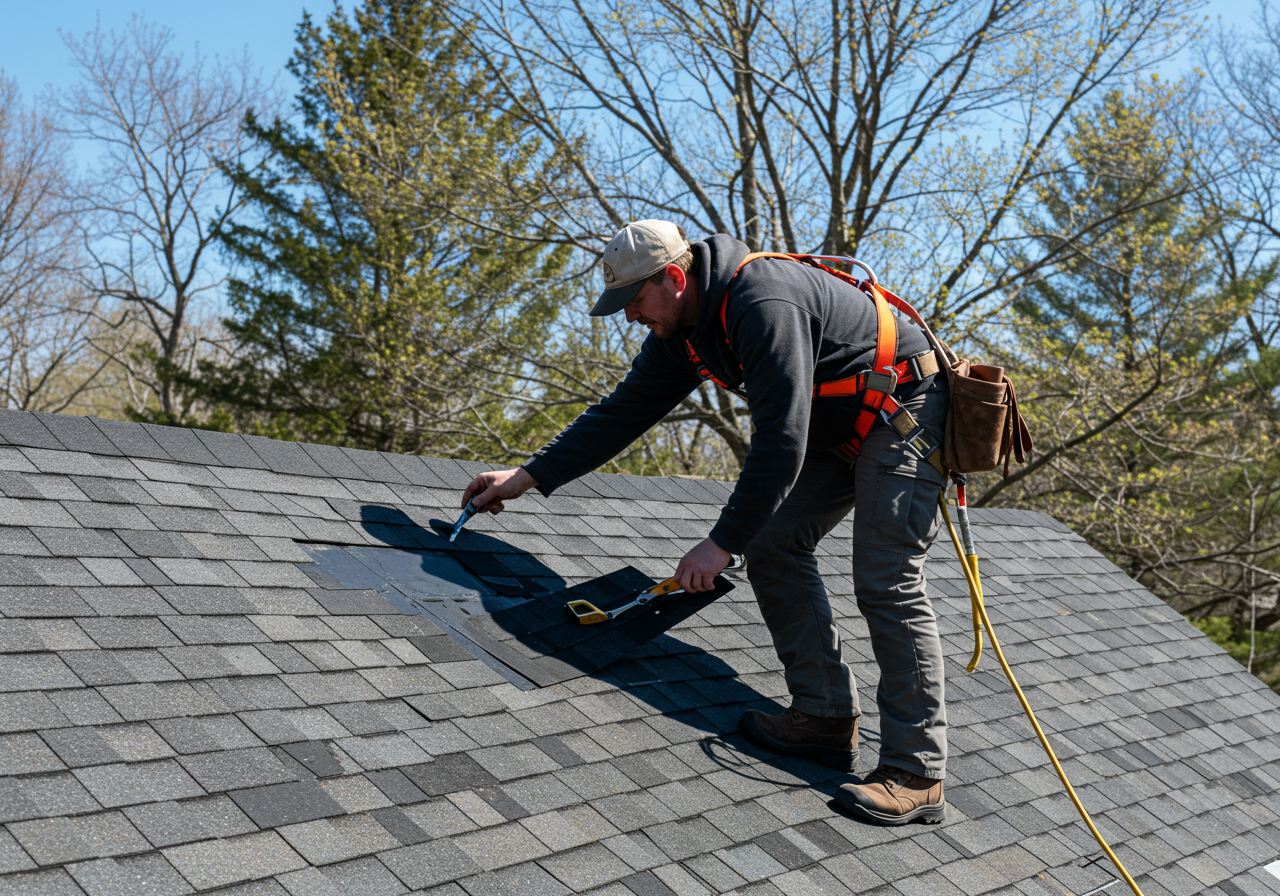
DIY vs Professional Shingle Repair in Griswold
Understanding the risks and costs of shingle replacement in New London County's unique climate.
The "It Looks Easy" Trap: A Tale from Geer Road
A few years back, I visited a homeowner over on Geer Road who had decided to tackle a small shingle patch himself. He'd watched a few videos, bought a bundle of architectural shingles from the big-box store, and spent a Saturday afternoon on a ladder. From the ground, it looked okay. But he didn't realize that in the middle of a Connecticut March, the shingles were too cold and brittle to manipulate.
Why Brittle Shingles Break
When temperatures hover in that "early spring" range, asphalt shingles lose their flexibility. If you try to lift the tab above the one you're replacing—which you have to do to nail it in—you often end up snapping the seal or cracking the shingle. By trying to fix three shingles, my friend on Geer Road accidentally compromised fourteen others. He didn't see the hairline fractures until the following May, when his guest bedroom ceiling started looking like a watercolor painting.
The Thermal Seal Mystery
Shingles aren't just held down by nails; they have a strip of adhesive that requires consistent sunlight and warmth to "activate" and bond to the layer below. In Griswold, if you install shingles during a week where the sun isn't hitting the roof at the right angle, they might just sit there like loose cards in a deck. The next time a gust comes off the Quinebaug River, those unsealed shingles are gone.
The Real Math of DIY Shingle Swaps
People often tell me they want to save money. I get it. Life in CT isn't getting any cheaper. But the math on a DIY roof repair rarely adds up when you factor in the "Griswold Variable."
Tooling Up for a One-Hour Job
To do it right, you aren't just using a hammer. You need a flat bar (a "cat's paw") to pull nails without tearing the underlayment, a hook blade for clean cuts, and high-quality roofing cement that won't dry out in three years. By the time you buy the materials and the safety gear (please, tell me you're using a harness), you've spent $345 on a job a pro might have charged $550 to do with a guarantee.
The Insurance Headache
Here's a detail most folks miss: if you do your own roof work and then file a claim for storm damage later, an adjuster might see your "handiwork" and deny the claim. They'll argue that the roof failed because of improper installation rather than the weather. According to FEMA's hurricane mitigation guide, the way a shingle is fastened is the number one factor in whether it stays on during a high-wind event.
Safety and the Southeast CT Pitch
Griswold has some beautiful historic homes, but many of them feature steep pitches that would make a mountain goat nervous. I've seen enough "ladder slips" in my time to know that a 10/12 pitch roof is no place for an amateur.
"The most expensive roof repair is the one that includes an ambulance ride. In Connecticut, gravity doesn't take days off, especially when there's a light morning dew on the shingles."
The Hidden Danger of Moss and Lichen
In our humid corner of the state, especially near the state forests, many roofs develop a thin film of moss or "micro-lichen." In March, this film can be incredibly slippery even if the roof looks dry. One wrong step and you're sliding. Professionals use specialized footwear and "roof jacks" to create stable platforms. If you don't have those, you're literally gambling with your well-being.
Liability for "Helpful" Neighbors
I once knew a guy who let a "handy" neighbor help him with some shingles in exchange for a case of beer and some grilled steaks. The neighbor fell, broke his wrist, and suddenly, the homeowner's insurance was involved in a messy liability suit. When you verify a contractor's insurance and license, you're buying peace of mind that no DIY project can provide.
The Step-by-Step Evaluation Guide
If you're still on the fence about whether to grab the ladder or make the call, follow this progression. It's the same logic I use when assessing storm damage for my climate reports.
Inspect from the ground
Use binoculars to identify the total number of missing or lifted tabs.
Check the attic
Look for 'daylight' or water staining on the rafters—this indicates the underlayment is breached.
Research your shingle warranty
Most major brands (GAF, CertainTeed) void coverage for non-certified repairs.
Assess pitch and height
If it's over one story or steeper than a 6/12 pitch, stay on the ground.
When to Call the Pros Immediately
If you see "granule loss" (it looks like dark sand in your gutters) or if the shingles are curling at the edges, your problems are deeper than a few missing pieces. This usually means the asphalt has reached its "dry-out" phase. At that point, our roofing guides can help you understand whether a patch is a waste of money compared to a full replacement.
Weather Timing: Why March is Crucial
In Griswold, March is the bridge between the snow loads of winter and the "April Showers" that can turn a minor leak into a mold colony. If you wait until May to fix a March leak, you're giving the humidity plenty of time to rot your decking.
Ventilation and the Whole-House Approach
Roofing isn't just about shingles; it's about how your house breathes. Sometimes, shingles blow off because the attic is too hot, causing the adhesive to degrade prematurely from the inside out. The Department of Energy's insulation and roofing guide highlights how proper attic airflow prevents the very issues that make shingles fail. A pro will check your soffit vents while they're up there; a DIYer usually just looks at the hole in the roof.
Noah's Weather Tip
Making the Right Choice for Your Griswold Home
At the end of the day, your roof is the only thing standing between your family and the unpredictable Connecticut climate. While I love a good DIY project (I've spent plenty of weekends painting and flooring), the exterior envelope of your home is different.
Did You Know?
In New London County, 'shingle blow-off' is the #1 cause of interior water damage during spring nor'easters, often costing homeowners $8,700 or more in non-roofing repairs.
If you're unsure, don't just take my word for it. It's always a good idea to see what other CT homeowners experienced when they transitioned from trying to patch things themselves to hiring a verified crew. Often, the speed and the warranty are worth more than the few hundred bucks you might save by doing it yourself.
Get Your Free Roof Quote
Enter your zip code to get started
Conclusion
Deciding between DIY and professional shingle replacement in Griswold shouldn't be a gamble. While the "do-it-yourself" spirit is strong here in New London County, the technical requirements of modern roofing—and the volatile March weather—usually tip the scales toward the experts. Focus on safety, protect your warranty, and make sure your home is ready for the spring rains.
FAQ

About Noah Knight
Verified ExpertNoah Knight is a Connecticut Weather & Climate Specialist who helps homeowners understand how New England's unique weather patterns affect their roofing systems. He combines meteorological knowledge with practical home maintenance advice.