Have you ever noticed how the damp March air in Tolland County seems to cling to your roofline just as the frost finally retreats from the Mansfield Hollow Lake trails? It's that specific time of year when the "March Mud" isn't just under your boots—it's a reminder that your home's primary shield has just survived another Connecticut winter. As I've watched the weather patterns shift across the Quiet Corner over the last 14 years, I've seen thousands of homeowners in Mansfield grapple with the same question: Is the classic asphalt shingle still the king of the hill, or is it just a habit we can't quit?
Choosing a roofing material in our neck of the woods isn't just about color palettes or curb appeal; it's about surviving the 60-mph gusts that whip across the open hills near Storrs and the heavy, wet snow that likes to sit on our rafters until April. Asphalt shingles are the standard for a reason, but they aren't a "one size fits all" solution for every Mansfield Cape or Colonial.
Key Takeaways
- Asphalt remains the most budget-friendly option, typically costing 45% less than metal or slate.
- Architectural shingles (laminate) are essential for Mansfield's wind loads compared to basic three-tab versions.
- Moss and algae growth are significant local "cons" due to the heavy tree canopy in Tolland County.
- Proper attic ventilation is the deciding factor in whether an asphalt roof lasts 12 years or 22 years.
The "Everyman" Shingle: Why Mansfield Homes Stick with Asphalt
There is a certain comfort in the familiar. When I'm driving past the historic homes near the Town Center, I see a lot of asphalt. It's the workhorse of the American Northeast. But the "pro" list for asphalt has evolved quite a bit since the 1990s.
Cost-Effectiveness in the Quiet Corner
Let's be real: roofing is an investment that usually hits the wallet hard. Asphalt's biggest "pro" is its entry price. In a town like Mansfield, where we value a dollar, being able to dry-in a home for a fraction of the cost of premium materials is a major win. I often tell neighbors that if you're planning on staying in your home for less than 15 years, the ROI on asphalt is hard to beat. If you're trying to figure out how these numbers actually land for your specific square footage, calculating your potential roofing costs is the best place to start before talking to a single contractor.
Rapid Installation Before the Spring Rains
March in Connecticut is a fickle beast. We get these narrow windows of clear skies between the late-season slush and the April deluges. One of the greatest advantages of asphalt is the speed of installation. A professional crew can often tear off and replace an entire roof on a standard Mansfield ranch in two days. That speed minimizes the time your decking is exposed to our unpredictable Tolland County humidity.
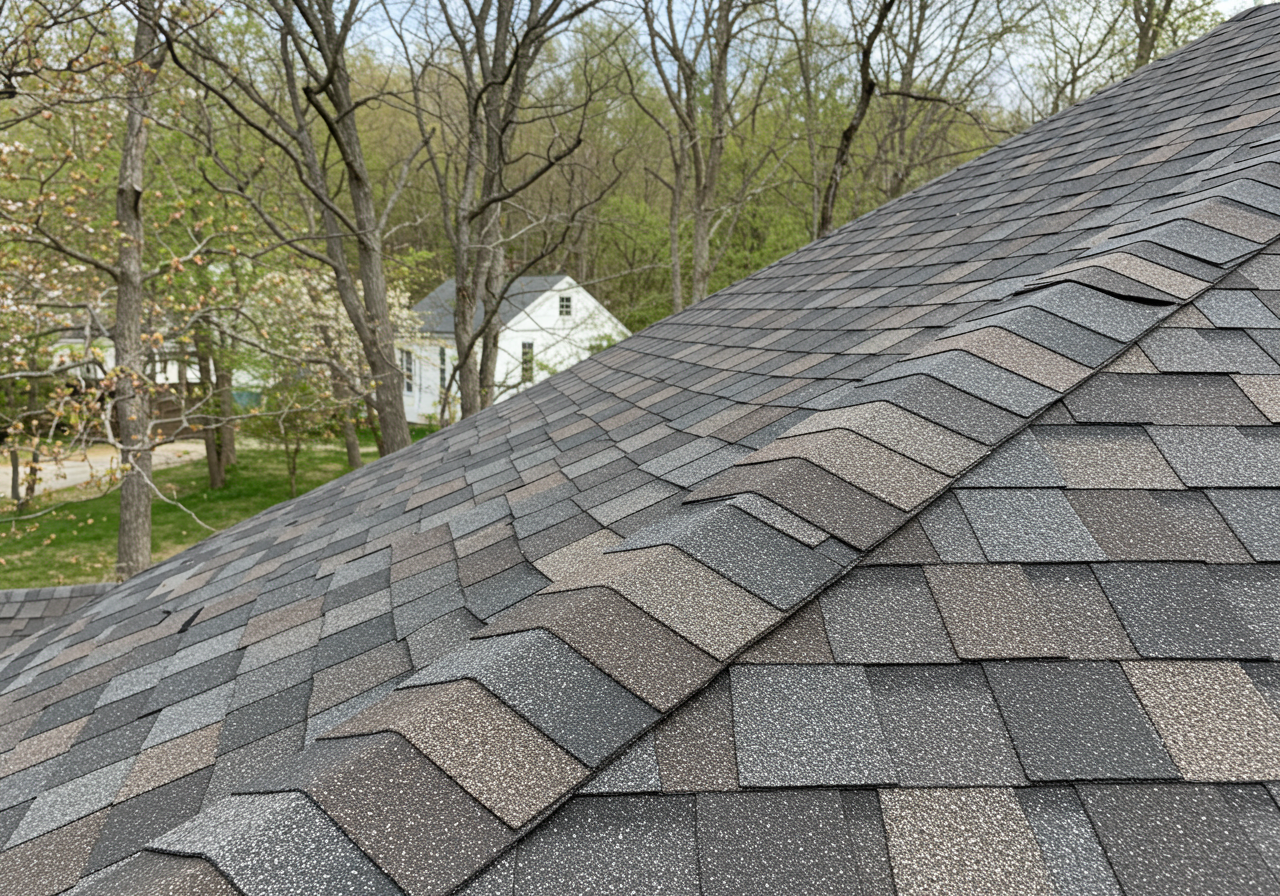
Mansfield asphalt shingle roof with architectural laminate shingles
Typical Tolland County home showing dimensional shingle profile and proper ventilation
The Tolland County Torture Test: Where Asphalt Struggles
It's not all sunshine and low invoices. Our local climate puts asphalt through a literal "torture test" every single season. If you aren't careful, what looked like a bargain in March can become a headache by November.
The Wind Lift Problem in Open Elevations
Mansfield has some beautiful, high-elevation spots, but those views come with a price. High winds can get under the edges of asphalt shingles, especially older three-tab styles, and peel them back like a banana skin. According to FEMA's hurricane mitigation guide for sloped roofs, reinforcing the edges and using high-wind rated starters is non-negotiable for homes in storm-prone areas like ours.
The Moss and Shade Dilemma
If your home is tucked under the massive oaks and maples that Mansfield is known for, you've probably seen that fuzzy green "carpet" starting to creep across your north-facing roof slopes. Asphalt shingles are porous. They hold moisture, and in our humid CT summers, they become a breeding ground for moss. This isn't just an aesthetic issue; moss roots can actually lift the shingles, allowing water to seep into the underlayment.
Did You Know?
'Blue-green' algae streaks on Mansfield roofs are actually caused by a bacteria called Gloeocapsa Magma. It feeds on the limestone filler used in modern asphalt shingles!
Architectural vs. Three-Tab: The 20-Year Reality
I've seen a lot of homeowners try to save a few hundred dollars by opting for traditional three-tab shingles. In my professional opinion? Don't do it. The "pro" of architectural (or laminate) shingles far outweighs the slight "con" of the higher price tag.
Why We Are Abandoning Three-Tab
Three-tab shingles are flat, thin, and have a much lower wind rating. In the 2020s, I rarely recommend them for anything other than a shed. Architectural shingles use multiple layers of material, giving them a dimensional look that mimics wood shakes and, more importantly, a much higher resistance to the "uplift" I mentioned earlier.
Resale Value in Historic CT
Mansfield has a specific aesthetic. Whether you're near the University or out toward Eagleville, buyers expect a certain look. Architectural shingles add a depth and shadow line that simply looks more "premium." When it comes time to sell, a roof that looks rugged and substantial is a major selling point.
Real-World Lifespan in Tolland County (Years)
Energy Efficiency and the Mansfield Canopy
One "con" often cited for asphalt is that it absorbs heat. In July, an asphalt roof can hit temperatures that would fry an egg. This heat doesn't stay on the roof; it migrates into your attic and drives up your AC bills.
Managing Heat Under the Oaks
However, asphalt technology has improved. "Cool" shingles now exist with reflective granules that can bounce back a significant portion of solar radiation. The Department of Energy's guide on insulation and roofing highlights that even with asphalt, proper R-value insulation in your attic can mitigate most of that heat transfer.
Ventilation: The Key to Longevity
I once looked at a roof in Storrs that was only eight years old but looked like it was thirty. The shingles were "crispy" and curling. The culprit? No ridge vent. The attic was literally cooking the shingles from the inside out. When you upgrade to a new roof system, the ventilation plan is just as important as the shingles themselves.
"In Mansfield, an asphalt roof is only as good as the air moving underneath it. Without a balanced intake and exhaust system, you're essentially putting your shingles in a slow-cooker every summer."
Making the Call: Repair or Replace?
But what if you aren't ready for a total overhaul? March is the perfect time to do a "ground-level" inspection. Take a pair of binoculars and look at your eaves and valleys.
Spotting the "March Melt" Warning Signs
If you see piles of granules in your gutters after the snow melts, that's a sign that the asphalt coating is failing. If the shingles look "shiny," the fiberglass matting is exposed. At that point, you aren't just looking at a cosmetic fix; you're looking at a potential leak. Sometimes, a targeted roof repair for minor leaks can buy you another two or three seasons, but you have to catch it before the plywood deck starts to rot.
Asphalt Shingles: The Mansfield Verdict
Pros
- Most affordable upfront cost
- Widely available contractors and materials
- Excellent fire resistance ratings
- Easy to repair individual damaged shingles
Cons
- Shorter lifespan than metal or slate
- Prone to moss growth in wooded lots
- Vulnerable to high-wind uplift if poorly installed
- Heavier environmental footprint (petroleum-based)
Avoid Roof-Overs
Ready to see if your Mansfield roof is ready for the spring rains?
Get a matched estimate from local pros who know Tolland County weather inside and out.
No credit card required • Free to use
Conclusion
Asphalt shingles aren't perfect, but for the majority of Mansfield homeowners, they represent the best balance of protection and price. The "pro" is the reliability; the "con" is the maintenance. If you choose a high-quality architectural shingle, ensure your attic is breathing correctly, and keep the moss at bay, you'll have a roof that stands up to whatever the Connecticut sky throws at it for the next two decades.
Get Your Free Roof Quote
Enter your zip code to get started
FAQ

About Noah Knight
Verified ExpertNoah Knight is a Connecticut Weather & Climate Specialist who helps homeowners understand how New England's unique weather patterns affect their roofing systems. He combines meteorological knowledge with practical home maintenance advice.