
Key Takeaways
- Most HOAs operate under legally binding CC&Rs that require approval before any roofing work begins.
- 74% of HOA disputes in Connecticut stem from unapproved exterior modifications, making compliance crucial.
- HOA approval timelines typically take 30-45 days, so plan your project timeline accordingly.
- You need both HOA approval and a town permit—one doesn't replace the other.
Understanding East Haven HOA Requirements
Imagine you've spent weeks browsing through slate-grey shingle samples, finally finding the one that makes your siding pop. You've got the contractor ready, the February morning is crisp but clear, and you're excited. Then, a neighbor mentions the Architectural Review Committee (ARC). Suddenly, your project is on ice because your "Charcoal" shingle isn't on the "Weathered Wood" approved list. This isn't just a minor annoyance; I've seen situations in New Haven County where homeowners were forced to strip a brand-new roof because it didn't match the community's master plan. We want to avoid that stress entirely.
The "Hidden" HOA Rulebook Challenge
The biggest hurdle for most of us in East Haven isn't the physical labor of the roof; it's the paper trail. Most HOAs operate under a set of Covenants, Conditions, and Restrictions (CC&Rs). These documents are usually thick, boring, and buried in a drawer somewhere from when you bought the house. But they are legally binding.
I remember helping a friend near Momauguin who thought "like-for-like" replacement meant she didn't need to ask permission. She replaced her old three-tab shingles with a modern architectural shingle. The board flipped out because the texture was "too aggressive" for the street's aesthetic. Here's the thing: in an HOA, your roof isn't just yours—it's part of the neighborhood's visual fabric. You have to treat the board like a partner in your design process, even if it feels like they're being a bit of a micromanager.
Aesthetic Harmony and East Haven Curb Appeal
When we talk about East Haven style, we're often looking at a mix of classic New England saltboxes and modern colonials. Your HOA likely has a "pre-approved" color palette. This is designed to make sure no one house stands out like a sore thumb (we've all seen that one house with the bright blue roof that just doesn't fit).
The color you pick is essentially a conversation with your block. If everyone on your street has earth tones, and you show up with a high-contrast black metal roof, you're going to have a hard time getting that past the committee. I always suggest walking the neighborhood first. Take photos of three roofs you love that are already within your association. Presenting these to the board shows you've done your homework and respect the existing vibe. If you are looking at a complete roof replacement, the design phase should actually start at the curb, not the computer.
HOA-Approved Color Palettes
Pros
- Maintains high property values across the street
- Faster approval times for 'Standard' colors
- Easier to find matching materials for future repairs
Cons
- Limits your personal creative expression
- May prevent use of some cutting-edge materials
- Can feel restrictive for unique home styles
Meeting the International Building Code Standards
Beyond what the HOA wants, there is what the law requires. Connecticut follows specific versions of the International Code Council (ICC) standards for roof deck preparation and ice dam protection. In East Haven, where we get that biting dampness off the Sound, your roof needs to be more than just pretty; it has to be a fortress.
A common friction point happens when the HOA guidelines are older than the current building codes. For instance, the HOA might specify a certain type of vent that is no longer the most efficient way to meet CT's attic ventilation requirements. In these cases, the law usually wins, but you have to explain that to the board. I always tell homeowners to have their contractor write a brief "Code Compliance" letter to include with their HOA application. It makes the board feel like they aren't just taking your word for it.
The Timeline for Getting Board Approval
Don't expect to sign a contract on Monday and have a crew on your roof by Thursday. Most East Haven HOAs meet once a month. If you miss the submission deadline for the February meeting, you might be waiting until March or April for a green light.
Obtain the 'Request for Modification' form
Get the form from your HOA portal or management company.
Gather material samples
Physical shingle scraps are better than photos for approval.
Get a detailed quote
From a licensed contractor with all specifications included.
Submit the package
At least 10 days before the monthly board meeting deadline.
Wait for written approval
Do NOT start work on a verbal 'it looks fine' from a neighbor.
While you're waiting on those approvals, it's a great time to calculate your potential project costs so you aren't surprised when the final bill arrives. Most boards want to see the exact manufacturer and color name, so don't just say "grey." Say "GAF Timberline HDZ in Charcoal."
Energy Efficiency vs. HOA Aesthetics
This is where things get interesting in 2026. Many of us want to lower our cooling bills during those humid Connecticut summers. According to the Energy Star guide to cool roofs, reflective shingles can save you a significant amount on energy costs. However, some HOAs think "reflective" means "shiny" or "metallic," which they might find "industrial."
The reality is that modern cool-roof shingles look just like traditional ones; they just have granules that reflect infrared radiation. If you're pushing for an eco-friendly roof, you might even be eligible for federal tax credits. You can check the IRS instructions for Form 5695 to see how those credits apply to your specific material choice. Bringing this data to the board can often turn a "maybe" into a "yes," especially if you frame it as "increasing the community's sustainability."
Flexibility: HOA vs. Independent Homes
HOA flexibility shown as percentage (Independent homes = 100% for all factors)
Why Your Contractor Choice Matters to the Board
Your HOA isn't just looking at the color; they are looking at the liability. Most boards require proof of insurance and a valid Connecticut contractor's license before they will approve the permit application. They don't want a half-finished roof or a dumpster sitting in a driveway for three weeks because a cut-rate contractor disappeared.
I've found that the smoothest projects happen when you use someone who has worked in your specific East Haven development before. They already know the board members, they know where the dumpsters are allowed to be parked, and they know the exact "Weathered Wood" shingle the neighborhood loves. If you're just dealing with a minor leak and don't need a full overhaul, professional roof repair still often requires a quick "heads up" to the board, especially if the shingles won't be a perfect 100% match due to weathering.
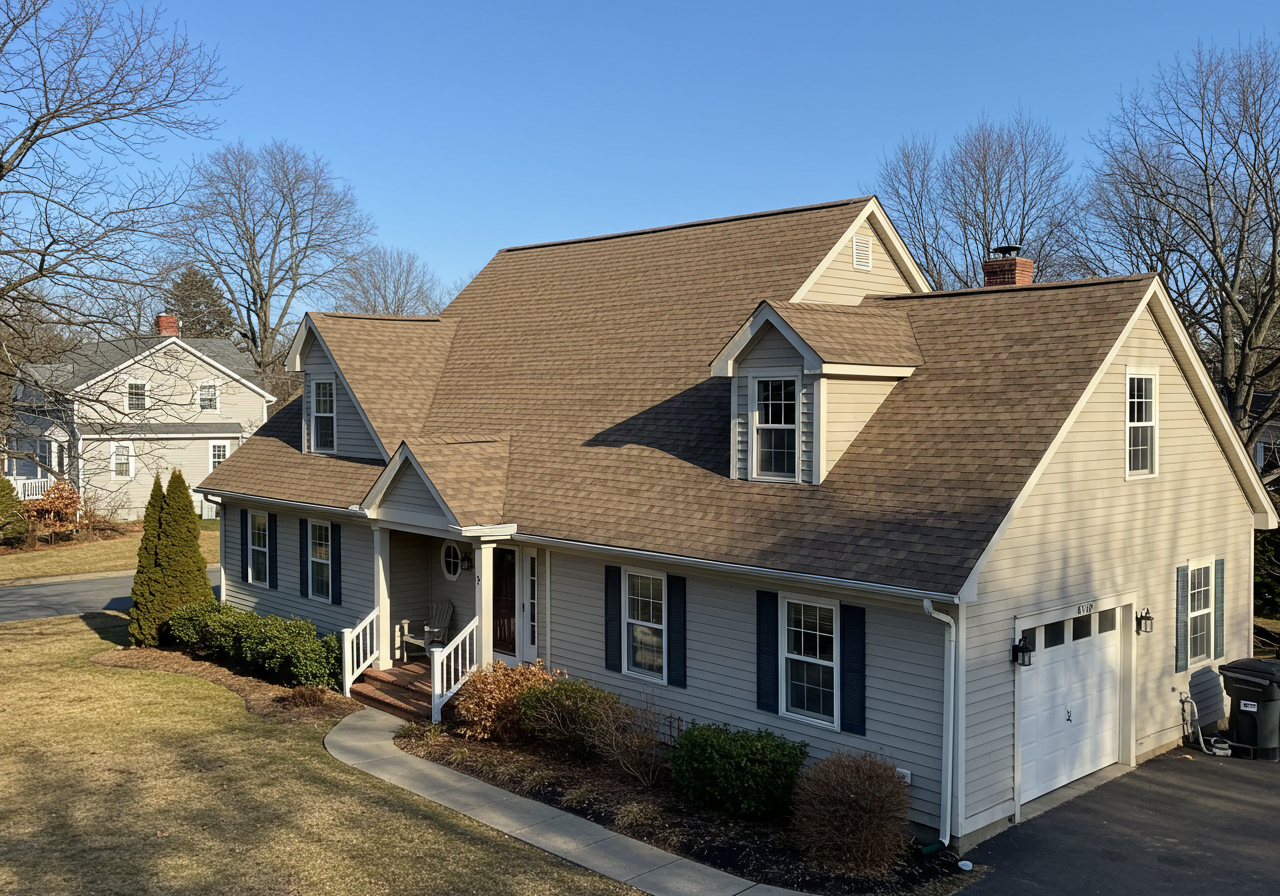
East Haven HOA Roofing Compliance
Understanding the rules and regulations for roofing projects in East Haven HOA communities
Handling Disputes with Your HOA Board
But what if they say no? It happens. Maybe they think your choice is too dark, or they don't like the look of metal. First, don't get angry. These boards are usually made up of your neighbors who are just trying to keep property values high.
Ask for a "variance." This is a formal way of saying, "I know the rules say X, but because of my home's specific location/orientation, Y makes more sense." For example, if your house is tucked behind a line of hemlocks and isn't visible from the street, the board might be more lenient on your material choice. I once saw a homeowner get a variance for a different shingle style simply because the "approved" one was out of stock for six months due to supply chain issues. Be reasonable, provide data, and always keep the conversation civil.
Ready to find a roofer who understands East Haven HOA rules?
Get matched with a local pro who can help you navigate the paperwork and the installation with ZikQuote's instant matching.
No credit card required • Free to use
Get Your Free Roof Quote
Enter your zip code to get started