Key Takeaways
- Code is the Floor, Not the Ceiling: CT building codes ensure safety, but they don't guarantee a leak-free attic during a February freeze-thaw cycle.
- Ice & Water Shield is Non-Negotiable: Danielson's humidity and temperature swings require protection that exceeds standard asphalt felt.
- The Paper Trail Protects Your Wallet: A contractor who scoffs at permits is a contractor who will likely skip the $800 flashing detail that prevents mold.
- Local Specs Matter: Windham County has specific wind load requirements that 'out-of-state' bargain crews often ignore.
The air in Danielson is sitting at a crisp 28°F today, and with humidity hovering around 84%, every roof in Windham County is essentially a giant petri dish for ice damming. If you're looking out your window near Main Street or over by Alexander's Lake and seeing a "partly cloudy" sky, don't let the calm fool you. That 11 mph wind is just enough to push moisture into gaps that a sub-par roofing job left wide open.
In my years of auditing contractor invoices, I've seen a recurring theme: homeowners think "building code" means "gold standard." It doesn't. Building code is the bare minimum required by law so the structure doesn't collapse or catch fire immediately. In the Quiet Corner, where our winters oscillate between a deep freeze and a damp thaw, sticking to the bare minimum is a recipe for a $14,800 headache five years down the road.
The "Minimum Code" Trap in Windham County
When a contractor tells you they "build to code," what they're actually saying is they're doing the least amount of work possible without getting fined by the town of Killingly. In Danielson, the code requires ice and water shield to extend 24 inches inside the interior wall line. That sounds specific, but on a home with deep eaves or a low-pitch roof, that's barely enough to stop a standard Connecticut ice dam.
Why Danielson's 84% Humidity is a Roof Killer
With humidity this high, moisture doesn't just fall from the sky; it hangs in the air and finds its way into poorly ventilated attics. I once worked with a homeowner near Owen Bell Park who had a "code-compliant" roof installed in 2022. By 2024, the plywood was delaminating because the contractor didn't account for the localized moisture levels. They hit the code, but they missed the reality of Danielson's microclimate.
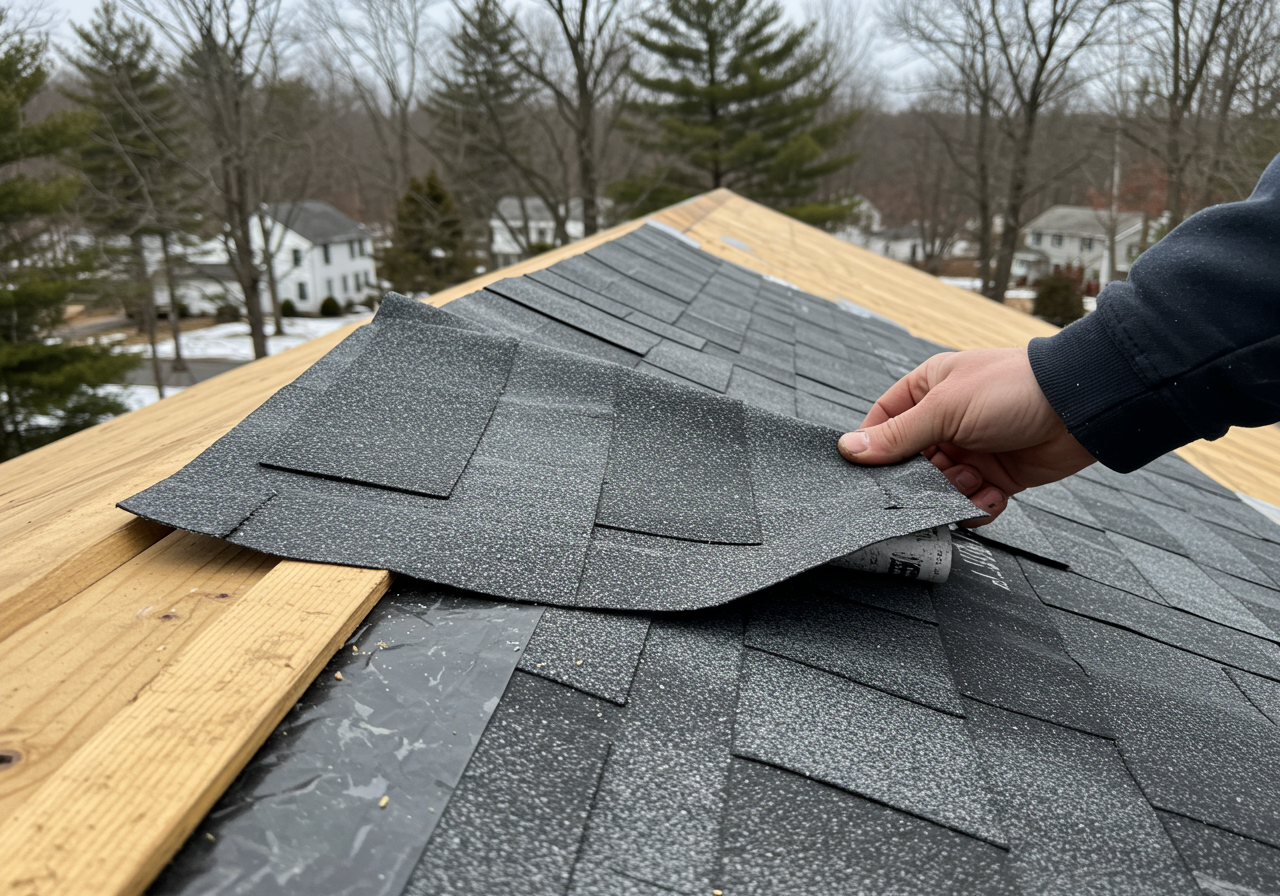
CT Building Code Compliance in Danielson
Understanding the difference between minimum code and quality installation
Ice Shields and Wind Loads: The $1,850 Flashing Oversight
Most people focus on the shingles, but the real money is won or lost in the valleys and transitions. CT code allows for woven valleys, but in my experience, a "closed-cut" or metal-lined valley is the only way to handle 11 mph winds driving sleet into the crevices of your home.
The Cost of Cutting Corners
I've looked at line items where contractors "saved" the homeowner $600 by using standard D-style drip edge instead of a heavy-gauge perimeter metal. Fast forward two winters, and the fascia boards are rotting. When you evaluate your roofing repair options, you have to look at whether the fix is just a bandage or a structural correction.
CT Code Minimum vs. Advocate Recommended Specs
| Feature | CT Building Code | Jackson's Standard |
|---|---|---|
| Extended Ice & Water Shield (36"-72" for low slopes) | ||
| Synthetic Breathable Underlayment | ||
| Metal-Lined/Closed-Cut Valleys | ||
| Heavy-Gauge Drip Edge |
Low-Slope Realities: When Shingles Aren't Enough
Danielson has a lot of beautiful older homes with "porch wraps" or additions that have a very slight pitch. If your roof has a slope of less than 2:12, shingles are a violation of code—and common sense. I see crews trying to "double-lap" shingles on low slopes all the time to save the homeowner money.
Membrane vs. Shingle Lifespan
For flat or low-slope sections, you need a membrane system. According to FEMA's guidelines on low-slope protection, these systems require specific termination bars that "code" crews often skip. If you see a contractor trying to use roofing cement instead of a mechanical termination bar, show them the door.
Expected Lifespan of Low-Slope Materials in CT
The Permit Paper Trail: Your Only Real Protection
The town of Killingly building department isn't just a hurdle; it's your insurance policy. I've had homeowners tell me, "The contractor said we can save $400 if we don't pull a permit." That is the most expensive $400 you will ever save. Without a permit, you have no record of the work, and your homeowner's insurance can—and will—deny claims if they find the roof wasn't inspected.
How to Audit Your Own Quote
Before you sign, ask for the math. If the permit fee isn't its own line item, ask why. If they aren't citing OSHA fall protection standards for their crew, they are likely cutting corners on your shingles too. A professional crew that values their own safety usually values your home's integrity. If you're looking for a full roof replacement, the contract should explicitly state that the work will meet or exceed CT State Building Code Section R905.
The 'Overlays' Warning
Did You Know?
Most CT insurance policies won't cover interior water damage from ice dams if your roof wasn't installed to the specific 'ice shield' code requirements in place at the time of installation.
Hiring: Licensed Professional vs. 'The Truck & Ladder' Guy
Pros
- Verifiable insurance coverage
- Permit handling included
- Manufacturer backed warranties
- Knowledge of Windham County wind loads
Cons
- Higher upfront labor cost
- Longer scheduling lead times
- Rigid adherence to safety protocols (slower)
Final Thoughts on Danielson Roofing
Navigating the world of building codes shouldn't feel like a shell game. The goal is to build a roof that survives the 28°F February nights and the 90°F July humidity without failing. If you want to see what others in the area are learning about material durability, our expert roofing blog has plenty of deep dives into specific CT material performance.
If you're struggling to find the money for a necessary code-compliant upgrade, check out USA.gov's home repair assistance portal for potential grants or low-interest loans available in 2026. Don't settle for the bare minimum; your home is worth more than the "code basement."
Get Your Free Roof Quote
Enter your zip code to get started
FAQ

About Dana Jackson
Verified ExpertDana Jackson is a Homeowner Advocate & Cost Analyst who helps Connecticut families navigate the financial aspects of roofing projects. She specializes in finding the best value and avoiding common pricing pitfalls.