
Key Takeaways
- Proper attic ventilation and insulation work together—you can't optimize one without the other in East Hampton's humid shoreline climate.
- Upgrading both systems can reduce energy bills by 15% to 28%, saving $360 to $672 annually on a typical $2,400 energy bill.
- East Hampton homes need R-49 to R-60 insulation (16-20 inches) and balanced 1/150 ventilation ratio to prevent ice dams and mold.
- The investment typically pays for itself within 5-7 years through energy savings, plus it extends your roof's lifespan.
I've inspected hundreds of East Hampton homes over the past 15 years, and there's a pattern I see constantly: homeowners investing in premium shingles while ignoring the two systems that actually determine their roof's performance—ventilation and insulation. Last week, I was on a job site off Route 66 where a beautiful new architectural shingle roof was already showing signs of premature aging after just three years. The culprit? An attic that was essentially a sauna in summer and a heat leak in winter.
East Hampton sits in a unique microclimate. We're close enough to Long Island Sound to feel the humidity, but far enough inland to experience Connecticut's harsh winter freezes. This combination creates a perfect storm for attic problems: moisture buildup from shoreline humidity meets extreme temperature swings that test even the best roofing systems.
The Balance Act: Why Both Matter
Here's the fundamental truth most contractors don't explain: ventilation and insulation aren't competing systems—they're partners. Insulation keeps your heated and cooled air in your living space where it belongs. Ventilation removes the moisture that inevitably migrates upward from your daily activities (cooking, showering, breathing) and prevents it from condensing on your roof deck.
In East Hampton, I've seen what happens when this balance breaks down. A home with excellent insulation but poor ventilation develops ice dams that can cost $4,800 to repair. A home with great ventilation but insufficient insulation wastes hundreds of dollars heating the outdoors every winter. According to the Department of Energy's insulation guidelines, most older Connecticut homes are significantly under-insulated, which means you're likely paying more than you should.
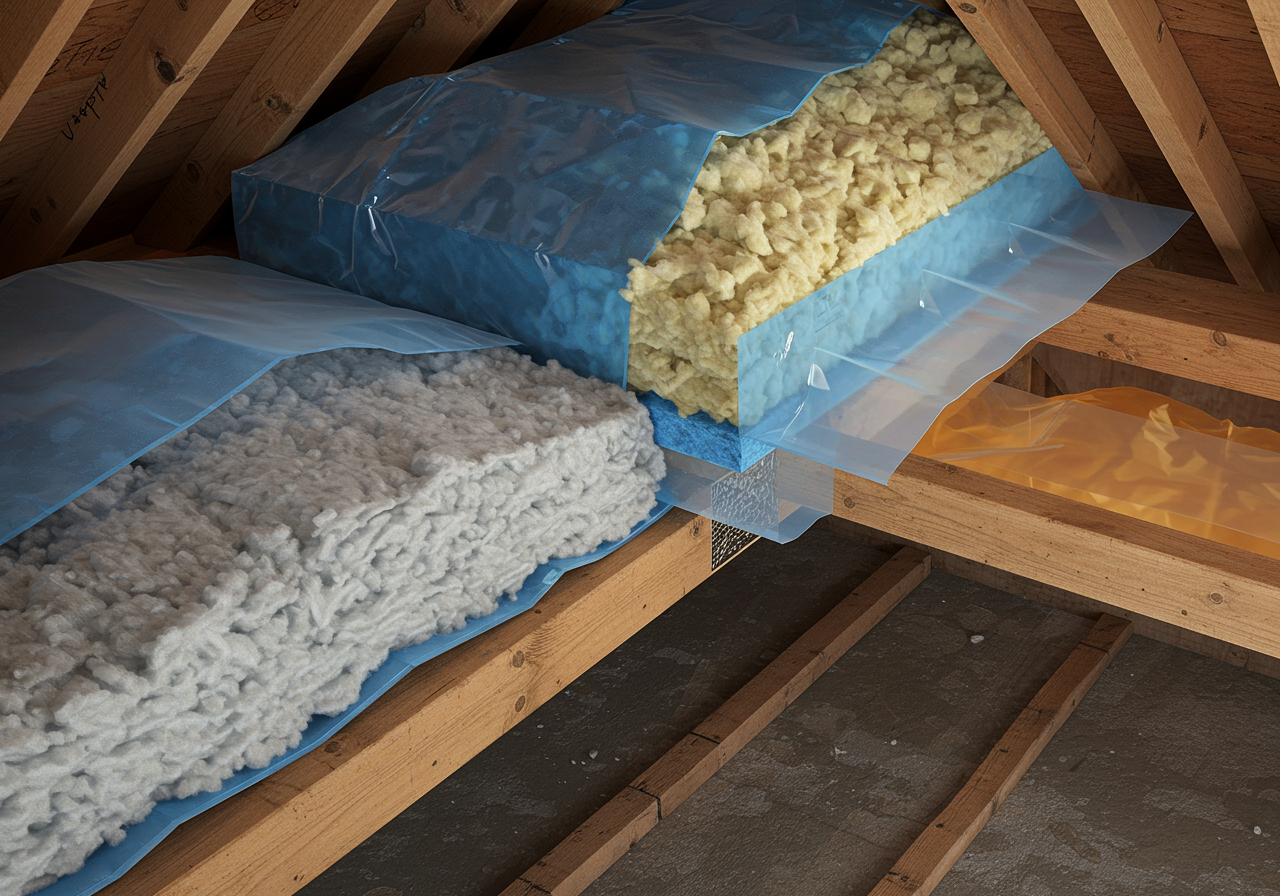
Attic Ventilation and Insulation Balance
Proper balance between ventilation and insulation is critical for East Hampton's humid shoreline climate.
Ventilation vs. Insulation: What Each System Does
| Feature | Insulation | Ventilation |
|---|---|---|
| Prevents Heat Loss | ||
| Removes Moisture | ||
| Prevents Ice Dams | ||
| Reduces Summer Heat | ||
| Extends Roof Lifespan |
Did You Know?
East Hampton's average relative humidity hovers around 78% in summer, creating conditions where a poorly ventilated attic can trap enough moisture to cause structural rot in as little as 3-5 years.
Ventilation Basics for Shoreline Homes
Proper attic ventilation follows the 1/150 rule: you need 1 square foot of vent area for every 150 square feet of attic floor space. But here's where East Hampton homeowners get tripped up: you need balanced intake and exhaust. Most contractors install ridge vents (exhaust) but forget to ensure adequate soffit vents (intake). This creates a vacuum effect that can actually pull conditioned air out of your living space through gaps around recessed lights and electrical boxes.
I recently worked on a home near Lake Pocotopaug where the homeowner complained about a $450 monthly heating bill. We discovered their attic had only 60% of the required ventilation area, and what vents existed were blocked by insulation. By installing a continuous ridge vent system and ensuring clear airflow from soffit to peak, we dropped their attic temperature by 18 degrees in summer and eliminated the ice dam problem that had plagued them for three winters.
Soffit Vents
Intake vents at the eaves that allow cool, dry air to enter.
Ridge Vents
Exhaust vents at the peak that allow warm, moist air to escape.
Balanced System
Equal intake and exhaust prevents moisture buildup and energy waste.
The 'More Vents' Myth
Insulation Deep Dive: R-Values and Reality
Connecticut falls in Climate Zone 5, which means the Department of Energy recommends R-49 to R-60 for attic insulation. That translates to 16-20 inches of blown-in cellulose or fiberglass. Most East Hampton homes built before 2000 have only R-19 (about 6 inches), which is woefully inadequate for modern energy standards. The EPA's ventilation guidelines emphasize the importance of balanced airflow to prevent moisture-related problems.
Energy Waste by Insulation Level (Annual Cost)
The type of insulation matters too. Blown-in cellulose is excellent for East Hampton because it resists moisture better than fiberglass batts. However, if your insulation has settled or been compressed by previous contractors walking through your attic, it loses its R-value effectiveness. I've seen attics where the insulation looked thick enough, but compression had reduced its actual R-value by 30%.
Insulation Types for East Hampton
Pros
- Blown-in Cellulose: Best moisture resistance, fills gaps well, fire-retardant.
- Fiberglass Batts: Lower cost, easy to install, but can leave gaps if not careful.
- Spray Foam: Highest R-value per inch, air-seals simultaneously, but most expensive.
Cons
- Cellulose: Can settle over time, requires professional installation.
- Fiberglass: Prone to gaps around edges, less effective if compressed.
- Spray Foam: 2-3x the cost of other options, requires specialized contractors.
"I've seen too many East Hampton homeowners spend $15,000 on a new roof only to watch their energy bills stay high because they ignored the attic. A $3,200 investment in proper insulation and ventilation would have saved them thousands over the roof's lifespan."
Cost Comparison: Investment vs. Savings
Let's talk numbers. For a typical 2,000-square-foot East Hampton home, upgrading from R-19 to R-49 insulation costs approximately $2,400-$3,200. Adding balanced ventilation (soffit and ridge vents) adds another $1,800-$2,400. Total investment: $4,200-$5,600.
But here's where it gets interesting. On a home with a $2,400 annual energy bill, proper insulation and ventilation typically reduce costs by 15% to 28%. That's $360 to $672 per year in savings. At the conservative end ($360/year), your investment pays for itself in about 7 years. At the higher end ($672/year), you're looking at a 4-year payback period.
Long-Term Value Comparison
Based on 15-year total cost of ownership
Financing Options Available
Before you commit to any upgrade, make sure you're working with a contractor who understands both systems. I always recommend verifying your contractor's license and experience with energy-efficient upgrades. Not every roofer understands the science behind balanced ventilation. If you're dealing with an emergency situation like ice dams or active leaks, emergency roofing services can address immediate problems while you plan the full upgrade.
Assess Current Insulation
Measure the depth of your attic insulation. If you can see floor joists, you're under-insulated. Aim for 16-20 inches of even coverage.
Check Ventilation Balance
Count your soffit vents and ridge vents. You need roughly equal intake (soffit) and exhaust (ridge) areas. A professional can measure Net Free Area (NFA).
Seal Air Leaks First
Before adding insulation, seal gaps around chimneys, plumbing stacks, and electrical boxes with spray foam. This prevents conditioned air from escaping.
Install Baffles
Ensure insulation doesn't block soffit vents by installing baffles. These create a clear air channel from eaves to peak.
Upgrade Both Systems
Add insulation to reach R-49 to R-60, then ensure balanced ventilation. Both systems must work together for optimal performance.
If you're planning a roof replacement, this is the perfect time to address attic systems. Many contractors can bundle the work, saving you money on labor. Plus, a new roof with proper ventilation and insulation will perform better from day one, extending its lifespan and maximizing your investment.
Get Your Free Attic Assessment Today
Connect with verified CT pros who understand ventilation and insulation balance.
No credit card required • Free to use