A few months back, I spent a rainy afternoon with the Millers on Waterside Lane. Their charming 1940s Cape had a roof that looked more like a patchwork quilt than a protective barrier. They were torn between the classic look of shingles and the rugged promise of metal, especially with the salt air from the harbor constantly gnawing at their siding. We sat at their kitchen table, looking at samples, and realized that for Clinton homeowners, the "best" material isn't just about what looks good—it's about what won't require a frantic call for urgent storm repairs after the next big nor'easter. We ended up looking at data on how different materials handle the unique Middlesex County humidity and wind, and the results were eye-opening for their specific budget.
Key Takeaways
- Metal roofing offers the highest resistance to salt-spray corrosion found along the Clinton shoreline.
- Architectural asphalt shingles remain the most cost-effective choice but require specific algae-resistant granules.
- Synthetic slate provides the high-end look of historic Clinton homes without the structural weight or maintenance.
- Impact-rated materials can significantly lower long-term ownership costs by reducing the frequency of storm-related replacements.
The Shoreline Reality: Why Clinton Roofs Age Differently
Living near the water is a dream, but for your roof, it can be a bit of a nightmare. The salt air that we all love during a walk at Hammonasset Beach is surprisingly abrasive. I've noticed that homes even a mile inland from the Clinton town docks show significantly more granular loss on their shingles than those further up toward Killingworth. It's not just the salt; it's the way the moisture clings to the surface.
The Impact of Salt Air and Humidity
In our part of Connecticut, humidity doesn't just make us uncomfortable in July; it creates a breeding ground for Gloeocapsa Magma—that black, streaky algae you see on older roofs. When I look at a roofline, I'm not just seeing color; I'm seeing how that material "breathes." A roof that traps moisture against the deck is a roof that's going to fail years before its warranty suggests.
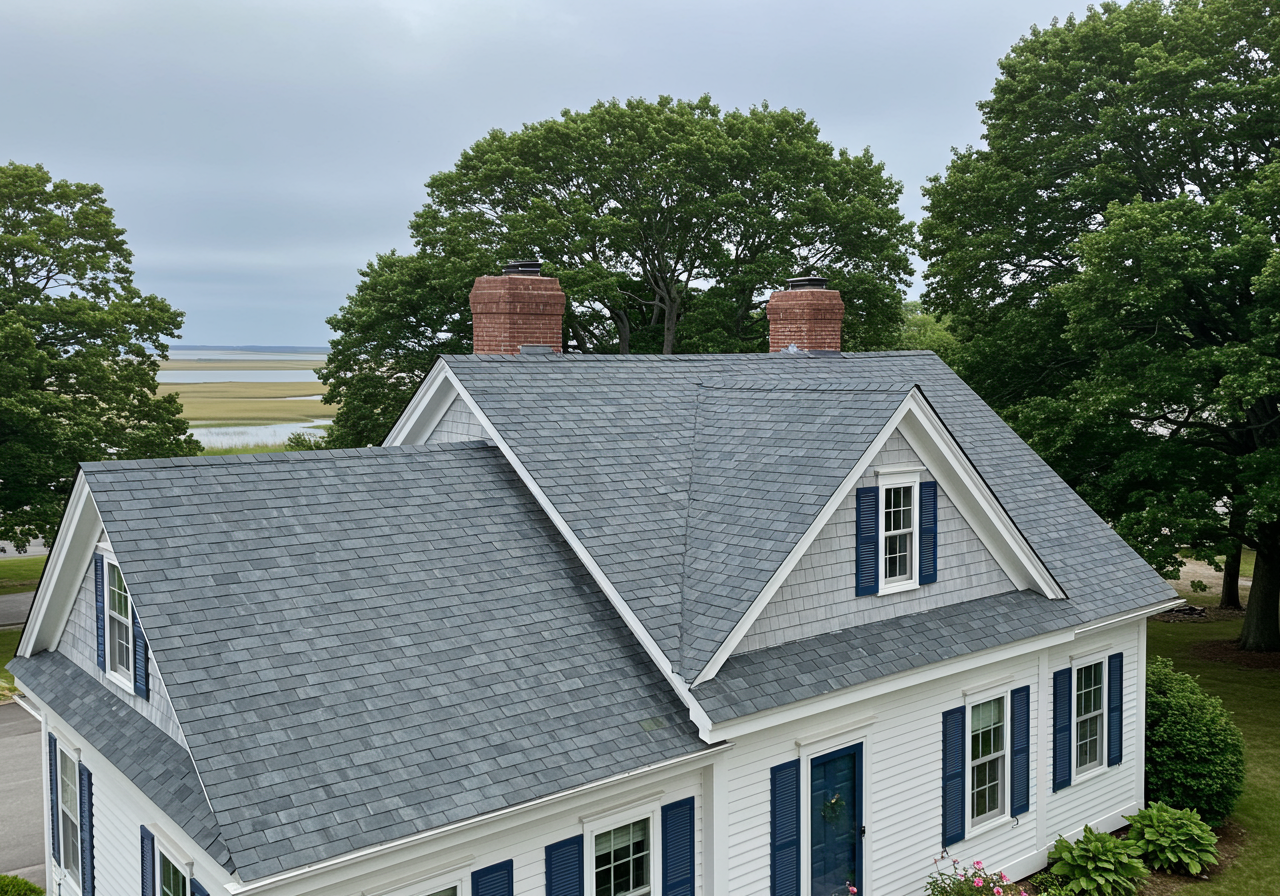
Clinton Shoreline Roofing Challenges
Salt air and humidity create unique challenges for roofing materials along the Middlesex County shoreline.
Asphalt Shingles: The Practical Clinton Standard
Most of us in town have asphalt shingles. It makes sense—they are familiar and generally affordable. But not all shingles are created equal for our climate. I always tell my neighbors that if you're going this route, you have to look at the "Architectural" or "Laminate" options. They have a dimensional look that mimics wood shakes, which fits the aesthetic of our historic districts perfectly.
Why "Algae-Resistant" is Non-Negotiable
If you're budgeting for a full replacement, don't cut corners on the shingle quality. In Clinton, you want shingles infused with copper granules. Copper is a natural algaecide. I remember a project on Liberty Street where the homeowner saved $435 by choosing a standard shingle without the copper infusion. Within three years, their beautiful light gray roof had dark, ugly streaks that looked like soot.
Expected Lifespan in Shoreline Environments
Metal Roofing: The Performance Powerhouse
There's a growing trend in Clinton toward standing seam metal roofs, and honestly, I'm here for it. From a design perspective, a charcoal gray metal roof on a white farmhouse is a total showstopper. But the real beauty is in the durability. Metal is virtually impervious to the wind uplift that often plagues shingles during our coastal gusts.
Aluminum vs. Steel on the Coast
Here's a tip I picked up after a particularly nasty winter: if you live south of Route 1, go with aluminum. Steel, even when galvanized, can eventually succumb to "edge creep" where the salt air eats away at the cut ends. Aluminum is naturally more resistant to that coastal corrosion. According to Energy Star's guide on cool roofs, reflective metal surfaces can also keep your attic significantly cooler during those humid Connecticut Augusts.
"For shoreline properties, the mechanical fastening of a standing seam system provides a level of security that traditional shingles struggle to match."
The Aesthetic Appeal of Wood Shakes and Synthetics
We have some stunning historic homes in Clinton, and nothing beats the look of weathered cedar. However, real wood is a high-maintenance relationship. It needs to be cleaned, treated, and watched closely for rot. For many of my clients, synthetic shakes are the "secret weapon."
Balancing Design and Maintenance
Synthetics are made from polymer resins and can be molded to look exactly like hand-split cedar or heavy slate. I recently saw a Cape on commerce street that used synthetic slate, and you couldn't tell the difference from the sidewalk. The best part? They often qualify for significant insurance discounts because of their fire and impact ratings. You can check the IRS instructions for energy credits to see if certain high-efficiency synthetic materials might even snag you a tax break.
Material Comparison for Clinton Homes
| Feature | Asphalt | Metal | Synthetic |
|---|---|---|---|
| Initial Cost | |||
| Salt Resistance | |||
| Avg. Lifespan | |||
| DIY Friendly |
Engineering for the Next Big One: Storm Resistance
In Connecticut, we don't just plan for the weather we have; we plan for the weather we're afraid of. Every time a storm rolls up the coast, my inbox fills with questions about wind ratings. It's not just the material you choose, but how it's attached to your house.
Beyond the Shingle: The Underlayment
I've seen roofs where the shingles stayed on, but the water still got in. This happens when the underlayment—the stuff beneath the shingles—isn't up to snuff. In Clinton, I recommend a synthetic underlayment and double-shielding the eaves to prevent ice dams. FEMA's mitigation guide for sloped roofs emphasizes that the "roofing system" is only as strong as its weakest attachment point.
The 'Drip Edge' Secret
Making the Final Decision for Your Home
When it's time to choose, I always tell people to take a walk around the neighborhood first. How does the color of that roof meet the sky? Does it complement the siding of the house next door? A roof is a 20-to-50-year commitment, so it's worth being picky about the details.
The ROI of Quality Materials
While the upfront cost of a metal or synthetic roof might be $18,450 more than a basic asphalt job, the long-term value in a town like Clinton is undeniable. You aren't just buying shingles; you're buying peace of mind for the next two decades of shoreline winters. If you're ready to explore a full roof upgrade, start by looking at materials that can handle the salt and the snow equally well.
Assess your home's distance from the shoreline
Determine salt-resistance needs based on proximity to the water.
Choose a color palette
Select colors that fit the Clinton neighborhood context.
Compare long-term maintenance costs
Evaluate shingles vs. metal for total cost of ownership.
Request a detailed estimate
Ensure high-quality underlayment is included in the quote.
Verify wind-rating specifications
Confirm your chosen material meets local wind requirements.
Final Thoughts on Clinton Roofing
Choosing the right material for your Clinton home is about more than just picking a color from a catalog. It's about understanding how our local environment—from the humid summers to the salty winter winds—will interact with your house over time. Whether you opt for the classic reliability of architectural shingles or the modern strength of metal, make sure you're prioritizing durability.
If you're feeling overwhelmed by the options, don't worry. Most of us have been there. The goal is to get a roof that lets you sleep soundly, even when the wind is howling off the Sound.
Ready to see how these materials fit your budget?
Get a fast, local roof estimate now.
No credit card required • Free to use
Get Your Free Roof Quote
Enter your zip code to get started
Frequently Asked Questions

About Sheri Wilde
Verified ExpertSheri Wilde is a Home Improvement Editor with a background in interior design and sustainable living. She helps Connecticut homeowners make informed decisions about their biggest investments.