Key Takeaways
- Decking density is non-negotiable; 7/16-inch OSB often lacks the pull-out resistance for solar brackets during 15 mph wind gusts.
- Ventilation must be oversized to account for the "heat trap" created between the panels and the roof surface.
- Standing seam metal offers a 50-year lifespan, perfectly matching the longevity of modern high-efficiency solar cells.
- Flashing details at mounting points are the #1 failure point—use flashing-integrated mounts rather than puck-and-caulk methods.
Right now in Chester, it's -2°F. While the sky is clear, that wind is kicking at 15 mph, and I can tell you from standing on a ridge line near the Pattaconk Brook earlier this morning, the freeze-thaw cycle is in full swing. When the mercury drops this low, any weakness in your roof deck isn't just a minor flaw—it's a ticking clock. I'm seeing a lot of Middlesex County homeowners looking at solar arrays this February to offset rising utility costs, but they're making a fundamental mistake: they're putting a 25-year power plant on a 10-year roof.
If you're planning on going solar in 2026, you aren't just buying shingles; you're building a foundation for a heavy mechanical system. In Chester's climate, that requires a specific set of technical standards that go beyond the "standard" install.
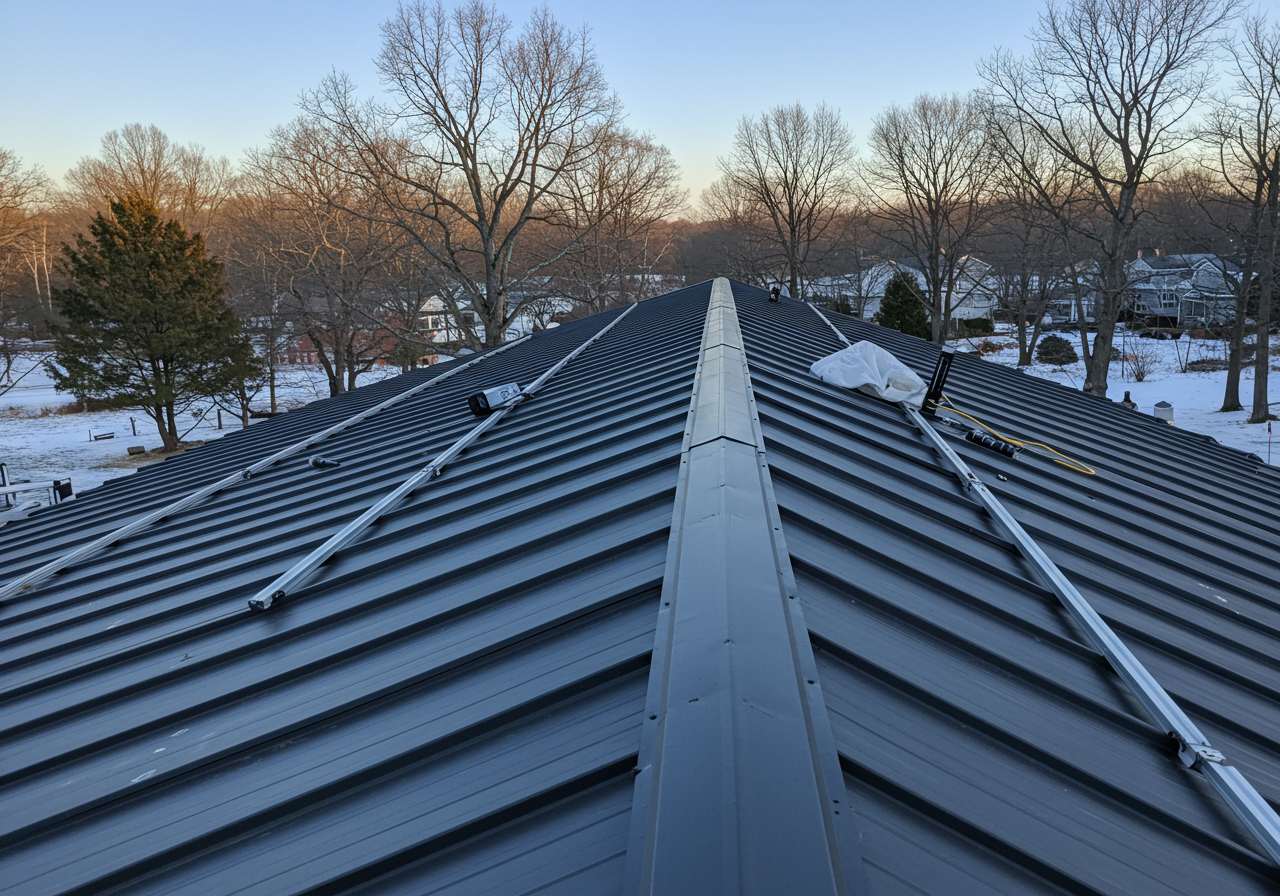
Solar-Ready Roofing in Chester
Proper preparation ensures your roof can handle solar panels for decades
Section 1: The Foundation – Why Your Roof Deck Dictates Solar Success
Here is the thing about solar: it adds roughly 2.5 to 4 pounds of dead load per square foot. While that doesn't sound like much, consider the "uplift" during a Middlesex County storm. I've spent enough time reviewing the NWS Historical Storm Events Database to know that Chester gets hit with localized wind tunnels that can rip poorly fastened brackets right out of the plywood.
Decking and Fastener Pull-Out Resistance
Most builders in the late '90s used 7/16-inch OSB (Oriented Strand Board). For a standard asphalt shingle, that's fine. For solar, I prefer a minimum of 5/8-inch CDX plywood. Why? Because the "pull-out strength" of a lag bolt is significantly higher in plywood. If you are stripping your roof to go solar-ready, spending the extra $1,200 to $1,800 on thicker decking is the smartest insurance policy you'll ever buy.
Managing the -2°F Freeze-Thaw Reality
In this -2°F weather, ice dams are a massive concern. When you mount solar panels, they act as a "snow fence," holding snow on your roof longer than usual. This leads to increased meltwater at the eaves. I recommend an extra course of Ice and Water shield—at least 6 feet up from the eave—to mitigate the backup caused by panel-induced snow shelfing. Before you sign any contract, verify their contractor's license and ask specifically about their eave protection protocols for solar-heavy zones.
Section 2: Material Selection – Matching Lifespan to ROI
It makes zero financial sense to install a solar system that lasts 25 years on a shingle roof that only has 12 years of life left. You'll end up paying a solar crew $2,500 to $4,000 just to detach and reset the panels when the roof fails. I tell my clients in Chester to look at the "marriage" of the two systems.
Standing Seam Metal vs. Architectural Shingles
If your budget allows, standing seam metal is the undisputed champion for solar. The panels clip directly onto the ribs (the "seams") of the roof. This means zero penetrations. No holes, no leaks. If you stay with asphalt, you must use a high-end SBS-modified shingle like Malarkey Legacy or GAF ArmorShield. These are "rubbery" enough to seal around fasteners and resist the thermal expansion that happens when panels get hot in July.
Roofing Materials for Solar Integration
| Feature | Asphalt Shingle | Standing Seam Metal |
|---|---|---|
| Expected Lifespan | ||
| Installation Cost | ||
| Penetration Free? | ||
| Solar Compatibility |
The Ventilation Gap
(This is a detail even the "big box" solar companies miss.) Solar panels sit about 3-5 inches off the roof. This creates a stagnant air pocket. On a 90°F day in Chester, the shingles under those panels can reach 170°F. This "bakes" the asphalt from the top down. I insist on using an intake-heavy ventilation system—like the Air Vent Edge Vent—to ensure a constant stream of cool air is moving under that deck.
Don't just take my word for it; see what other CT homeowners experienced when they upgraded their ventilation systems alongside their roof replacements.
Section 3: Professional Standards and Safety
I've walked too many Chester roofs where the solar installers treated the shingles like a sidewalk. Scuffing the granules off a new roof during a solar install can shave five years off its life.
Contractor Coordination and OSHA Standards
When the roofing crew finishes, the solar crew starts. I've seen crews work without proper tie-offs, which is why I always point people toward the OSHA Homeowner's Guide to Fall Protection. If a contractor isn't following safety protocols, they likely aren't following the manufacturer's flashing specs either. The trick is finding a contractor who actually shows up and understands the hand-off between the two trades.
Structural Audit: Verify the rafters and decking can handle the 3lb/sqft dead load.
Material Selection: Opt for 50-year metal or high-impact shingles.
Underlayment Overhaul: Install double-layered ice and water shield in high-risk zones.
Flashing Integration: Use metal-to-metal flashing kits for all mounting feet.
Financial Incentives for 2026
While I'm a roofing guy, not an accountant, the 2026 tax credits for solar-ready "integrated" systems are substantial. Often, if the roof is required for the solar to function (like in the case of solar shingles), a portion of the roofing cost may be eligible for federal credits. You can check the latest USA.gov home repair assistance portal for current grants and efficiency loans available to Connecticut residents.
FAQ
Did You Know?
Solar panels can actually extend the life of the shingles they cover by protecting them from UV degradation—provided the edges are flashed correctly against wind-driven rain.
"A solar-ready roof isn't just a new layer of shingles; it's a structural upgrade that turns your home into a durable power platform."
If you're weighing the pros and cons of different materials or wondering if your current rafters can handle the weight of a 400-watt panel array, don't guess. The -2°F weather we're having right now is the perfect time to check your attic for heat loss and structural sagging before the spring solar rush begins.
Get Your Free Roof Quote
Enter your zip code to get started

About Daniel Roberts
Verified ExpertDaniel Roberts is a Senior Roofing Consultant with over 15 years of experience in the New England residential construction industry. He specializes in storm damage assessment and energy-efficient roofing systems.