Did you notice how the frost stayed on your neighbor's shingles this morning while yours melted off by 9:00 AM? When it's 29°F outside in Woodbridge and the humidity is sitting at a heavy 97%, that melting isn't just a sign of a sunny morning—it's the sound of your furnace working overtime to heat the neighborhood. If your roof is clear of snow or frost while the rest of the street is white, you aren't looking at a "warm house"; you're looking at a thermal sieve that's likely costing you an extra $115 every single month in leaked BTU energy.
Key Takeaways
- The 'stack effect' pulls warm air upward through your home, escaping through an uninsulated roof deck.
- R-60 insulation is now the recommended standard for Connecticut attics, not the outdated R-49.
- Proper attic ventilation prevents moisture buildup that destroys insulation effectiveness.
- Ice dams form when interior heat melts snow that refreezes at the eaves, causing $5,800+ in damage.
1. The Physics of the "Stack Effect" in New Haven County
Heat rises—this isn't news—but the "stack effect" in a colonial or cape-style home in Woodbridge acts like a vacuum. Warm air from your living room is pulled upward through recessed lighting, attic hatches, and bypasses, eventually hitting the underside of your roof deck. If your roofing system isn't designed to handle this, that heat escapes into the atmosphere.
I've spent plenty of time looking at thermal imaging in the West Rock Ridge area, and the results are always the same. Most older homes here were built when oil was cheap. Today, that lack of a thermal break means your roof is essentially a radiator for the outdoors. To stop this, we have to look at the roof not as a lid, but as a complex seal. I always recommend that homeowners explore our educational roofing library to understand how different layers of the roof—from the deck to the shingle—work together to trap that expensive air where it belongs.
2. Why R-49 is No Longer the Gold Standard for Woodbridge
For years, the magic number for attic insulation in Connecticut was R-49. But as our winters become more erratic, the Department of Energy has pushed recommendations toward R-60 for our zone. In a typical Woodbridge attic, this means about 16 to 20 inches of blown-in cellulose or fiberglass.
If you're still rocking the original 6-inch fiberglass batts from 1985, you are essentially wearing a t-shirt in a blizzard. Adding that extra layer of insulation is the single most cost-effective roofing-adjacent project you can tackle. However, don't just dump bags of pink stuff over your eaves. You have to maintain the airflow. I've seen homeowners "improve" their insulation only to find a forest of black mold three years later because they blocked their soffit vents. If you're unsure about your current R-value, it's worth having our network of vetted professionals take a look at your attic floor before you commit to a full shingle replacement.
3. The 29°F Freeze-Thaw Trap and Ice Dam Costs
Today's 29°F temperature is the "danger zone" for Woodbridge roofs. It's just cold enough for snow to sit, but just warm enough that interior heat loss can melt the bottom layer of that snow. That water runs down to the gutters—which are at the ambient 29°F—and freezes instantly. This is the birth of an ice dam.
Did You Know?
Ice dams can weigh as much as 250 pounds per linear foot, often tearing gutters clean off the fascia boards during a heavy CT winter.
I remember the February 2013 blizzard where half of New Haven County was dealing with water backing up under their shingles. The cost to repair the interior drywall and mold after an ice dam breach often exceeds $5,800. A properly insulated and ventilated roof stays "cold," meaning the snow melts evenly from the sun, not unevenly from your attic. To see if your neighborhood has a history of these heavy weather events, you can check the NWS Historical Storm Events Database to see just how often we hit these critical freeze-thaw cycles.
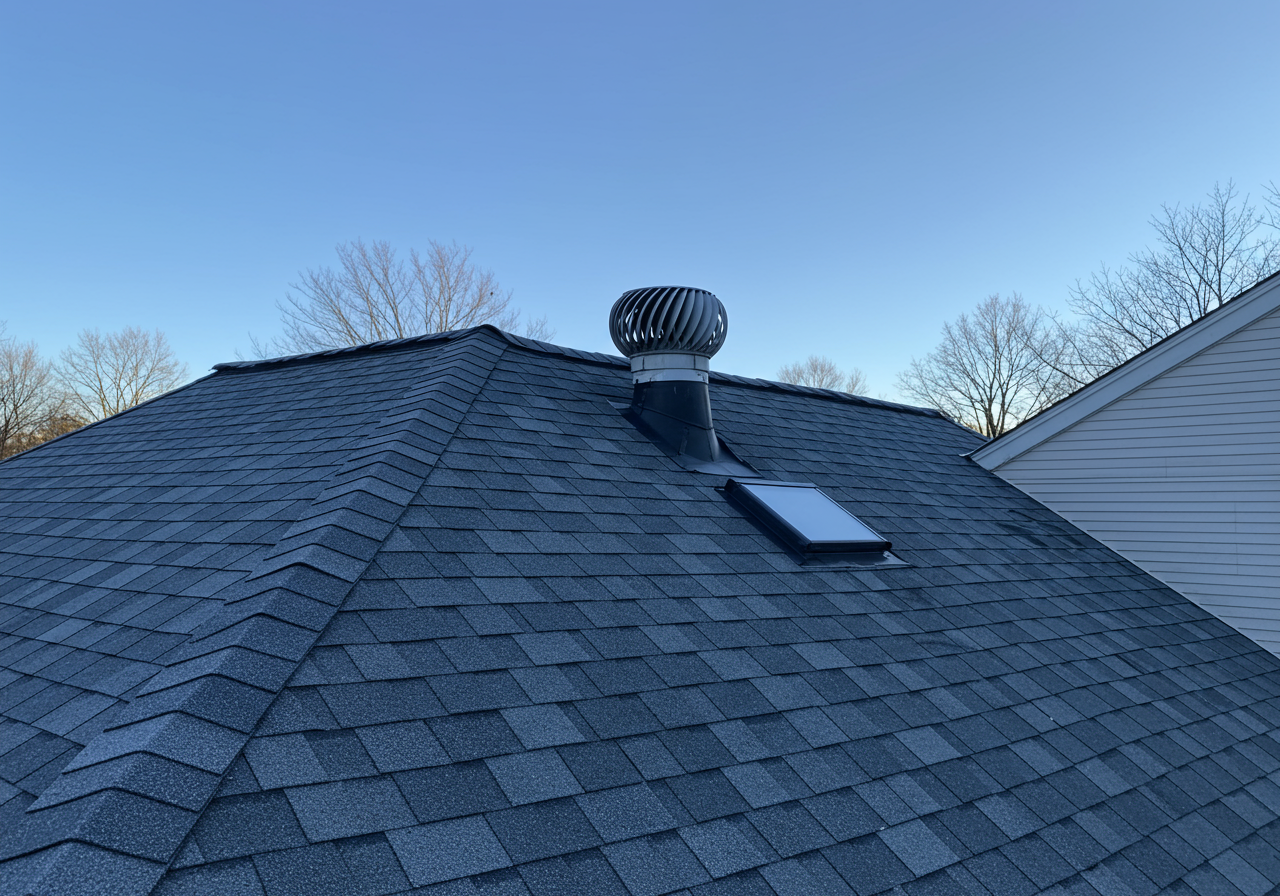
Heat Loss Through Roof Deck
Thermal imaging reveals how warm air escapes through uninsulated roof systems in Woodbridge homes.
4. Ventilation: The Hidden Engine of Energy Efficiency
Ventilation sounds counterintuitive when we're talking about saving heat. Why would you want cold 29°F air moving through your attic? The goal isn't to keep the attic warm; it's to keep the attic the same temperature as the outdoors while keeping the house below it toasted.
Install baffle vents at the soffits
Ensure air can enter the attic floor without being blocked by insulation.
Verify ridge vent clearance
Check that the ridge vent is clear of debris and moss growth.
Seal air leaks
Seal air leaks around chimneys and plumbing stacks with fire-rated foam.
Balance intake and exhaust
Balance intake and exhaust square footage to prevent 'dead air' pockets.
With 97% humidity today, any stagnant air in your attic is going to turn into condensation. That moisture makes your insulation clump together, which ruins its R-value. It's a vicious cycle: wet insulation doesn't hold heat, which leads to more heat loss, more melting, and more moisture. I've found that many local crews skip the baffles to save twenty minutes on a job. I always tell my neighbors to verify their contractor's standards and ensure they aren't cutting corners on the "invisible" parts of the roof.
5. Modern Materials: Cool Roofs in a Cold Climate
We often think of "cool roofs" as a Florida thing, but they are incredibly effective in Woodbridge too. Modern shingles use specialized granules that reflect solar radiation. In the summer, this keeps your AC bills low. In the winter, the advanced thermal underlayments act as a secondary radiant barrier.
Comparing Insulation Approaches
Pros
- Blown-in cellulose fills every tiny gap and nook.
- Reflective underlayment bounces heat back into the house.
- Spray foam provides a superior air seal.
Cons
- Fiberglass batts often leave 'thermal bridges' at the joists.
- Poorly installed foam can trap moisture against the roof deck.
When you're choosing a material, don't just look at the color. Look at the thermal emissivity rating. Even with a light 2 mph wind, a high-quality asphalt shingle with an integrated thermal break can keep the roof deck significantly more stable. Before you sign a contract, see what other CT homeowners experienced with different brands like GAF or CertainTeed in our specific climate.
6. Securing Funding and Professional Oversight
A high-efficiency roof is an investment, often ranging from $12,400 to $19,800 depending on the pitch and square footage of your Woodbridge home. The good news? You don't have to foot the bill alone. There are federal tax credits for Energy Star-rated roofing products that can offset a portion of the cost.
Estimated Annual Heating Savings by Roof Condition
For those looking at major upgrades, the USA.gov Home Repair Assistance portal offers pathways for federal grants or low-interest loans for energy-efficiency improvements. And remember, when the crew is up there, safety is paramount. I always look for teams that follow the OSHA Homeowner's Guide to Fall Protection Standards —because a contractor who cares about their crew's safety usually cares about the quality of your insulation seal too.
Get Your Free Roof Quote
Enter your zip code to get started
Conclusion
In the end, your roof is your home's first line of defense against the Connecticut winter. Don't wait until you see those three-foot icicles hanging over your front door to take action. A proactive check of your attic's "breathing" and "blanket" today can save you thousands by the time the March winds roll in.
FAQ

About Noah Knight
Verified ExpertNoah Knight is a Connecticut Weather & Climate Specialist who helps homeowners understand how New England's unique weather patterns affect their roofing systems. He combines meteorological knowledge with practical home maintenance advice. Noah Knight is a Connecticut-based weather specialist with over 14 years of experience tracking the intersection of New England climate patterns and residential building durability. When he isn't analyzing NOAA radar data, he's helping homeowners understand how to prepare their properties for the next "Storm of the Century."