
Key Takeaways
- Sustainable roofing in Windham focuses on reflectivity and 50-year lifespans to maximize ROI.
- Standing seam metal and high-end composites offer the best wind resistance for Windham County's open terrain.
- Federal tax credits for Energy Star-rated materials can offset up to $1,200 of initial installation costs in 2026.
- Proper attic ventilation is the 'secret sauce' that makes sustainable materials actually perform as advertised.
Contrary to the popular narrative you'll hear at big-box home improvement stores, "sustainable roofing" in Windham isn't just about feeling good or using recycled milk jugs for shingles. Most homeowners think going green means sacrificing durability for a higher price tag—or that "cool roofs" are only for the scorching summers of the Southwest. The reality is quite the opposite. In the Quiet Corner, sustainability is a technical performance metric. It's about how a material handles a February ice dam while simultaneously preventing your attic from becoming a 140-degree oven in July.
I've spent a lot of time analyzing heat-loss patterns on historic Willimantic homes, and I can tell you: the wrong "green" choice is just an expensive mistake. But the right one? It pays for itself through reduced lifecycle costs and thermal efficiency.
The Material Showdown: What Actually Lasts in Windham?
Here's the thing: Windham County presents a unique set of challenges. We have the wind-swept hills that can rattle a standard 3-tab shingle until the sealant strips fail, and we have the dense tree cover that promotes moss growth. When we talk about sustainability here, we're looking at materials that don't end up in a landfill after 15 years.
Metal vs. Synthetic Composites
I'm a big proponent of 24-gauge standing seam metal. Why? Because it's 100% recyclable and reflects about 70% of solar radiation. I recently inspected a metal roof near the Frog Bridge that was installed in 2008; the Kynar 500 finish looked nearly factory-fresh, and the fasteners (I checked about a dozen) hadn't backed out a millimeter. Synthetic slate, like those from DaVinci Roofscapes, is another heavy hitter. These are made from engineered polymers that resist the freeze-thaw cycles that eventually crack natural Connecticut slate.
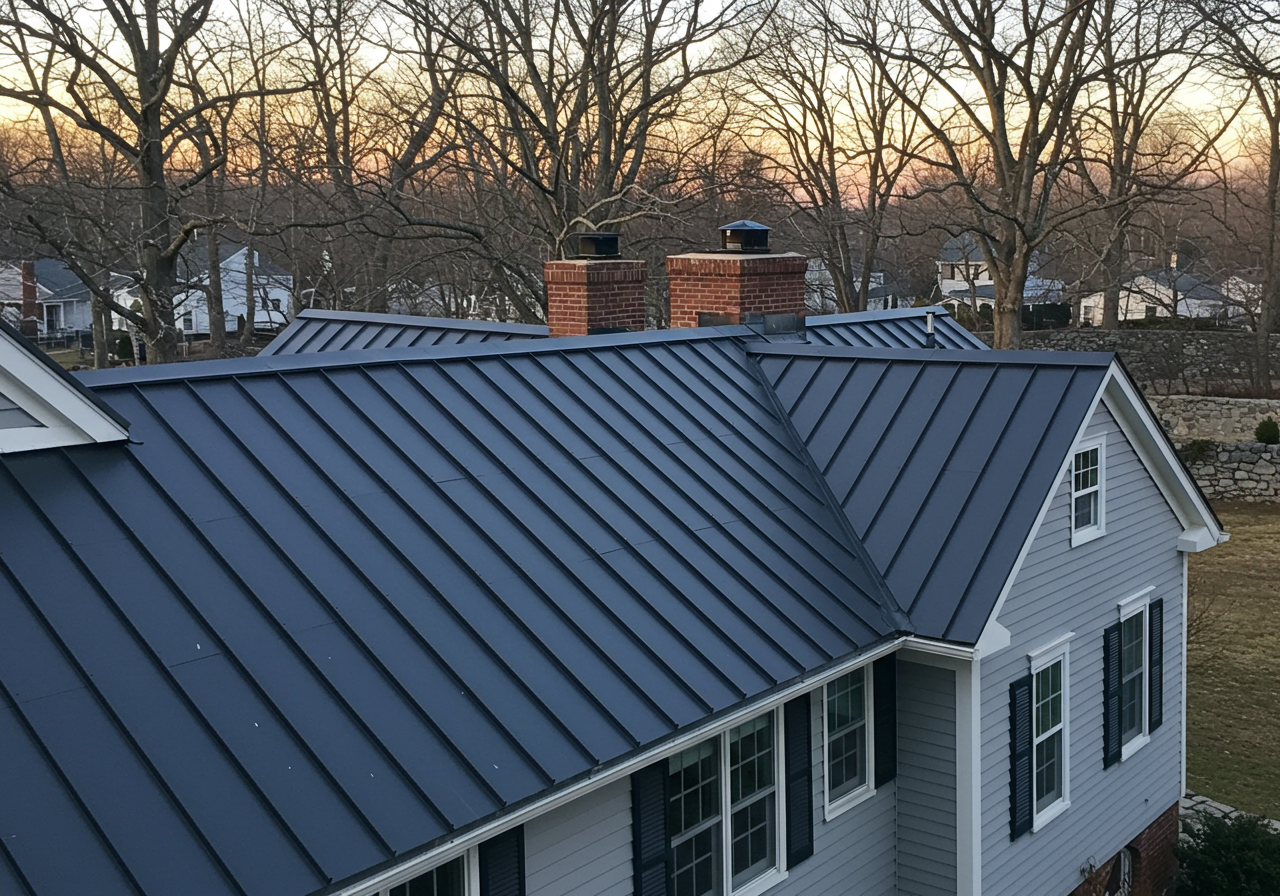
Sustainable Roofing Materials in Windham
Standing seam metal and synthetic composites offer superior durability and energy efficiency for Connecticut's challenging climate.
The Lifecycle Math
Look, the upfront cost of a "lifetime" sustainable roof might be $18,400 compared to $11,200 for basic asphalt. But when you factor in that the asphalt roof will likely need a full replacement in 17 years—especially with our increasingly volatile winters—the math shifts. I always tell my clients to verify their contractor's experience with these specialty materials, as a single poorly flashed valley can ruin a $20k investment.
Expected Lifespan by Material (Years)
Thermal Performance and the "Cool Roof" Advantage
Many people assume "Cool Roofs" are a gimmick for southern climates. However, EPA's data on cool roofs shows that even in New England, reducing "heat island" effects on your own property can slash summer cooling bills by 10-15%. In a town like Windham, where many older homes lack modern central air, that temperature drop is the difference between a miserable upstairs bedroom and a comfortable one.
Reflectivity vs. Emissivity
It's not just about the color. It's about the "Solar Reflectance Index" (SRI). A high SRI material bounces the sun's energy back into the atmosphere rather than absorbing it into your rafters. I've measured attic temperatures in North Windham where a standard black shingle roof hit 158°F, while a neighboring "cool" gray metal roof stayed at a much more manageable 112°F.
Integration with Insulation
You can't talk about a sustainable roof without talking about what's underneath it. I highly recommend following the Department of Energy's insulation guidelines to ensure your R-value matches your new roof's performance. If you have R-60 insulation in the attic but a roof that absorbs heat, you're essentially fighting a war on two fronts.
Sustainable Material Comparison
| Feature | Metal | Synthetic Slate | Reflective Asphalt |
|---|---|---|---|
| Recyclability | |||
| Energy Star Rated | |||
| Wind Rating (110mph+) | |||
| Lower Initial Cost |
Installation Nuances for the Quiet Corner
Windham isn't just a dot on a map; it's a high-wind zone compared to the Connecticut River valley. If a contractor tries to use "standard" nailing patterns on a high-efficiency roof here, they're asking for a claim. According to FEMA's guidance on sloped roof mitigation, the perimeter of the roof requires 40% more fasteners to combat uplift.
Ventilation is Non-Negotiable
(And I mean actual calculated ventilation, not just "popping in a few pods"). For sustainable roofs to prevent rot, you need a balanced intake and exhaust system. I prefer continuous ridge vents combined with oversized soffit intakes. I've seen $30,000 "eco-roofs" fail in five years because the installer choked off the airflow, causing the plywood deck to delaminate from moisture trap.
The 'Green' Markup Trap
Get Your Free Roof Quote
Enter your zip code to get started
The transition to a more efficient home starts with the largest surface area exposed to the elements. Don't just take my word for the long-term benefits; hear from neighbors who made the switch and seen their utility bills drop during our humid CT summers.
Sustainable roofing isn't a luxury anymore—it's a hedge against rising energy costs and more frequent coastal storms pushing inland. If you're ready to stop renting your roof 20 years at a time and start owning a permanent solution, the tech is finally there to make it happen.